 comparison
Pokémon vs Magic vs Yu-Gi-Oh!: Which TCG to Invest In
Last Updated: November 9, 2026
Quick Summary
Pokémon is the best TCG to invest in for liquidity, since its buyer pool of players, collectors and gift shoppers moves fairly priced cards in days rather than months. Magic suits patient buyers because reserved-list cards cannot be reprinted, while Yu-Gi-Oh! rewards format knowledge and patience.
- Pokémon leads on liquidity, Magic leads on depth, and Yu-Gi-Oh! rewards patience and format knowledge.
- Sealed booster boxes remove condition risk, while singles let you target a specific card.
- Magic reserved-list cards hold value because they cannot be reprinted.
- Modern Yu-Gi-Oh! reprints flood the market and dilute anything recent.
- Beginners should start with raw singles and mid-grade cards from sets they know.
Table of Contents
- The Best TCG to Invest in 2026: A Data-Driven Comparison
- The Best TCG for Collecting: Pokémon, Magic, or Yu-Gi-Oh!?
- The Best Trading Cards to Invest in Right Now: Sealed vs. Singles
- TCG Resale Value and Liquidity: Which Game Sells Fastest?
- Risk Management: Counterfeits, Storage, and Market Volatility
- Entry-Level vs. High-End Investment Tiers
- Building Your Portfolio with Dave's House of Cards
- Frequently Asked Questions
The Best TCG to Invest in 2026: A Data-Driven Comparison
Ask ten collectors what TCG to invest in and you will get ten opinions, most of them shaped by whatever they happen to play. The honest answer is that Pokémon leads on liquidity, Magic leads on depth, and Yu-Gi-Oh! rewards patience and format knowledge. Below, we break down which trading card game fits your budget, your risk tolerance, and your exit plan.
How We Evaluated the Major TCGs
| Game | Liquidity | Reprint Risk | Collector Depth | Best For |
|---|---|---|---|---|
| Pokémon | Highest | Moderate | Very high | Beginners, fast exits |
| Magic: The Gathering | High | Low on reserved list | Very high | Patient, experienced buyers |
| Yu-Gi-Oh! | Moderate | High | High on vintage | Format-savvy collectors |
The Best TCG for Collecting: Pokémon, Magic, or Yu-Gi-Oh!?
The best TCG for collecting is Pokémon, because its characters carry recognition far beyond the hobby.
Magic rewards knowledge instead. Older printings and reserved-list cards hold value because they cannot be reprinted, and the official Magic reserved list policy explains which cards are protected. Yu-Gi-Oh! sits in the middle: vintage first-edition printings are genuinely scarce, but modern reprints flood the market and dilute anything recent.
Pick the game you understand. A collector who knows print runs will always beat one chasing hype.
The Best Trading Cards to Invest in Right Now: Sealed vs. Singles
The best trading cards to invest in right now are sealed booster boxes of out-of-print sets and high-grade singles of iconic characters. Sealed product removes condition risk entirely, while singles let you target a specific card instead of gambling on a whole box.

Here is how we weigh the two approaches:
- Sealed booster boxes: no condition disputes, but storage space and sealed-integrity risk.
- Raw singles: cheaper entry, but grading and authenticity questions follow every sale.
- Graded singles: easiest to resell, highest buy-in price.
A common mistake is buying sealed product and opening it. The moment a box is opened, you have traded a known asset for a pile of unknowns. If you want the cards, buy the cards. For a deeper look at both strategies, read our breakdown of singles vs. booster packs.
TCG Resale Value and Liquidity: Which Game Sells Fastest?
Pokémon sells fastest. Its buyer pool includes players, collectors, and gift shoppers, so a fairly priced card moves in days rather than months. Magic cards sell well but slower, because buyers are more knowledgeable and haggle harder. Yu-Gi-Oh! liquidity depends heavily on format: a card that is legal in the current meta moves quickly, and the same card after a ban list update can sit for months.
Liquidity matters more than headline value. A card worth a fortune on paper that nobody buys is not an asset, it is a decoration. Track price history before you buy, and check how many recent sales a card actually has.
Risk Management: Counterfeits, Storage, and Market Volatility
Risk management is where most TCG investment guides stop at "use sleeves and don't buy fakes." That is not enough once real money is on the table. Treat a card position the way you would treat any other alternative asset: identify the threats, price them, and insure against the ones you cannot absorb.
Counterfeits and authenticity risk
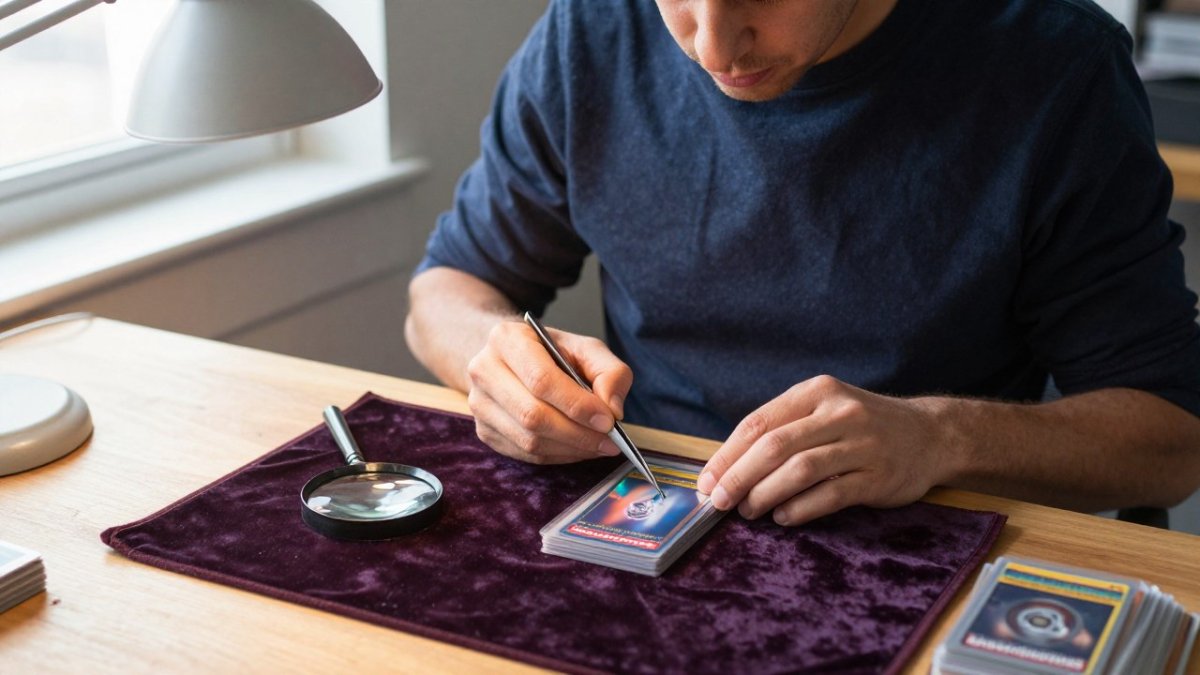
Counterfeits are the most common way new investors lose money, and modern fakes are good enough to fool a casual glance. The reliable checks are physical, not visual alone. The light test looks for the correct core layer and ink behavior under a strong light; the rip test (on a card you can afford to destroy) reveals whether the core is blue or black rather than the expected composition. For higher-value purchases, a jeweler's loupe and a known-genuine comparison card are standard tools. Most practitioners find that the risk concentrates in raw singles bought from unfamiliar sellers and in sealed vintage, where resealed boxes are a recurring problem. Our guide on how to verify trading card authenticity walks through physical inspection step by step.
Storage and preservation logistics
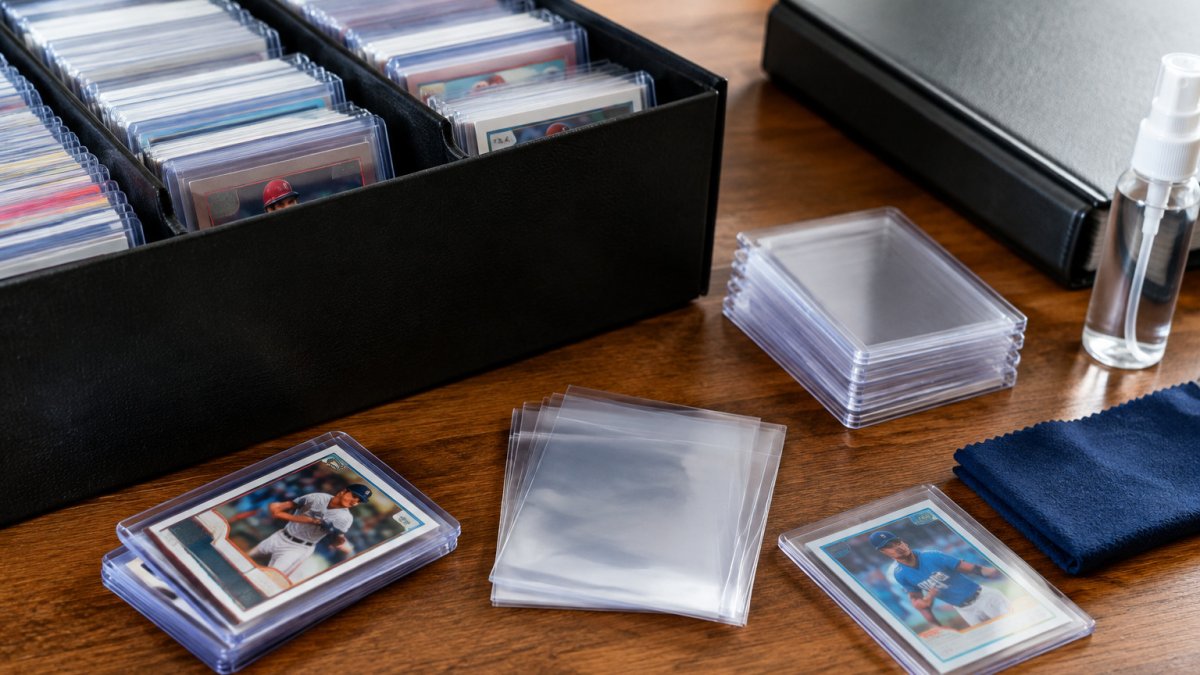
Heat, humidity, and ultraviolet light destroy cards quietly, and the damage is usually irreversible. Our guide to the best ways to store vintage trading cards covers sleeves, humidity control, and long-term protection.
Tax and legal treatment
This is the part of TCG investing that most guides skip, and it is the part that can cost you the most. This is general information, not tax advice, confirm your situation with a qualified tax professional before you build a position.
Market volatility and position risk
Prices spike on hype and settle on reality. The practical defense is position sizing: never put more into a single card or set than you could hold through a quiet year without needing to sell. Ban lists, rotation, and reprint announcements are the three events that move TCG prices fastest, and each game handles them differently. Diversifying across games, eras, and formats is the simplest way to reduce the chance that one announcement damages your whole portfolio.
Entry-Level vs. High-End Investment Tiers
Beginners should start with raw singles and mid-grade cards from sets they know. The entry barrier is low, mistakes are cheap, and you learn how the market behaves. High-end investors should focus on graded cards, sealed vintage, and low print runs, where the buyer pool is smaller but the price floor is firmer.
If you are ready for the high end, browse our graded cards to see what portfolio-grade pieces look like in person.
Building Your Portfolio with Dave's House of Cards
A sound portfolio spreads across games, eras, and formats, and it plans the exit before the entry. Most guides cover buying and stop there. The framework below treats a TCG position as an alternative asset with an allocation, a holding period, and a defined way out.
Allocation across games and tiers
A common pattern among experienced collectors is a core-and-satellite structure.
Entry-level vs. high-end tiers
Beginners should start with raw singles and mid-grade cards from sets they know. The entry barrier is low, mistakes are cheap, and you learn how the market behaves. High-end investors should focus on graded cards, sealed vintage, and low print runs, where the buyer pool is smaller but the price floor is firmer. Moving up a tier should follow demonstrated knowledge, not a hot tip.
Exit strategy planning
Watch out: selling a large position all at once can depress the price you receive, stagger sales across several listings or auctions rather than dumping everything in one week.
Where to start
We stock individual cards across all three games, ship free on standard orders over $7.50 and free USPS Ground Advantage over $25. Our guide to buying rare cards for investment portfolios goes deeper on position sizing, and our graded cards show what portfolio-grade pieces look like in person.
The hardest part of TCG investing is not picking a game, it is buying from a seller who verifies condition and authenticity before the card ships. Dave's House of Cards offers a curated selection of individual cards across Pokémon, Magic, and Yu-Gi-Oh!, with free standard shipping over $7.50 and free USPS Ground Advantage over $25. Get started with Dave's House of Cards and build a collection you can actually sell.
Frequently Asked Questions
What TCG is worth investing in right now?
Pokémon currently leads for broad market liquidity and collector demand, making it a strong starting point for many investors. Magic: The Gathering offers deep secondary market stability due to its older player base, while Yu-Gi-Oh! provides high-risk, high-reward opportunities with reprint volatility.
Is Pokémon or Magic: The Gathering better for collecting?
Pokémon is generally better for collectors focused on nostalgia and pop culture, with strong demand for first edition and graded cards. Magic: The Gathering appeals more to players and investors interested in competitive play and reserved list cards.
Which TCG has the strongest resale market?
Magic: The Gathering has the strongest resale market for high-end singles due to its established tournament scene and large adult player base. Pokémon has the highest volume of resale activity overall, especially for sealed product and graded cards.
How do I evaluate a trading card before buying it?
Check the card's condition first: look for whitening on edges, scratches on the holo surface, and centering. Verify authenticity by comparing print patterns and using a jeweler's loupe. Review recent sold listings on price tracking sites to understand market value, and confirm the print run and rarity.