 how-to
How to Verify Trading Card Authenticity
Table of Contents
- How to Verify Trading Card Authenticity: A Step-by-Step Inspection Guide
- What to Look for During Physical Inspection
- Common Signs of Counterfeit Trading Cards
- Using Light Tests and Magnification
- What Is Near Mint Card Condition and Why It Matters
- Trading Card Grading Services vs. DIY Authentication
- Digital Verification and Authentication Tools
- Counterfeit Detection for Specific Card Eras
- Frequently Asked Questions
Last Updated: September 27, 2026
How to Verify Trading Card Authenticity: A Step-by-Step Inspection Guide
Spotting a fake trading card takes practice, but it's easier than most collectors think. The problem isn't that counterfeits are perfect, it's that many buyers rush through their inspection and miss obvious red flags.
At Dave's House of Cards, we offer a curated selection of collectible trading cards for enthusiasts and players. Whether you're hunting for vintage Pokémon cards, Magic: The Gathering rares, or Yu-Gi-Oh! holos, the same core techniques apply. This guide walks you through how to verify trading card authenticity using methods you can apply right now.
The good news: you don't need expensive equipment or professional grading to spot most fakes. A magnifying glass, a UV light, and your eyes are enough to catch counterfeits before you spend money on them.
What to Look for During Physical Inspection
Start with your hands. Hold the card and feel it. Authentic trading cards have a specific weight and texture that fakes rarely match.
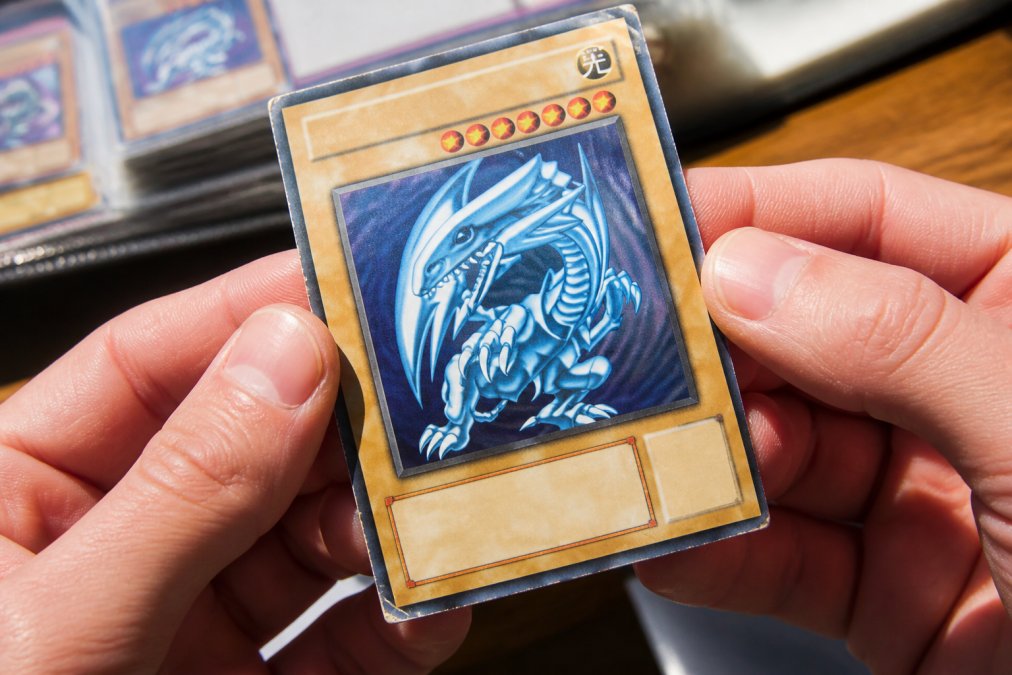
Real cards from major publishers use specific card stock. The surface should feel smooth but slightly textured. Counterfeits often feel too glossy or too thin. Run your thumb across the card. Does it feel right?
Check the card's centering next. Centering refers to how the printed image sits on the card. On authentic cards, the borders around the image should be roughly equal on all sides. Counterfeits often have off-center images because the printing process was rushed or imprecise.
Card Stock and Surface Texture
The card stock is your first clue. Authentic trading cards use premium cardboard with specific weight and composition. When you hold a real card, it feels substantial, not flimsy or plasticky.
Run your fingernail gently across the surface. Real cards have a consistent texture. Fakes often feel waxy or uneven. The surface should have a slight matte finish on most modern cards, though older cards and special editions may vary.
Press the card gently. A real card has slight flex but doesn't bend easily. Counterfeit stock is often too thin or too rigid. This matters because it affects how the card ages and how it feels in your hand.
Edge Wear and Centering
Edges tell a story. Look at all four edges closely. Real cards show consistent wear patterns if they've been handled. Counterfeits often have edges that look too perfect or too damaged in unnatural ways.
Centering is critical for grading and value. Measure the borders with your eye. The left and right borders should be roughly the same width. The top and bottom borders should match too. Even slight centering issues drop a card's grade significantly.
Bad centering doesn't always mean fake, older cards and certain print runs had centering issues. But extreme centering problems combined with other red flags suggest counterfeiting.
Printing Quality and Ink Saturation
Look at the colors. Real cards have vibrant, consistent ink saturation. The colors should be sharp and well-defined. Counterfeits often have dull, washed-out colors or colors that bleed slightly beyond their borders.
Check the text on the card. The font should be crisp and clean. Blurry text or inconsistent letter spacing is a major warning sign. Run a magnifying glass over the text. Real cards have precise printing. Fakes show pixelation or ink irregularities.
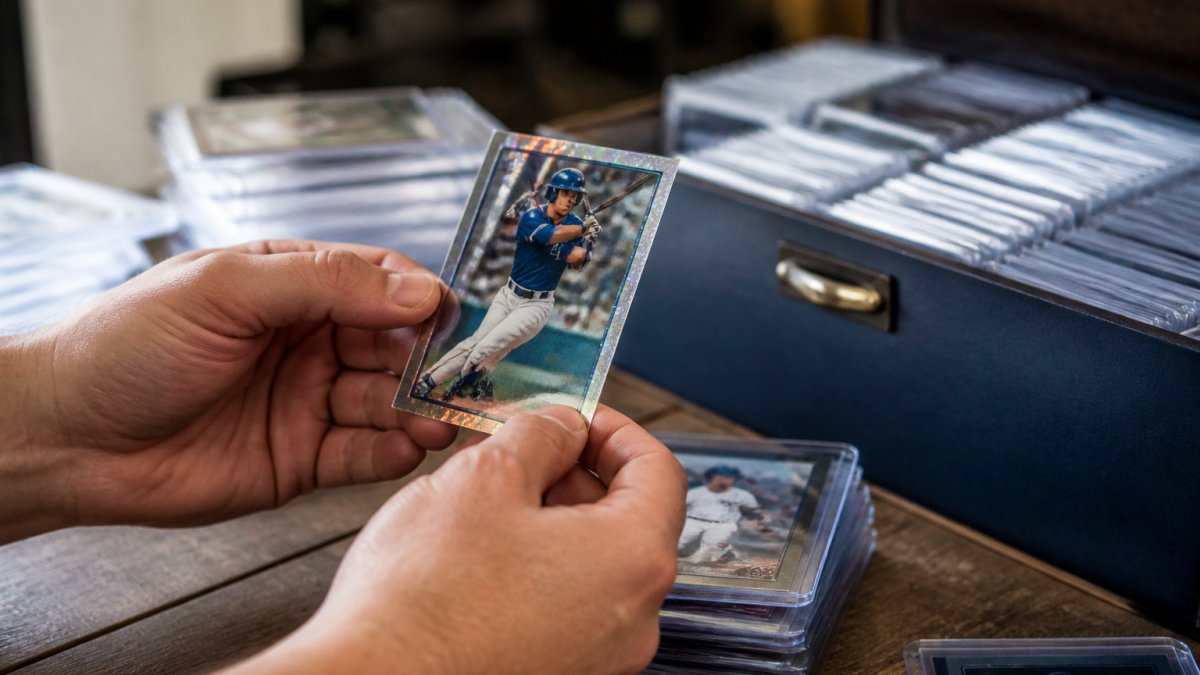
The holographic foil (if the card has one) should reflect light evenly. Fake holos often look flat or have uneven reflectivity. Tilt the card under light. Does the holo shine consistently across the entire surface?
Common Signs of Counterfeit Trading Cards
Counterfeits share predictable flaws. Once you know what to look for, you'll spot them quickly.
The most obvious sign is poor printing quality. Blurry images, misaligned colors, and inconsistent ink saturation are dead giveaways. Real cards use high-resolution printing. Fakes use cheaper processes that show visible defects.
Another common issue: the card feels wrong. Weight, thickness, and texture matter. If a card feels off in your hand, it probably is.
Rosette Pattern and Micro-Print Flaws
The rosette pattern is the tiny dot pattern you see when you magnify printed images. Real cards show a consistent, precise rosette pattern. Counterfeits often show irregular patterns or pixelation under magnification.
Micro-print, tiny text designed to be nearly invisible to the naked eye, is a security feature on many modern cards. Real cards have clear, legible micro-print under magnification. Counterfeits either lack it entirely or show blurry, distorted micro-print.
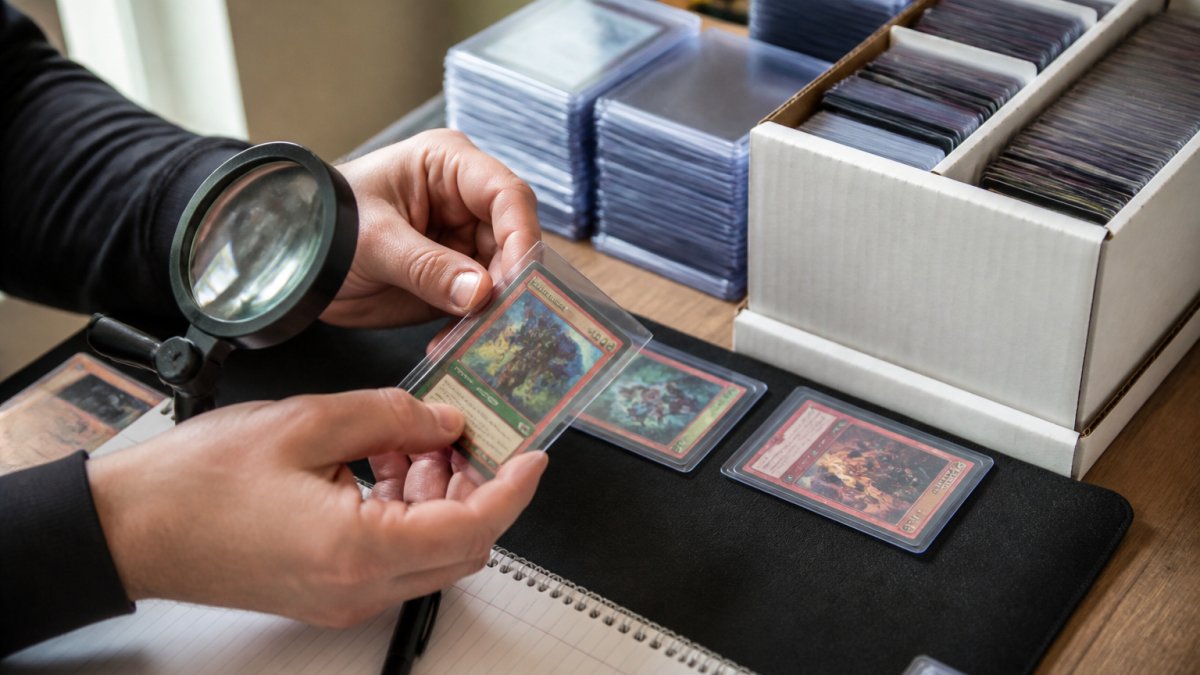
Use a magnifying glass to examine the rosette pattern and any micro-print. This is where many fakes fail. The printing process used for counterfeits can't reproduce these details accurately.
Red Flags in Online Listing Photos
Be skeptical of photos that hide details. If a seller's photos are blurry, angled awkwardly, or don't show the back of the card, ask why.
Authentic sellers provide clear, well-lit photos from multiple angles. They show the front, back, and edges. They photograph the card under consistent lighting so you can see the true colors.
Listing photos with poor lighting, heavy filters, or strategic angles often hide printing defects. If the seller won't provide clear photos, that's a red flag. Legitimate collectors and dealers have nothing to hide.
Look for inconsistencies between the listing photo and the card's actual condition description. If the photo shows a card in near-mint condition but the description says "lightly played," something doesn't add up.
Using Light Tests and Magnification
Light and magnification are your best DIY tools for verifying trading card authenticity.
The UV Light Test
A UV light reveals details invisible to the naked eye. Shine a UV light on the card and observe how it reacts.
Real cards respond consistently to UV light.
Magnification for Detailed Analysis
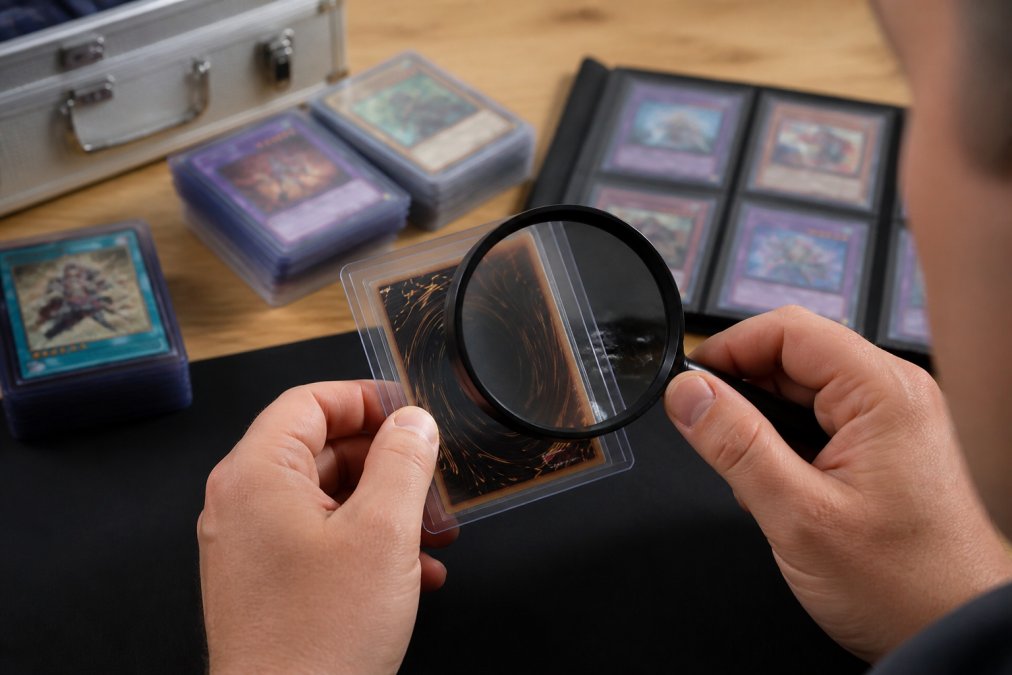
A 10x magnifying glass lets you inspect the card at a level that reveals manufacturing details. Examine the rosette pattern, ink saturation, and edge quality under magnification.
Look for:
- Consistent dot patterns in the rosette
- Sharp, clean edges on printed elements
- Even ink coverage with no bleeding or gaps
- Micro-print that's legible and precise
What Is Near Mint Card Condition and Why It Matters
Near mint condition means the card shows minimal signs of wear. It has been handled carefully but may show light play. The card's corners are sharp. The edges are clean. The surface is unmarked.
Trading Card Grading Services vs. DIY Authentication
Professional grading services examine cards under controlled conditions using standardized criteria. They assign a grade and encapsulate the card in a protective slab. This process adds credibility and protection.
When Professional Grading Makes Sense
Professional grading makes sense for high-value cards. If you're buying a card worth more than $500, professional authentication adds security. The graded card is easier to resell because the grade is verified.
Cost-Benefit Analysis for Collectors
Grading costs money. Professional services charge per card, plus shipping. For low-value cards, grading costs exceed the card's value.
Digital Verification and Authentication Tools
Some modern cards include digital verification features. QR codes link to authenticity databases. Holograms contain encoded information that can be verified with special readers.
Counterfeit Detection for Specific Card Eras
Different card eras have different vulnerabilities. Counterfeiting techniques have improved over time, so detection methods vary by era.
1990s and Early 2000s Cards
Older cards often have cruder counterfeits. The printing technology used in the 1990s and early 2000s is easier to replicate than modern printing, but fakes still show obvious flaws.
Look for:
- Inconsistent card stock (real cards from this era have specific weight and feel)
- Dull colors or color bleeding
- Blurry text or images
- Uneven holographic foil (if present)
Modern and Recent Releases
Modern cards use advanced printing and security features that are harder to counterfeit. But modern fakes are also more convincing.
Look for:
- Precise centering and printing quality
- Consistent holographic foil reflectivity
- Accurate micro-print and security features
- Proper card stock weight and texture
Frequently Asked Questions
What are the most obvious signs a trading card is counterfeit?
Counterfeits typically show poor printing quality with fuzzy or misaligned ink, uneven card stock texture, and weak color saturation. The rosette pattern, the tiny dots that form printed images, appears pixelated or irregular instead of precise. Edges are often rough or incorrectly cut. Check the holographic foil for dull finish or improper placement. Compare directly to a known authentic card of the same era; fakes rarely match the exact feel and weight. If the seller's listing photos show obvious printing artifacts or pixelation, that's a major red flag.
How do professional trading card grading services verify authenticity?
Professional grading services use multi-point inspection processes combining physical examination, magnification, UV light testing, and comparative analysis against known authentic specimens. They assess card stock composition, ink saturation patterns, and printing techniques specific to each card's era. Graded cards receive a tamper-evident protective casing with a digital certificate and assigned grade. This professional authentication can be a significant investment, making it most cost-effective for high-value cards or competitive tournament decks requiring certified near-mint condition.
What is near mint card condition and how does it affect authenticity verification?
Near mint condition means minimal wear: sharp corners, clean surface, perfect centering, and no visible creases or stains. While condition doesn't prove authenticity, counterfeiters struggle to replicate the precise manufacturing standards that create truly near-mint cards. Authentic near-mint cards show consistent edge wear patterns, proper light transmission through the card stock, and ink saturation that matches the card's original printing date. If a card claims near-mint status but shows printing flaws, uneven centering, or unusual surface texture, those are authentication red flags worth investigating further.
Can I authenticate a trading card without paying for professional grading?
Yes. Use a magnifying glass to inspect the rosette pattern for pixelation or irregularities, perform a UV light test to check for tamper-evident features, and compare the card's weight and thickness to a known authentic copy. Examine printing quality under bright light for artifacts or color bleeding. Check card stock texture, authentic cards feel consistent and smooth, while counterfeits often feel rough or waxy. For high-value cards or tournament use, professional grading provides certainty and protective casing that DIY methods cannot match, but basic inspection catches most obvious fakes.