 how-to
How to Safely Ship Trading Cards: Step-by-Step
Table of Contents
- Why Proper Packing Matters for Trading Cards
- Step 1: Choose Protective Materials and the Best Way to Package Trading Cards for Shipping
- Step 2: Secure the Card Without Causing Damage
- Step 3: Select Trading Card Shipping Supplies and Outer Packaging
- Step 4: How to Ship Cards to PSA for Grading
- Step 5: Choose a Carrier and Service With Trading Card Shipping Cost and Tracking
- Common Mistakes to Avoid When Shipping Trading Cards
- Documenting Card Condition and Handling Damage Claims
- Frequently Asked Questions
Last Updated: October 13, 2026
Why Proper Packing Matters for Trading Cards
Failing to safely ship trading cards costs money: a card worth hundreds arrives cracked, bent, or scratched, and the seller faces a return, refund, or negative review.
Protecting cards during shipment is straightforward. Cards fail in transit for three reasons: bending, surface damage, and moisture.
This guide walks you through how to safely ship trading cards, from sleeves to carrier selection.
Step 1: Choose Protective Materials and the Best Way to Package Trading Cards for Shipping
Start inside the package. The first layer of protection is the sleeve that touches the card itself.
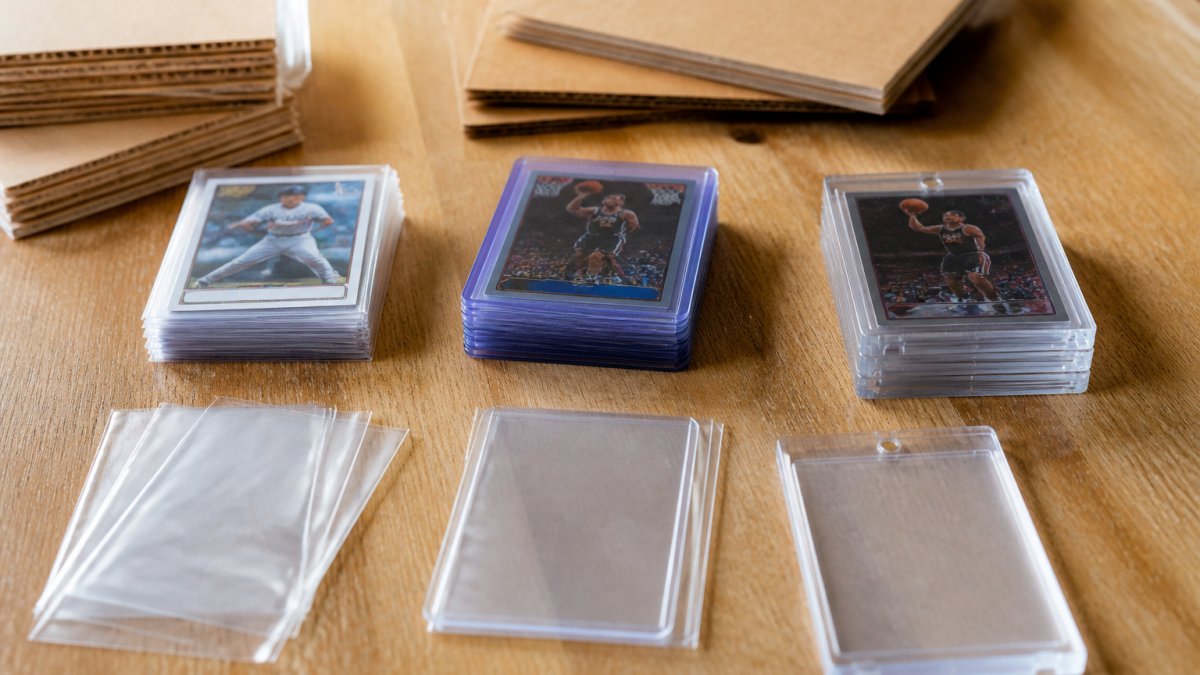
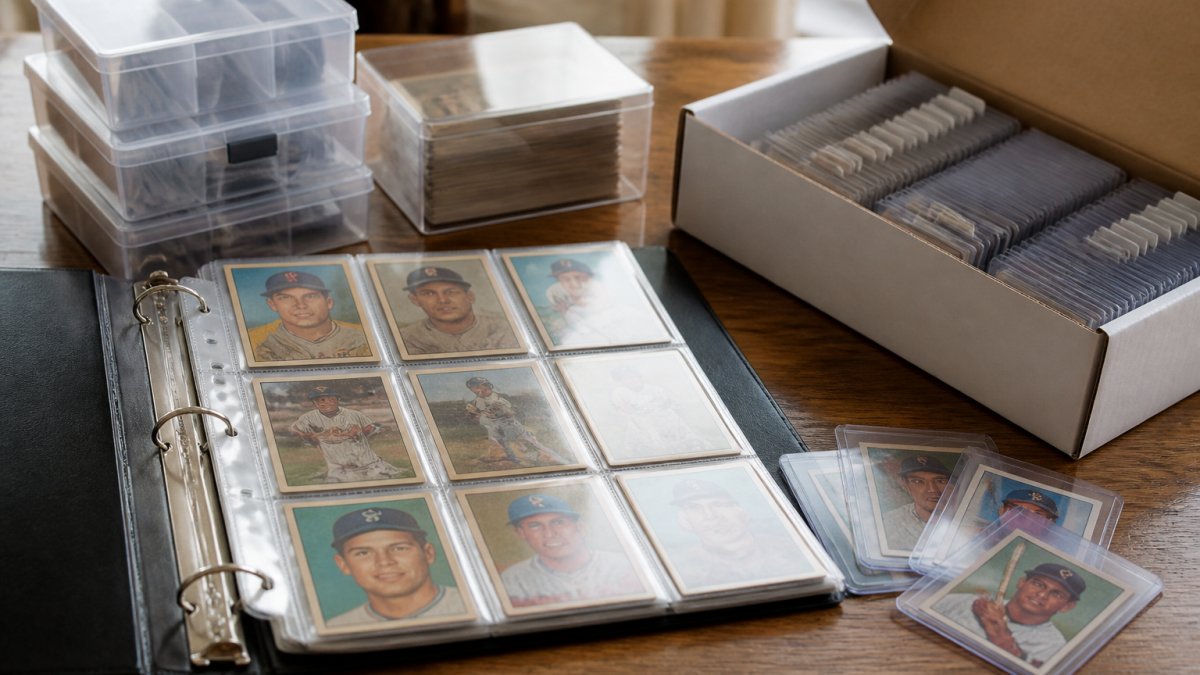
Penny sleeves and soft sleeves
Penny sleeves are thin plastic sleeves that fit most standard trading cards snugly. They cost pennies each and prevent dust and light scratches but offer no impact protection.
Soft sleeves are thicker plastic that protects against dust, minor scratches, and light bending, and are popular for everyday storage.
For shipping, sleeves alone are not enough, add rigid protection on top.
Top loaders and semi-rigid holders
Top loaders are rigid plastic sleeves the card slides into from the top.
Semi-rigid card savers are similar but more flexible, designed for graded or near-mint cards. They protect against bending and impact while keeping cards visible.
For single cards or small stacks, a top loader or semi-rigid holder is the minimum protection for any card worth more than a few dollars.
Cardboard sandwich for extra rigidity
A cardboard sandwich is two pieces of cardboard with the sleeved or top-loaded card between them, adding rigidity against crushing and bending.
Cut cardboard slightly larger than the card, sandwich the sleeved card between the pieces, and tape the sides, never the card itself. For high-value or graded cards it is essential.
Step 2: Secure the Card Without Causing Damage
Once the card is in a top loader or semi-rigid holder, secure it so it doesn't slide inside the package.
Use painter's tape or masking tape around the cardboard sandwich or holder, never directly on the card. Regular shipping tape damages the surface and leaves residue.
For multiple cards, place each in its own sleeve or top loader, stack carefully, and wrap the stack gently with painter's tape to prevent shifting, without pressure that bends or warps the card.
Step 3: Select Trading Card Shipping Supplies and Outer Packaging
Now build the outer layers, and understand how the package determines whether your mailpiece is accepted, how it is sorted, and what you pay.
Team bags for multiple cards
A team bag is a small, clear, resealable bag sized to hold a stack of sleeved or top-loaded cards. They are cheap and keep a multi-card order together in transit.
Use one when shipping several cards to one buyer: sleeve each card, stack, slide into the bag, press out excess air, and seal. It is an inner organizer, not outer protection, it still needs a rigid mailer or box.
Padded mailers vs. rigid mailers
Padded mailers (bubble- or foam-lined envelopes) cushion impact but flex. Sorting equipment or heavier mail on top can bend them, transferring that flex to the cards inside.
Rigid mailers are flat, corrugated cardboard mailers, often padded inside.
The trade-off is cost and thickness: rigid mailers weigh and measure more than a flat envelope, pushing them into a higher postage tier, the price of not having your card folded.
How thickness and rigidity affect acceptance and processing
- Thickness limits. Flat and letter classifications have maximum thickness thresholds. A top loader plus cardboard sandwich plus rigid mailer can push a piece into parcel pricing, or get it returned for insufficient postage. Measure the finished mailpiece.
- Rigidity and machinability. Automated sorting bends and pinches mail. A piece too rigid, thick, or oddly shaped may be flagged non-machinable, adding a surcharge and slowing delivery; a piece flexible enough to bend risks the card inside.
- The fix is intentional rigidity. Build the mailpiece stiff enough to resist bending but flat and uniform enough to process cleanly. A cardboard sandwich inside a rigid mailer, with no bulges, is the shape sorting equipment handles best.
Shipping boxes and double boxing for high-value cards
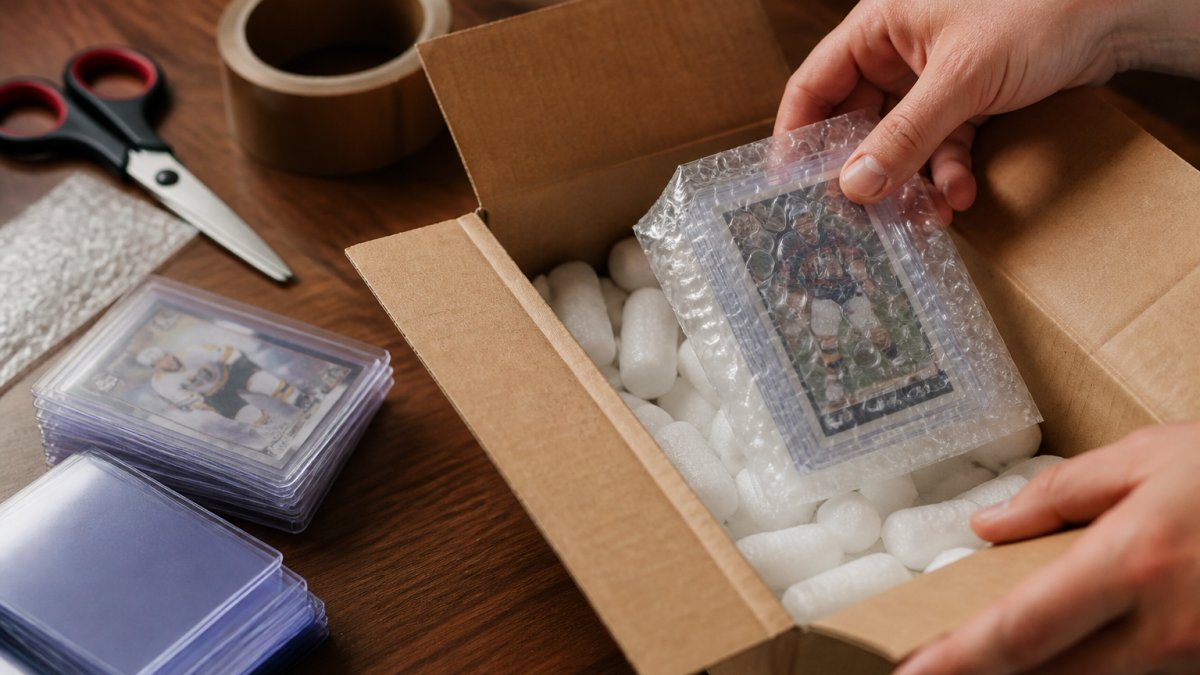
For cards worth roughly $100 and up, or graded slabs, use a shipping box. Place the cardboard-sandwiched card in a small box surrounded by bubble wrap, foam, or crumpled paper so it cannot shift.
Double boxing puts the small box inside a larger one with padding between them. If the outer box is crushed, the inner box absorbs the impact.
Matching the package to the shipment
| Shipment | Inner protection | Outer package |
|---|---|---|
| Single raw card, low value | Penny sleeve + top loader | Rigid mailer or cardboard sandwich in a flat |
| Single raw card, high value | Sleeve + top loader + cardboard sandwich | Rigid mailer, or small box with padding |
| Small lot (5-20 cards) | Individual sleeves/holders + team bag | Rigid mailer or small box |
| Graded slab | Slab + bubble wrap | Small box, padded; double box for high value |
| Bulk order | Sleeved stacks, banded | Box with padding, double boxed |
Step 4: How to Ship Cards to PSA for Grading
Shipping cards to grading companies like PSA requires packaging that meets their standards.
PSA and other graders require cards to arrive in near-perfect condition.
Pack the sandwich in the center of the box with at least one inch of padding on all sides.
Include a packing slip listing the cards, condition estimates, and special notes.
Use a tracked, insured service and include a return label so PSA can ship graded cards back safely.
Step 5: Choose a Carrier and Service With Trading Card Shipping Cost and Tracking
The carrier and service level matter as much as the packaging. The harder question is which combination of tracking, delivery confirmation, insurance, and signature fits a given shipment, overpaying for a $12 card and under-protecting a $400 card are both mistakes.
The four protections, and what each one actually does
- Tracking shows the package moving through the network. It does not prove the buyer received it.
- Delivery confirmation records that the carrier marked the item delivered, the baseline proof for most disputes.
- Insurance / declared value reimburses loss or damage up to the declared amount, but you must document the card's value and condition to collect.
Match these to risk, not to habit.
A decision guide by shipment value
| Shipment value | Recommended service | Tracking | Insurance | Signature |
|---|---|---|---|---|
| Under $20 (single raw card) | First-Class Mail letter or flat, rigid mailer | Optional | No | No |
| $20-$50 | Ground service with tracking | Yes | Optional | No |
| $50-$200 | Tracked service, insured to full value | Yes | Yes | Recommended |
| $200-$1,000 | Tracked, insured, signature required | Yes | Yes | Yes |
| $1,000+ or graded slab | Premium tracked service, full declared value, signature | Yes | Yes | Yes |
Treat the dollar bands as starting points. A $30 card that completes a buyer's set carries more relationship risk than a $30 common, so when in doubt, add the next protection up.
Why "just add tracking" is not enough
Tracking, delivery confirmation, and insurance are not the same thing. A seller who ships a $300 card with tracking, sees "delivered," and loses a chargeback because the buyer claims the envelope was empty learns that tracking alone does not win the dispute. Signature confirmation plus pre-shipment photos plus declared value does.
Insurance mechanics worth knowing
- Declare the real value. Under-declaring caps your recovery; over-declaring a card you cannot document invites a denied claim.
- Keep the receipt. Carriers ask for proof of mailing, declared value, and often photos of the packaging and item.
- File promptly. Most carriers impose a claim window measured in days from delivery or mailing, so do not wait for the buyer to "think about it."
- Packaging affects claims. A claim can be denied if the carrier finds the packaging inadequate, your rigid mailer or box is also your insurance evidence.
Service-level trade-offs
- Ground / standard tracked services are the workhorse for raw singles and small lots. Slower, cheapest, tracking included. Fine for low-value cards where speed does not matter.
- Expedited services buy speed and often higher default insurance, worth it when the buyer paid for fast delivery or the card is time-sensitive.
- Premium overnight services are rarely justified on cost alone. Use them when value or buyer expectation demands it, not by default.
- Private carriers can be stronger for high-value, signature-required shipments and negotiated business rates. Compare the all-in cost, base rate plus insurance plus signature, against the postal option.
Free shipping and the cost balance
If you offer free shipping, you absorb the carrier cost, so the value bands above become your margin guardrail. Set a free-shipping threshold high enough that the average order can carry tracked, insured shipping without erasing profit.
Always include tracking on anything a buyer would grieve over, and never ship a valuable card without a way to prove it arrived.
Common Mistakes to Avoid When Shipping Trading Cards
Mistake 2: Packing cards loosely. Cards shift in transit and get bent or creased.
Mistake 3: Using regular shipping tape on the card. It leaves residue and damages the surface.
Mistake 4: Shipping high-value cards in a padded mailer. Padded mailers bend.
Mistake 5: Not using tracking or insurance. Tracking proves delivery; insurance covers loss or damage.
Mistake 6: Overstuffing the package. Too much padding creates pressure that bends cards.
Documenting Card Condition and Handling Damage Claims
If a buyer claims damage, compare it to your photos.
File a damage claim with the carrier within 30 days of delivery.
For high-value cards, require signature confirmation on delivery.
Shipping trading cards safely protects your reputation and your buyer's investment. Start with the right sleeves and holders.
When you need to source cards for your collection or business, Dave's House of Cards makes it easy.
Frequently Asked Questions
What is the safest way to ship trading cards?
The safest way to safely ship trading cards combines multiple layers of protection: start with a penny sleeve or soft sleeve to prevent surface scratches, place the card in a top loader or semi-rigid holder for rigidity, add cardboard on both sides as a cardboard sandwich, and seal with tape. Use a padded mailer or rigid mailer for outer packaging, and choose tracked shipping with insurance for valuable cards. This multi-layer approach prevents bending, corner damage, and moisture damage during transit.
How do you package trading cards so they don't bend?
Prevent bending by creating a rigid structure around the card. Use a top loader or semi-rigid holder to hold the card flat and stiff, then add cardboard pieces on both sides (a cardboard sandwich) to distribute impact forces evenly. Place this assembly inside a padded mailer or rigid mailer, and avoid flexible envelopes. For high-value cards or multiple cards, use double boxing with bubble wrap between the inner and outer boxes. Never fold cards or use standard envelopes without rigidity.
How much does it cost to safely ship trading cards with tracking?
Trading card shipping cost with tracking depends on shipment weight, distance, and carrier choice. Costs increase with package weight (multiple cards or double boxing) and insurance for valuable cards. Check current rates directly with carriers, as prices fluctuate with service levels and distance.
Should you insure a valuable trading card before shipping?
Yes, insure valuable trading cards, typically any card worth over $20-$30. Most carriers offer declared value or full insurance options. USPS Priority Mail includes up to $100 in free coverage; higher values require paid insurance. UPS and FedEx offer similar options. Insurance protects against loss and damage claims. Document the card's condition with photos before shipping and keep the insurance receipt and tracking number. If the card arrives damaged, file a claim immediately with photos and the carrier's documentation to resolve the issue.