 how-to
Best Ways to Store Vintage Trading Cards in 2026
Table of Contents
- Why Vintage Cards Need Different Storage Than Modern Cards
- Best Protective Sleeves for Cards: First Line of Defense
- Trading Card Binder vs Box Storage: Which Is Right for You?
- Trading Card Storage Temperature and Humidity: Getting the Conditions Right
- How to Store Trading Cards Long Term: Step-by-Step
- Handling, Cleaning, and Pre-Storage Prep
- Disaster and Pest Protection for Your Collection
- Conclusion
- Frequently Asked Questions
Last Updated: October 7, 2026
Why Vintage Cards Need Different Storage Than Modern Cards
Vintage trading cards were printed on paper stock that ages differently than modern cards, which changes everything about the best ways to store vintage trading cards.
Old cardboard yellows, dries out, and curls, and the gloss coating on a 1950s baseball card can crack if it dries too fast.
Vintage cards are also more valuable, so a small mistake that would barely matter on a modern common card can wipe out real money on a 1960s rookie card.
Best Protective Sleeves for Cards: First Line of Defense
Sleeves are the first layer of protection, and on vintage cards the fit matters as much as the material.
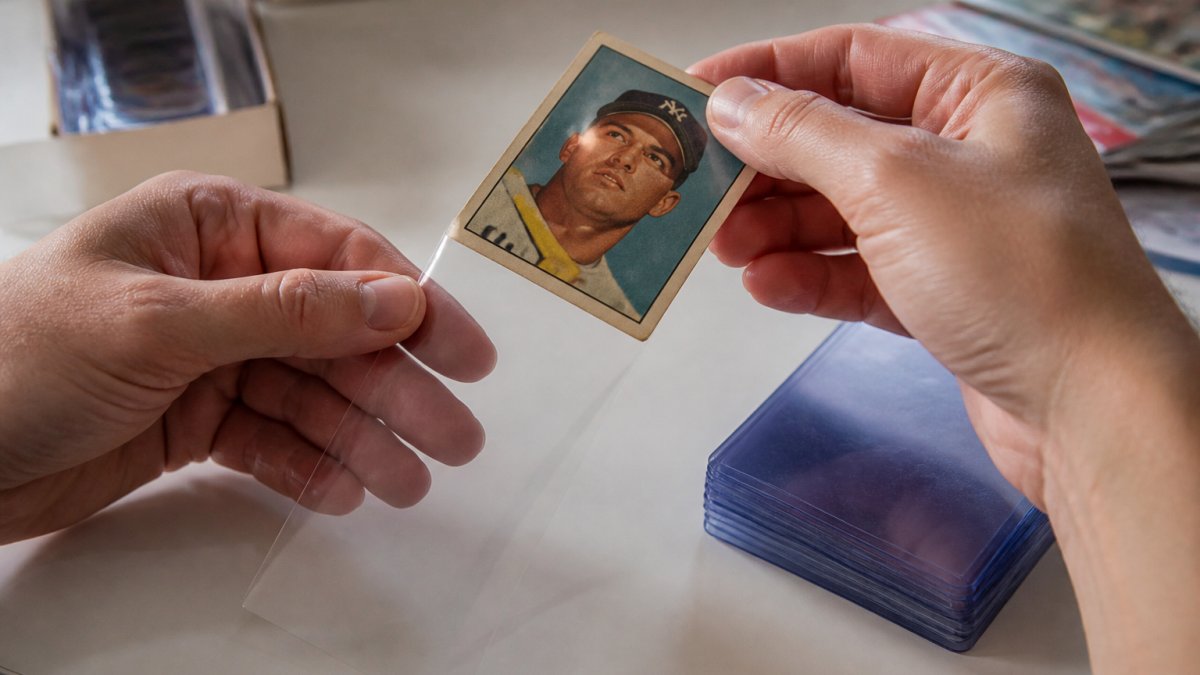
Vintage cards are not all the same size. Measure before buying sleeves in bulk: a standard penny sleeve can leave a tobacco card swimming, and a snug modern sleeve can pinch a thicker vintage card.
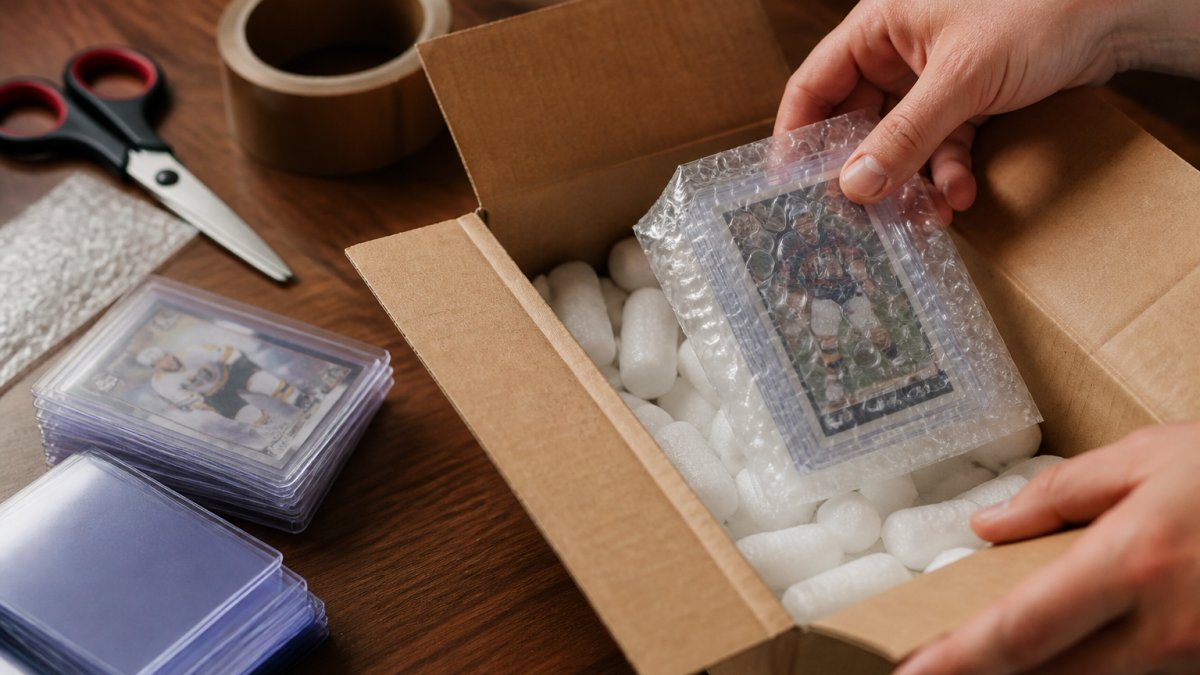
For most vintage cards, a penny sleeve plus a rigid holder is the standard combo. The sleeve keeps dust and fingerprints off the surface.
Card Shellz publishes a storage guide recommending a layered approach: sleeve first, then a toploader for anything valuable.
Penny Sleeves vs. Rigid Top Loaders
Penny sleeves are soft, thin plastic sleeves. They cost very little and protect against handling and dust. They do not stop bending.
Rigid holders (top loaders) are stiff plastic cases. They stop bending and pressure damage.
| Feature | Penny Sleeves | Rigid Top Loaders |
|---|---|---|
| Main job | Stop dust and fingerprints | Stop bending and pressure |
| Protection level | Light | Strong |
| Best for | Bulk and mid-value cards | High-value vintage cards |
| Adds bulk | No | Yes |
A common mistake is putting a raw vintage card straight into a binder page with no sleeve. The page plastic can scratch the surface over years of flipping.
Archival Materials and Compatibility
Archival storage means materials that won't break down or react with your cards over time.
Look for sleeves and holders labeled acid-free and PVC-free. PVC causes the most trouble, leaving a greasy film and staining card surfaces.
Not every "soft" sleeve is safe. If it smells like a shower curtain, don't use it on vintage cards.
Here is how to tell the difference before you buy:
- PVC (polyvinyl chloride): Often the clearest and most flexible, and the most damaging over time. It off-gasses and can leave a waxy film. If a product does not say PVC-free, assume it may contain PVC.
- Polyethylene (PE): Common in basic penny sleeves. Generally safe, but thinner and less clear than other options.
- Polypropylene (PP): The usual material for quality sleeves and binder pages. Rigid, clear, and stable. Look for "acid-free polypropylene" on the label.
A quick field test: if a sleeve has a strong plastic smell, feels tacky, or yellows within a year, it is not archival.
Matching the Holder to the Card's Condition
Not every vintage card should get the same treatment:
- Bulk commons in low grade: Acid-free penny sleeve, stored upright in a box. Skip the toploader.
- Mid-value raw cards: Penny sleeve inside a toploader, or a semi-rigid card saver for cards you may submit for grading.
- High-value raw cards: Penny sleeve inside a toploader, then into a team bag or sealed box. Consider a one-touch magnetic holder only if the card is flat and not curled.
Buy a small test pack of any new sleeve brand and check the fit on a low-value vintage card before you commit a whole collection to it. Fit and material both matter, and brands vary more than the labels suggest.
Trading Card Binder vs Box Storage: Which Is Right for You?
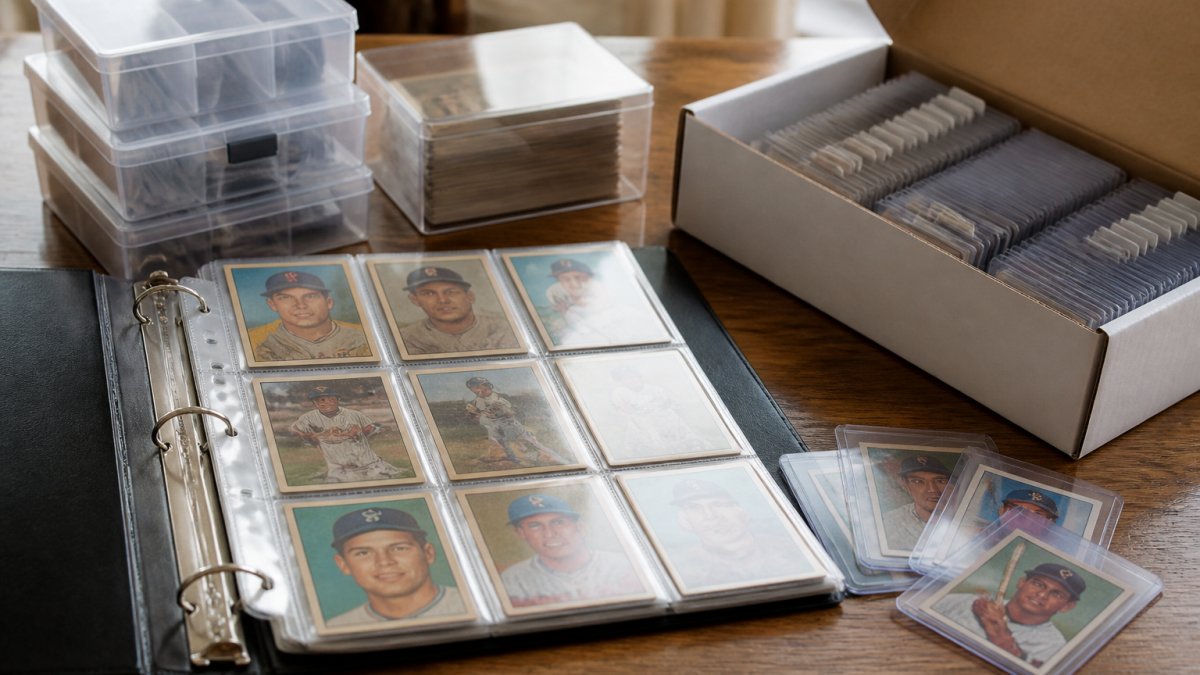
The trading card binder vs box storage choice comes down to how often you handle the cards and how much you care about display. Binders are for looking. Boxes are for keeping.
When to Use Binders
Binders work well when you want to flip through a set or show off a collection. Use one with acid-free pages and side-loading pockets. Side-loading keeps cards from sliding out.
Skip binders for your most valuable vintage cards. Every time you turn a page, you risk a bent corner. A binder is a display tool, not a vault.
When to Use Boxes
Boxes win for long-term storage and large collections. Tistaminis covers storage cases and deck boxes in its guide, and the same logic applies: a closed box blocks light and dust.
Use boxes that hold cards upright, not stacked flat, to keep weight off the card faces. Plastic boxes beat cardboard for anything you plan to keep for years.
Trading Card Storage Temperature and Humidity: Getting the Conditions Right
Trading card storage temperature and humidity should stay in a narrow range: about 60°F to 70°F and 30% to 50% relative humidity. Stable conditions matter more than hitting an exact number.
Paper expands and shrinks as moisture changes, so swinging humidity can warp, curl, or mold vintage cards. Heat speeds up the chemical breakdown that yellows old cardboard.
Target Ranges and Monitoring
Aim for a cool, dry, dark spot. Check it with a cheap hygrometer, the same tool people use for cigars. If the reading drifts outside 30% to 50%, adjust the room, not the cards.
Keep the collection off the ground. Water from a leak or a spill finds the floor first.
A hygrometer is only useful if you read it. A practical routine:
- Daily in summer and winter: Glance at the reading when you pass the storage area. Seasonal swings are when problems start.
- Weekly: Log the high and low for the week. A cheap digital hygrometer with a min/max memory does this for you.
- Monthly: Do a hands-on inspection. Open a box, check a few sleeves for condensation, and look for any sign of curl or mold.
What to Avoid: Attics, Basements, Garages
Attics, basements, and garages are the three worst places for a card collection, each failing a different test.
- Attics: heat spikes in summer, and heat ages paper fast
- Basements: damp air and flood risk
- Garages: temperature swings plus exhaust fumes and pests
A closet in a climate-controlled room beats all three.
Run a hygrometer in your storage spot for a week before you commit. If humidity swings more than 10 points, pick a different room.
Seasonal Strategy
Conditions change with the calendar, and so should your tactics.
- Summer: Humidity climbs. Run a dehumidifier if the reading creeps above 50%, and keep the collection away from exterior walls, which sweat in humid air.
- Winter: Indoor air gets dry. If humidity drops below 30%, a room humidifier can help, but keep it away from the cards and avoid heating vents or radiators.
- Spring and fall: These are the swing seasons. Watch for rapid changes and re-check the hygrometer more often.
Monitoring and Maintenance
Storage is not a set-and-forget job. Vintage cards and their holders change over years, and periodic checks catch problems while they are still fixable.
- Check for mold: Musty smell, gray or black speckling, or a fuzzy surface. Mold stains paper permanently, so act at the first sign.
- Check for warping: Lay a card on a flat surface. If it rocks or shows a curve, the storage conditions are drifting.
- Check the holders: Sleeves and toploaders can yellow, cloud, or become brittle. Replace any holder that looks discolored or feels stiff.
- Check for pests: Look for tiny holes, frass (fine powder), or shed wings. Silverfish and rodents are the usual culprits.
A simple rule: inspect high-value cards every three months and the rest twice a year. Photograph anything that looks off so you can compare next time.
Condition-Based Storage Decisions
How you store a card should match its condition and value.
- Raw, high-grade vintage: Stable cool, dry, dark conditions. Sleeve and toploader. Minimal handling.
- Raw, mid-grade vintage: Same conditions, but you can use a binder for display if you accept the handling risk.
- Raw, low-grade or fragile: Do not try to flatten, clean, or press a curled or brittle card. Support it as-is and keep it out of the handling rotation.
- Graded vintage: Store slabs upright, out of sunlight, and away from heat. The slab protects the card, but the label and plastic can still discolor in UV light.
Storing cards in a damp basement can lead to mold within a single season. Mold stains paper permanently and cannot be reversed.
How to Store Trading Cards Long Term: Step-by-Step
Here's the exact process we'd use for a vintage collection you plan to keep for years.
- Sort by value and condition. Split cards into high-value, mid-value, and bulk piles.
- Sleeve every card. Use acid-free penny sleeves as the base layer.
- Add rigid holders to high-value cards. Top loaders for your best vintage pieces.
- Choose your container. Binders for display sets, boxes for storage.
- Store cards upright. Never stack heavy boxes flat on top of each other.
- Pick a cool, dry, dark spot. Off the ground, away from windows.
- Monitor conditions. Check your hygrometer monthly.
- Document the collection. Photograph cards and keep a simple list.
Step 8 pays off later. If you ever file an insurance claim, a dated photo list is worth more than your memory.
Handling, Cleaning, and Pre-Storage Prep
Clean, dry hands are the cheapest protection you own.
Wash and dry your hands before every session. Skip lotion. Skip snacks. Handle cards by the edges, never the face.
For light surface dust, use a soft lens cloth and gentle strokes.
Leave deep cleaning to a professional; a bad home cleaning job can turn a valuable card into a damaged one.
The best cleaning routine for vintage cards is prevention: clean hands, edge handling, and a sleeve the moment a card leaves its box.
Disaster and Pest Protection for Your Collection
Water, fire, and pests destroy more collections than handling ever does.
Keep boxes off the floor and away from pipes and windows.
For pests, silverfish and rodents are the main threats. They chew paper and leave waste behind.
For a collection with real value, a fireproof safe or bank safe deposit box is worth considering.
Document everything. Photograph each high-value card, note its condition, and store the list somewhere outside your home.
Conclusion
Protecting a vintage collection takes a little planning, but the payoff is real. Sleeve your cards, store them upright in a cool, dry, dark spot, and keep your hands clean.
When you're ready to add to your collection, we can help. Dave's House of Cards offers individual vintage and modern cards, with free standard shipping over $7.50 and free USPS Ground Advantage shipping over $25.
Frequently Asked Questions
What is the best way to store trading cards for long-term storage?
For long-term storage, start by sleeving each card in a penny sleeve, then place valuable cards in rigid top loaders. Store them upright in acid-free boxes or binders, away from direct sunlight. Keep the environment between 60°F and 70°F with 30% to 50% relative humidity. Avoid attics, basements, and garages where temperature and humidity fluctuate. Check your collection every few months for signs of moisture or pests.
Should vintage trading cards be stored in sleeves?
Yes, vintage cards should always be stored in sleeves. Use penny sleeves for basic protection, and for more valuable cards, use rigid holders like top loaders. Make sure the sleeves are made from archival-safe materials like polyethylene or polypropylene to prevent chemical damage. This two-layer approach protects against scratches, bending, and handling wear while keeping the card visible.
What temperature and humidity are best for storing trading cards?
The ideal range is 60°F to 70°F with 30% to 50% relative humidity. This prevents warping, mold, and adhesive breakdown. Use a hygrometer to monitor conditions, and avoid placing cards near heating vents, windows, or damp walls. Basements and attics often exceed these ranges, so choose a cool, dry interior room. Consistent conditions matter as much as the specific numbers.
How do you store valuable vintage cards without damaging them?
Handle valuable vintage cards with clean, dry hands and hold them by the edges. Sleeve them immediately, then place them in rigid top loaders or archival-grade holders. Store them upright in a cool, dark, dry place. Consider a fireproof safe for high-value cards. Avoid stacking heavy items on top, and never use rubber bands or tape directly on cards. Regular inspections help catch any issues early.