 blog
Is Buying Vintage Cards Online Worth It?
Last Updated: November 8, 2026
Quick Summary
Buying vintage cards online can be worth it, but only when scarcity, condition, and collector demand justify the price. Check sold listings and seller feedback first, because old does not automatically mean valuable. Compare total landed costs, including shipping, tax, and grading fees, before you pay.
- Many 1990s print runs were large, so plenty of vintage cards are common and worth very little.
- Build a landed-cost estimate: price plus buyer's premium, shipping, sales tax, and grading.
- Vet sellers by feedback history, negative reviews about condition accuracy, and a stated return policy.
- Ask for straight-on front and back photos plus close-ups of all four corners and both edges.
- Grade only when the expected grade premium comfortably exceeds the grading fee and shipping both ways.
Table of Contents
- Are Vintage Trading Cards Worth Anything?
- Best Places to Buy Rare Cards Online
- How to Authenticate Vintage Trading Cards Before You Pay
- Vintage Cards Online vs. Card Shows: Which Gets You the Better Deal?
- Grading, Condition, and What Listing Photos Hide
- The Real Cost of Buying Vintage Cards Online
- Building Your Vintage Card Order at Dave's House of Cards
- Frequently Asked Questions
Are Vintage Trading Cards Worth Anything?
Yes, buying vintage cards can be worth the money, but the "worth" depends heavily on scarcity, condition, and collector demand. A 1990s-era card pulled from a junk-era box may sell for very little, while a scarce rookie card from the same decade can command serious money.
Vintage trading cards are collectible cards from earlier print runs, typically from the 1990s and before, whose value comes from scarcity, condition, and nostalgic demand rather than current tournament play.
What Drives Vintage Card Value
Four factors decide what a vintage card is actually worth:
- Scarcity: Many print runs from the 1990s were large, so many cards from that era are common. Cards from earlier decades or limited promos are genuinely rare.
- Condition: A near-mint copy can be worth many times more than the same card with creases or edge wear.
- Player or character demand: Rookie cards and iconic characters carry a premium because collector interest is concentrated there.
The single biggest mistake new buyers make is assuming "old" equals "valuable." It doesn't. Plenty of vintage cards are worth very little, and the junk era flooded the market with millions of copies. Check sold listings before you assume a card is a grail.
Best Places to Buy Rare Cards Online
The best places to buy rare cards online fall into four buckets: large general marketplaces, specialist card shops, auction platforms, and peer-to-peer collector communities. Each one trades off differently on price, protection, and how much work you do yourself. The table below is a starting map, but the details underneath it are what actually decide whether a purchase is worth it.
| Where You Buy | Price Level | Buyer Protection | Best For |
|---|---|---|---|
| Large marketplace | Often lowest | Varies by seller; platform dispute process | Bargain hunters willing to vet sellers |
| Specialist card shop | Mid to fair | Clear listings, real photos, stated return window | Buyers who want specific cards fast |
| Auction site | Unpredictable | Platform-dependent; buyer's premium may apply | Rare grails with no fixed market |
| Peer-to-peer community | Negotiable | Weakest; usually no formal recourse | Experienced buyers who know the seller |
What Each Channel Actually Costs You
The listing price is only the first line of the receipt. On auction platforms, a buyer's premium may be added on top of the hammer price. Shipping and taxes can be added separately from the listing price, so compare totals before you buy.
A practical way to compare channels is to build a landed-cost estimate before you bid or buy: hammer or list price, plus buyer's premium if any, plus shipping, plus sales tax, plus the cost of grading if you plan to submit a raw card.
How to Vet a Seller Before You Pay
Seller history is the closest thing online buying has to an in-person inspection. Look for a feedback record that spans more than a few months, read the negative reviews specifically for language about condition accuracy and packaging, and check whether the seller has a stated return policy rather than a vague "contact me" note.
Watch out: a seller who lists the same high-demand card repeatedly with identical photos across multiple listings is often using catalog images rather than photographing the actual card, which means you cannot judge centering, corners, or surface from the listing at all.
Marketplace vs. Specialist Seller: What to Expect
Marketplaces give you volume and price comparison, but you're buying from thousands of independent sellers with uneven photo quality and return policies. Specialist sellers can show you the actual card and describe its condition in detail, so it helps to ask questions before you pay.
A common mistake is chasing the lowest listed price on a marketplace without checking the seller's feedback and return terms. A card that arrives creased and can't be returned is never a deal.
When a Card Show Beats Every Online Channel
For a big-ticket card where condition is everything, a card show is still the only channel that lets you hold the card, check centering under good light, and negotiate face to face before money changes hands. Online buying wins on selection and convenience, but it cannot replicate that inspection. Many collectors use both: they hunt online for specific cards and inspect in person when the purchase is large enough that a condition surprise would matter.
How to Authenticate Vintage Trading Cards Before You Pay
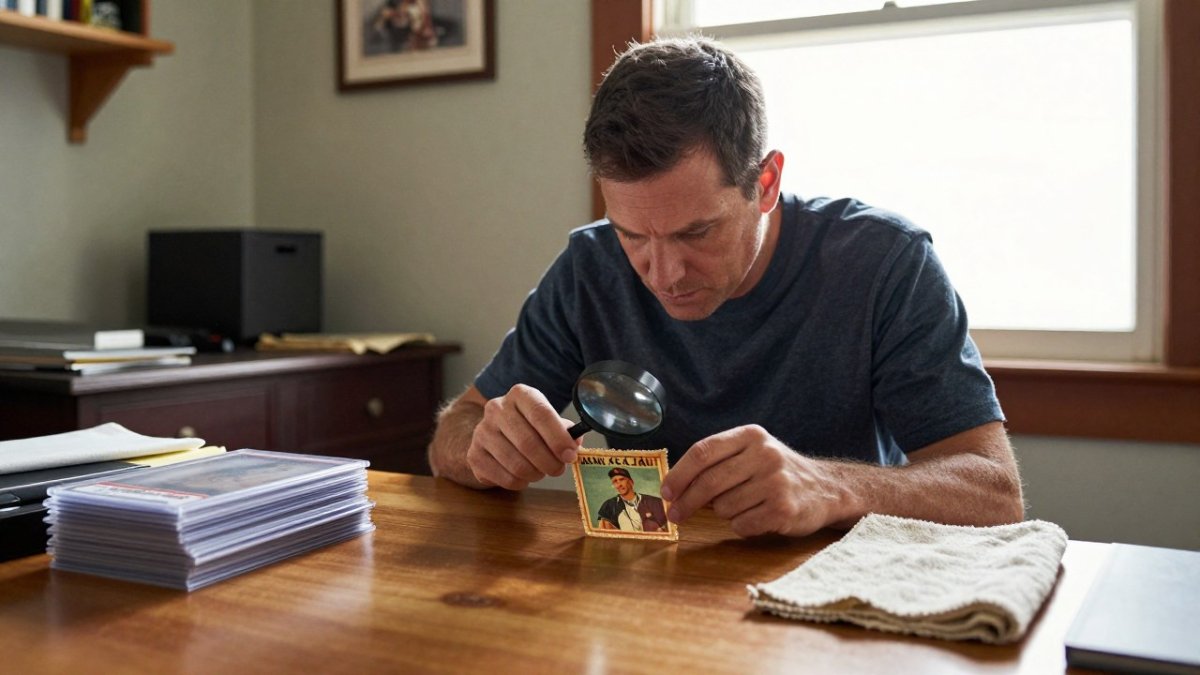
Authentication is the step most buyers skip, and it's the one that protects your money. Card authentication is the process of confirming a card is a genuine original print rather than a counterfeit or a reprint, by checking print quality, card stock, and known printing marks. Here's the checklist we'd use before paying for any vintage card online: Authentication also depends on judging condition accurately, since wear or restoration can affect a card’s value as much as its authenticity, a concern shared with Snellsantiquesstore.
- Compare the card back to a known genuine example from the same set
- Check print dot pattern and color registration under magnification
- Feel for correct card stock thickness and finish
Counterfeits can appear on high-demand characters, so extra caution is worthwhile there. If a price looks far below the going rate for a graded copy, treat that as a warning, not a win.
Vintage Cards Online vs. Card Shows: Which Gets You the Better Deal?
Online buying wins on selection and convenience; card shows win on inspection. At a show you can hold the card, check centering under good light, and negotiate face to face.
For a specific card you've been hunting, online is usually the only realistic route. For a big-ticket purchase where condition is everything, a show lets you verify before money changes hands.
Grading, Condition, and What Listing Photos Hide
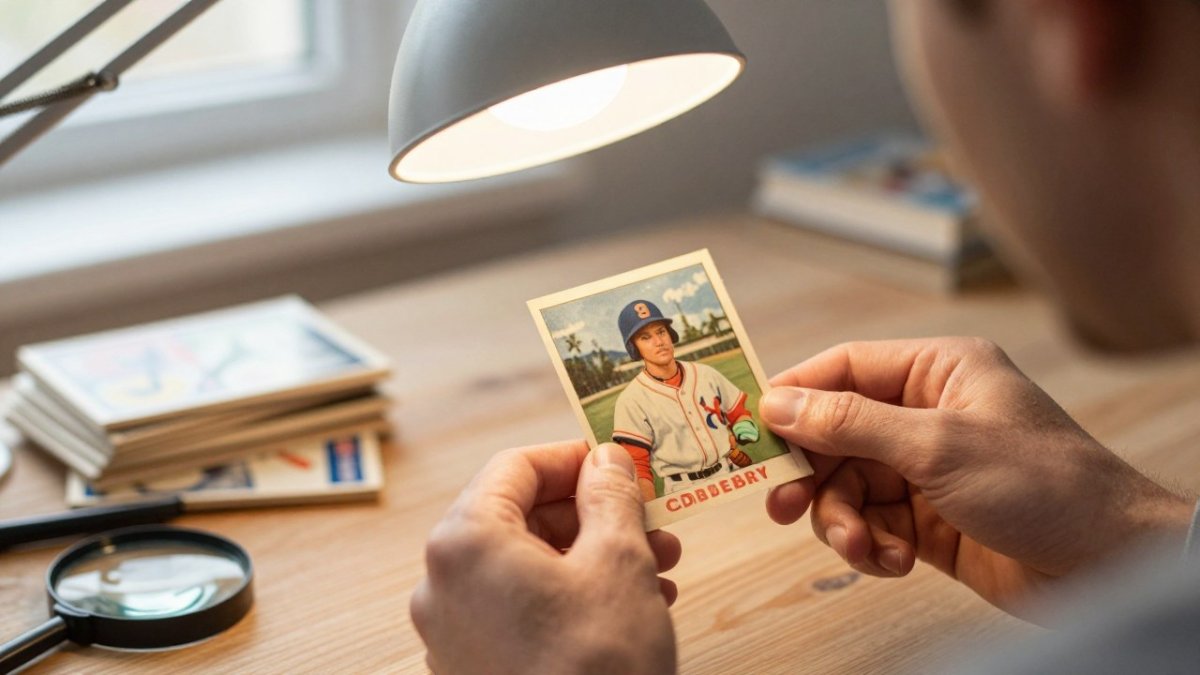
Listing photos hide more than they show. Glare hides surface scratches, soft lighting hides edge wear, and tight crops hide centering problems. Card grading is the process of a professional service assigning a numeric condition score to a card, which standardizes value and makes resale easier. Graded cards can reduce some of that guesswork, but grading adds cost up front.
How to Read a Listing Photo Like a Buyer
Sellers often photograph the most flattering angle of a card. A straight-on shot under diffuse light is the only view that lets you judge centering, and most listings lead with an angled shot that flatters the surface.
When you do get photos, check them in a fixed order. First, centering: compare the border widths on left versus right and top versus bottom, because off-center cards grade lower even when the surface is clean. Second, corners: look for whitening or a soft tip, which is the most common condition flaw on vintage stock. Third, edges: a trimmed card often shows an unusually sharp edge on one side and a worn edge on the other, which is a red flag rather than a plus. Fourth, surface: tilt the image mentally and look for a sheen break that suggests a scratch or print line.
Watch out: a listing that shows only the front, or crops the card tightly inside the frame, is often hiding edge wear or a trimmed border, and no amount of seller reassurance replaces a clear photo of the back.
What the Grade Tiers Mean for Price
Grading scales compress condition into a number, and the price difference between adjacent tiers is not linear. A card that grades near-mint typically commands a large premium over the same card in excellent condition, and the gap widens further at the top of the scale.
For a raw card, your job is to estimate what grade it would receive and compare that estimate to recent sold prices for that grade, not to the price of a higher grade.
Raw Versus Graded: The Cost Trade-Off
Grading costs money and time, and on a lower-value card the fee can exceed the value it adds. A practical rule is to grade only when the expected grade premium is comfortably larger than the grading fee plus shipping both ways. You can see how condition grades actually look in a real listing like this LP Dragalge Holo Rare from XY Breakpoint.
Condition Risk Is a Price Risk
Condition is often the hardest variable to verify online before paying. A card described as near-mint that arrives with a soft corner is worth less than you paid, and it may not be returnable. The channel you choose affects this risk. Deciding whether buying online is worth it comes down to whether the discount you capture is larger than the condition risk you accept.
The Real Cost of Buying Vintage Cards Online
The sticker price is not your total purchase cost. Add shipping, sales tax where it applies, and any grading fees if you plan to submit a raw card. Selling later may involve marketplace fees and shipping, which can reduce resale value.
Run the math before you buy: purchase price plus shipping plus grading (if any) equals your true cost. Compare that to recent sold listings for the same grade.
Building Your Vintage Card Order at Dave's House of Cards
If you've done the homework above, the last step is finding the specific cards you need without bouncing between sellers. Start with a marquee pick like this Charizard ex Holo Double Rare, add a Team Rocket's Houndoom Holo Art Rare for classic-era artwork, or grab a Pikachu ex Holo Special Art Rare and a Mew Holo Art Rare to round out an order.
Shipping is straightforward: free standard shipping over $7.50 and free USPS Ground Advantage shipping over $25. For more on how grading standards work, the PSA card grading guide explains the scale.
Buying vintage cards online is worth it when you verify condition, authenticate before paying, and count the full cost. Dave's House of Cards makes the last step easy with individual cards from popular series, real listing photos, and free standard shipping over $7.50 plus free USPS Ground Advantage shipping over $25.
Frequently Asked Questions
What should you check before buying a vintage card online?
Start with the listing photos: zoom in on corners, edges, and surface for creases or print defects the description might skip. Confirm whether the card is raw or graded, and read the seller's return policy and feedback history. Ask for extra photos if the back is not shown. Finally, compare the asking price against recent sold listings for the same card in similar condition so you know whether the deal is fair.
How can you tell if a vintage card is authentic?
Look for print quality first: counterfeit vintage cards often have blurry text, off-color borders, or a glossy finish that does not match the era. Check the card stock and back printing, and compare against known examples of the same issue. A grading company slab with a verifiable certification number is the strongest proof. When buying raw cards online, favor sellers with clear close-up photos and a stated return policy if authenticity fails.
Are vintage trading cards worth anything as an investment?
Some are, but not all. Value depends on scarcity, player or character demand, and condition. High-grade copies of key rookie cards and iconic characters hold value best, while mass-produced cards from the junk era often sell for very little. Treat vintage cards as a collection first and an investment second, and use sold listings rather than asking prices to judge what buyers actually pay.
Is it better to buy vintage cards online or at card shows?
Each has trade-offs. Online buying gives you a wider selection, sold-listing price data, and the ability to shop specific cards without travel, but you rely on photos and seller reputation. Card shows let you inspect condition in person and negotiate, but selection is limited to what dealers brought. Many collectors research prices online, then buy in person when condition matters most, or buy online from sellers with clear photos and returns.