 blog
Best Places to Buy Rare Cards: 2026 Buyer's Guide
Table of Contents
- Quick Comparison: Where to Buy Rare Cards in 2026
- Online Marketplaces for Rare Cards
- Local Hobby Shops and Big-Box Retailers
- How to Spot Fake Trading Cards Before You Buy
- Best Grading Services for Trading Cards and Why They Matter
- Rare Card Investment Tips: Tax, Insurance, and Resale Value
- Avoiding Third-Party Seller Scams and Buying Vintage Collections
- Why Dave's House of Cards Belongs on Your Shortlist
- Frequently Asked Questions
Last Updated: September 18, 2026
Quick Comparison: Where to Buy Rare Cards in 2026
Finding the best places to buy rare cards starts with understanding what each channel is actually good at.
Here's the honest breakdown:
| Source | Best For | Watch Out For |
|---|---|---|
| Online marketplaces | Selection, price tracking | Counterfeits, weak seller vetting |
| Local hobby shops | Inspection before purchase | Limited inventory |
| Big-box retailers | Sealed product, returns | Almost no singles |
| Auction houses | Vintage collectibles, graded cards | Buyer's premiums, slow shipping |
| Specialty card shops | Verified products, set completion | Smaller catalogs |
Online Marketplaces for Rare Cards
Online marketplaces offer the widest selection of raw cards and graded cards, but they also carry the highest counterfeit risk. Buyer protection varies wildly between platforms, and enforcement depends on how motivated a site is to police third-party sellers.
Fixed-Price Listings vs. Auction-Style Sales
Fixed-price listings give you certainty: the price is the price, and you can walk away. Auction-style sales can land you a better deal on limited edition cards, but bidding wars inflate final prices fast.
Fee Structures: What Sellers Pass On to You
Marketplace fees shape final prices more than most buyers realize. Sellers typically absorb a commission, then build it into the asking price. Auction houses add a buyer's premium on top of the hammer price, which can push your true cost well above the number you bid.
Local Hobby Shops and Big-Box Retailers
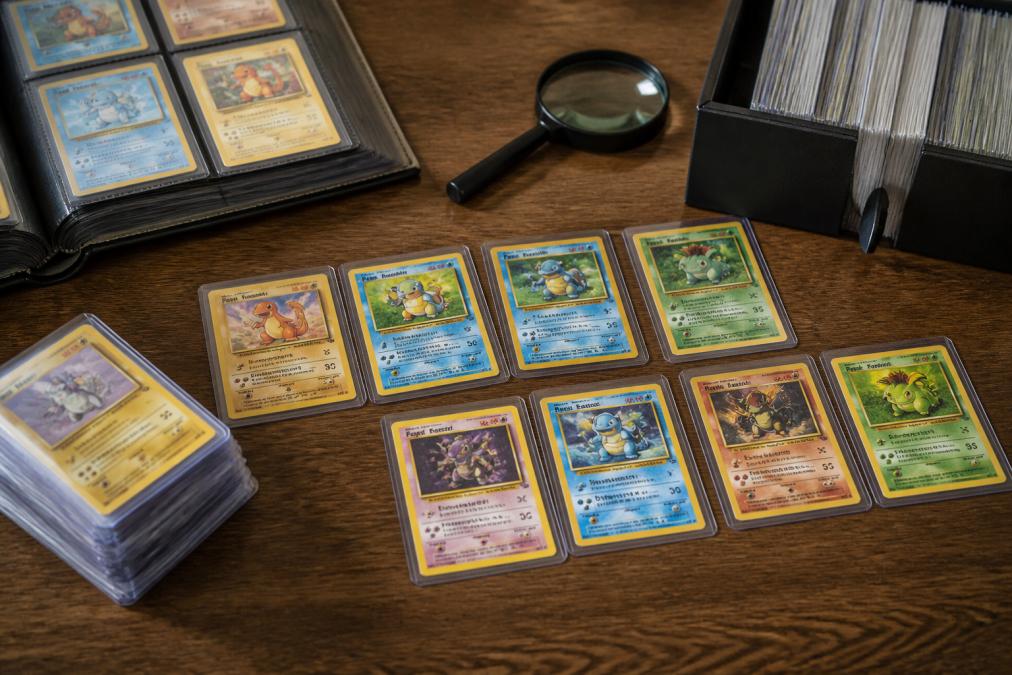
Local hobby shops remain the only channel where you can hold a card, inspect it under light, and ask the owner directly about provenance. That tactile check catches trimming, recoloring, and reprints that photos hide.
What Hobby Shops Offer That Retailers Don't
- Hands-on inspection before you pay
- Trade-in credit toward other cards
- Local collector community and meetups
- Knowledge of rarity tiers and print runs
The tradeoff is selection. A shop might have the card you want, or it might not. Call ahead before making the drive.
How to Spot Fake Trading Cards Before You Buy
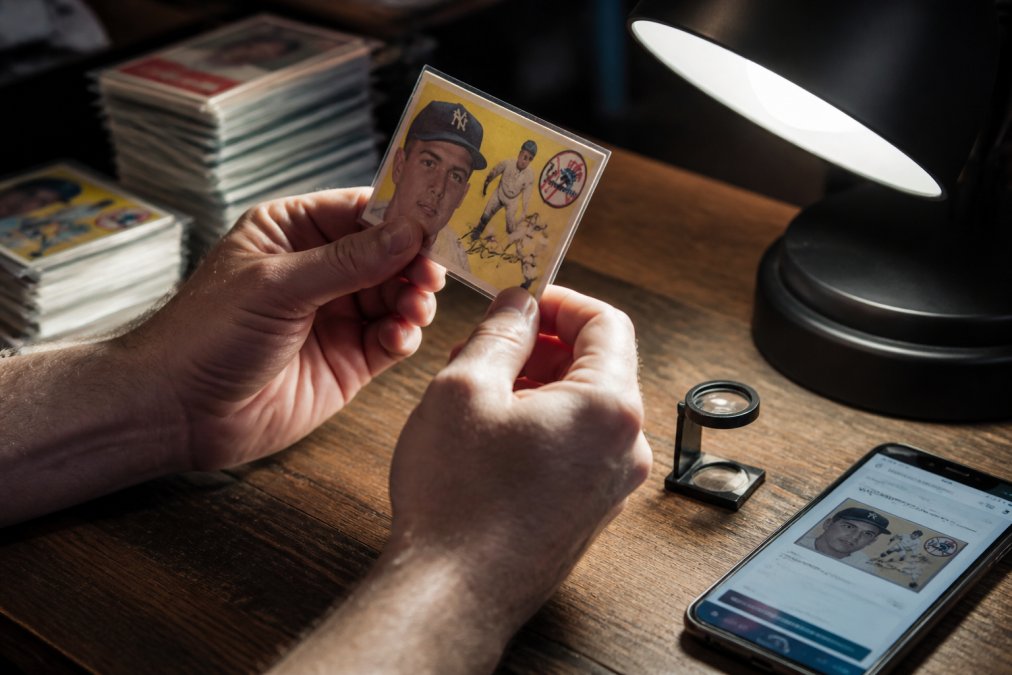
Counterfeit detection comes down to three checks: print quality, card stock, and the tell-tale signs of rebacking. Learning how to spot fake trading cards takes an afternoon of practice with a known-authentic card beside a suspected fake.
Authentication and Verification Protocols
Serious buyers use a repeatable protocol:
- Request high-resolution photos of front, back, and all four corners
- Check the print pattern with a loupe or macro lens
- Verify the card stock weight and flexibility against a known original
- Confirm the seller's return policy in writing before payment
- Pay with a method that offers buyer protection
Best Grading Services for Trading Cards and Why They Matter
Grading services authenticate a card and assign a numeric condition score, usually on a 1-to-10 scale. A card graded in mint state commands a far higher resale value than the same card raw, because the grade removes the buyer's biggest fear: is this real, and is it as described?
- PSA uses a 1-10 scale with half-point grades and is the most widely recognized label in the hobby. A PSA 10 is the ceiling; a PSA 9 often sells for a fraction of that.
- Beckett uses a 1-10 scale with subgrades for centering, corners, edges, and surface, plus a separate 10 "Pristine" designation. The subgrades let you see why a card scored what it did.
- CGC uses a 1-10 scale with subgrades on its higher tiers and is well known for comic and card crossover submissions.
What Actually Makes a Grading Service Worth Using
Three traits separate a trustworthy grader from a label mill:
- Consistent scoring. Send the same card twice and you should get the same grade range. Inconsistency is the number-one complaint collectors raise about any grader.
- Tamper-evident holders. The slab should be sonically sealed, with a holographic label and a certification number you can look up on the grader's website. If the number does not return a matching card image and grade, treat the holder as compromised.
- A public population report. This is the most underused tool in the hobby. The population report tells you how many examples of a specific card exist at each grade. A card with 40 examples at PSA 10 is not the same asset as one with 4,000, even if the labels look identical.
How to Read a Population Report Before You Buy
Before you bid on or buy any graded card, pull the population report and ask three questions:
- How many exist at this grade? Low populations support price; high populations cap it.
- How many exist one grade higher? If a PSA 9 has 3,000 siblings and a PSA 10 has 12, the 10 is a different asset class entirely.
- Is the population growing? A card that keeps getting submitted in high grade is a card whose premium may compress over time.
Buying the Holder, Not the Story
For investment-grade purchases, always buy the holder, not the story. If the slab is cracked, resealed, or missing label details, treat the card as raw, no matter what the seller claims about the grade. Check that the label's certification number, card name, year, set, and grade all match the card in the holder. A mismatched label is the single clearest sign of a swapped or reholdered card.
Raw vs. Graded: The Real Trade-Off
Raw cards are cheaper, faster to acquire, and let you inspect condition yourself. Graded cards cost more up front but carry third-party verification, easier resale, and a price that is anchored to a public population. For set completion on a budget, raw is often the right call. For anything you intend to hold as an asset, the holder is worth the premium.
Rare Card Investment Tips: Tax, Insurance, and Resale Value
Most rare card investment tips stop at "buy low, sell high." The parts that actually cost collectors money are tax and insurance, and almost no buying guide covers them. This section does.
Tax Treatment of Collectibles
The IRS treats collectibles differently from ordinary investments. Long-term capital gains on collectibles are taxed at a higher maximum rate than standard long-term capital gains on stocks or bonds (Topic no. 409, Capital gains and losses). The exact rate and thresholds change with legislation, so confirm current treatment with a tax professional or the IRS guidance on capital gains and collectibles before you sell.
Three practical points most collectors learn the hard way:
- Holding period matters. The long-term rate only applies after you have held the asset for more than one year. Sell inside that window and the gain is taxed as ordinary income.
- Every sale is a taxable event. Selling on a marketplace, at a show, or to a dealer all count. So does a trade, in most cases, at the fair market value of what you received.
- Cost basis includes more than the card. Grading fees, shipping, buyer's premiums, and sales tax you paid can generally be added to your basis, which lowers the taxable gain. Keep every receipt.
Insuring a High-Value Collection
Standard homeowners and renters policies typically cap coverage for collectibles at a low sublimit, and they often require a separate schedule or endorsement for anything above that cap. Two common structures exist:
- Scheduled rider on a homeowners policy. You list each card individually with a stated value. Simpler, but coverage is limited to the listed items and the value you declared.
- Dedicated collectibles policy. A standalone policy that covers the collection as a whole, often with broader perils (including accidental damage and, in some cases, loss in transit). More expensive, but the right fit once a collection crosses into five figures.
- High-resolution photos of the front and back of every card above your threshold
- Receipts and grading certificates (or population-report screenshots for graded cards)
- A spreadsheet with card name, set, year, grade, and current market value
- Appraisals for any single card above the insurer's stated-value limit
Resale Value: What Actually Holds
Graded cards hold pricing power because they sell on a third-party score, not on a seller's condition claim. Raw cards sell on the buyer's trust, which means they trade at a discount for the same underlying card. If you are building for resale, the holder is the asset. If you are building for play or personal collection, raw is fine, just do not expect graded-card pricing when you sell.
Avoiding Third-Party Seller Scams and Buying Vintage Collections
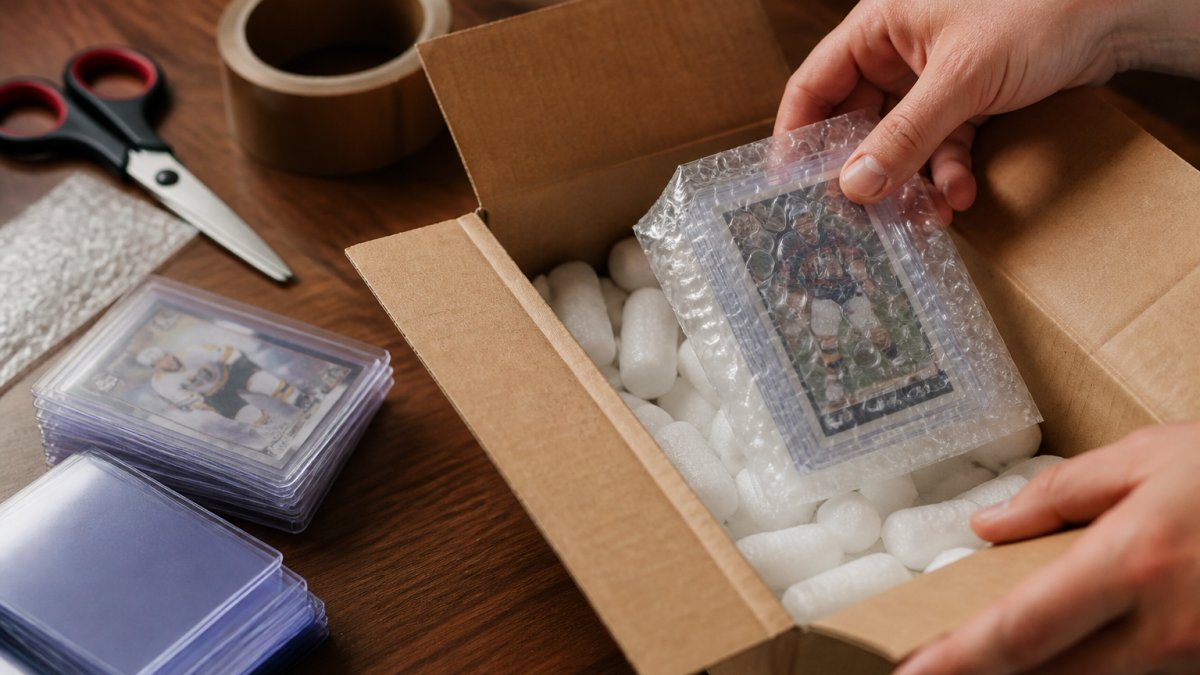
Shipping insurance is your last line of defense. Insist on tracked, signature-required delivery for anything valuable, and photograph the package before opening it.
Why Dave's House of Cards Belongs on Your Shortlist
For collectors who want verified products without the marketplace guesswork, Dave's House of Cards is built around individual cards from popular series, so you can chase the specific pieces you need instead of scrolling endless listings. Every order ships with free standard shipping over $7.50, and free USPS Ground Advantage shipping over $25.
Frequently Asked Questions
Where is the best place to buy rare Pokémon cards?
It depends on what you value most. Online marketplaces offer the widest selection and let you buy rare cards from sellers nationwide, while local hobby shops let you inspect card condition and authenticity in person before paying. Auction houses suit high-value vintage collectibles. For specific singles, a curated card shop that verifies authenticity and ships with tracking is often the safest starting point.
What should I look for when buying rare trading cards online?
Check the seller's return policy, buyer protection terms, and shipping insurance options before bidding or buying. Look for clear, high-resolution photos of the actual card, not stock images. Confirm whether the card is raw or graded, and read the condition notes carefully. A seller who answers questions about authentication and provenance is usually a safer bet than one who avoids them.
How can I verify the authenticity of rare trading cards?
Compare the card's print quality, font, color saturation, and cardstock feel against a known authentic copy. Check for the correct holo pattern, set symbol, and copyright text. For high-value cards, send them to a professional grading service that authenticates and encapsulates them. If you are buying online, ask the seller for proof of grading or a certificate number you can verify directly with the grading company.
Are online auctions better than fixed-price stores for rare cards?
Auctions can produce lower prices when demand is thin, but final bids are unpredictable and you may overpay in a bidding war. Fixed-price stores let you compare listings and buy immediately, which suits collectors who need a specific card to complete a set. Auction houses also charge buyer's premiums that add to the final cost, so factor those fees in before deciding.
The hardest part of collecting isn't finding rare cards. It's finding them without getting burned on authenticity, condition, or shipping. Dave's House of Cards makes that easier with a curated selection of individual cards, free standard shipping over $7.50, and free USPS Ground Advantage shipping over $25, so you can build your collection with confidence. Shop all and find the cards you've been chasing.