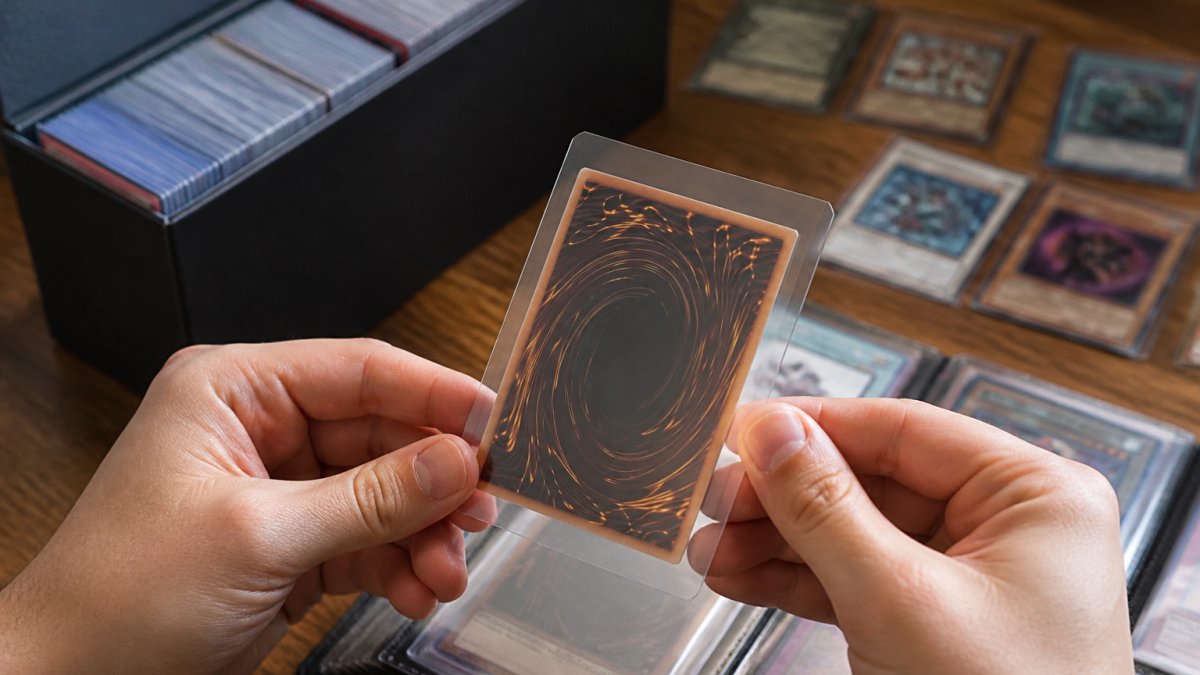
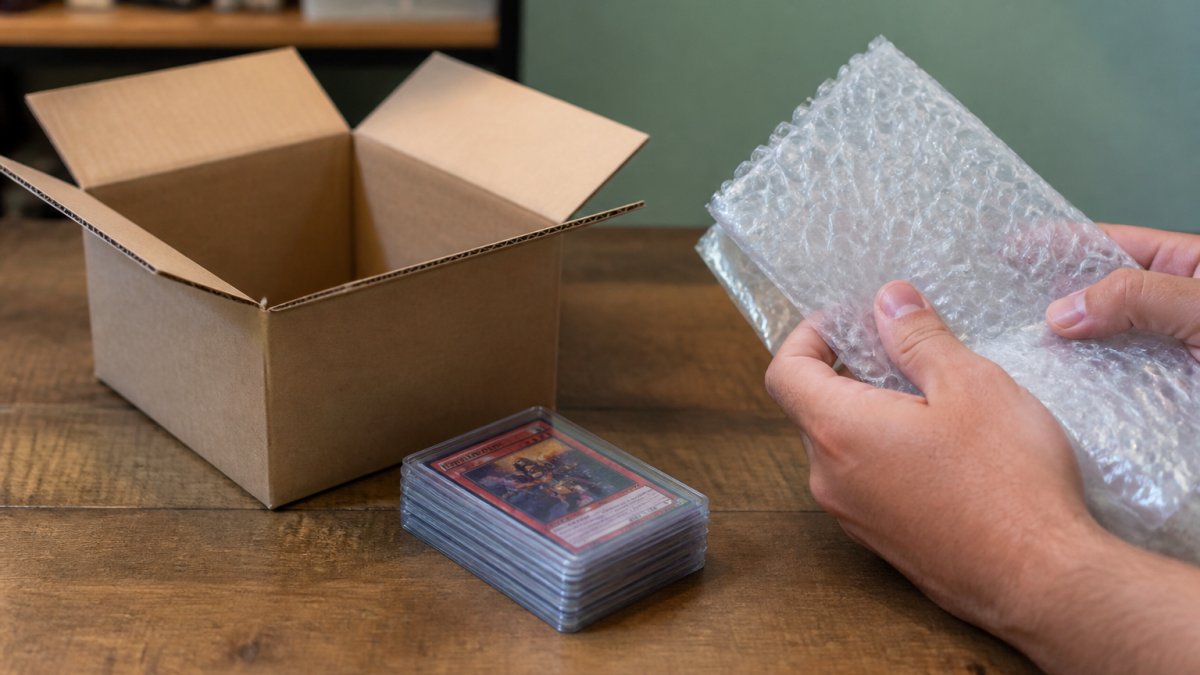
 ultimate-guide
Trading Card Grading Services Explained for 2026
Last Updated: November 7, 2026
Quick Summary
Card grading services assign a numerical condition grade, usually on a 1 to 10 scale, after inspecting centering, corners, edges, and surface, then seal the card in a tamper-evident slab. Grading is a condition assessment rather than a guarantee of value, so it pays off only when the expected graded value exceeds the raw value after fees, shipping, and selling costs.
- Graders evaluate four main criteria: centering, corners, edges, and surface.
- Inspect cards under bright light and magnification before submitting them.
- Compare total cost per card, including shipping, insurance, and selling fees.
- Use conservative grade estimates when deciding whether grading is worth it.
- Declare value honestly, since it sets insurance coverage on submitted cards.
Table of Contents
- How Trading Card Grading Works and What Graders Evaluate
- Pre-Grading Inspection and Preparing Your Cards for Submission
- Beckett vs PSA Grading Cost: Fees, Shipping, and Declared Value
- Which Card Grading Company Is the Best for Pokémon Cards?
- Card Grading Turnaround Time and Submission Backlogs
- Is It Worth Grading Sports Cards? A Decision Framework
- Choosing Your Next Card to Submit or Buy at Dave's House of Cards
- Frequently Asked Questions
Trading card grading services explained in 2026 comes down to one question: is a third-party grade worth paying for from the card grading services you choose?
Grading companies inspect a card and assign it a numerical grade, usually on a scale of 1 to 10, sealing it in a tamper-evident slab. Buyers and sellers rely on that grade to judge condition without handling the card.
How Trading Card Grading Works and What Graders Evaluate
A grade is a condition assessment, not a statement of value. Graders examine the card under magnification and assign a single numerical grade, usually on a 1 to 10 scale, then seal the card in a tamper-evident slab. The slab and label are the product; the number is the summary. Understanding what drives that number is the difference between a smart submission and an expensive lesson.
The Four Primary Criteria
Most major services evaluate the same four areas, and each one can pull a card down a grade if it falls short.
Centering measures how evenly the image sits within the card border, front and back.
Corners are checked for wear, rounding, dings, and softness.
Edges are checked for whitening, chipping, and roughness.
Surface covers scratches, print lines, stains, indentations, and gloss loss.
Beyond the Big Four: Print Quality, Alterations, and Card-Specific Issues
Grading services typically evaluate beyond the four criteria. Print quality, including factory print lines, roller marks, and ink inconsistencies, can affect a grade even though the collector did nothing wrong. Alterations are treated more seriously: trimming, recoloring, restoring, and pressing are grounds for a lower grade or an "altered" designation, and many services will not slab an altered card at all. Card-specific issues matter too. Vintage cards are judged with more tolerance for edge wear and centering drift than modern cards, while modern cards are held to tighter standards on corners and surface because the population of high-grade examples is large.
Understanding the Numerical Grading Scale
Many major services use a 1 to 10 scale, with 10 representing a near-perfect card. The difference between a 9 and a 10 is often steep in market value, which is why borderline cards matter so much. Grades also carry service-specific labels and subgrades. Some services publish subgrades for centering, corners, edges, and surface; others publish only a single overall grade. Read each company's scale before comparing results, because a 9 from one service is not automatically equivalent to a 9 from another. When you compare recent sales, compare like-labeled slabs, not just the number. Because labels and grades are easiest to compare when the card remains visible and protected, consider how a display case such as PrismGuard Pro fits into your collecting setup.
Watch out: a card that looks clean at arm's length can still lose points on a single criterion under magnification, so inspect every card as if the grader will, because they will.
Pre-Grading Inspection and Preparing Your Cards for Submission
Before you submit, inspect every card under bright light and magnification. Look at the front and back, check centering with a ruler or a centering tool, and check corners and edges from several angles.
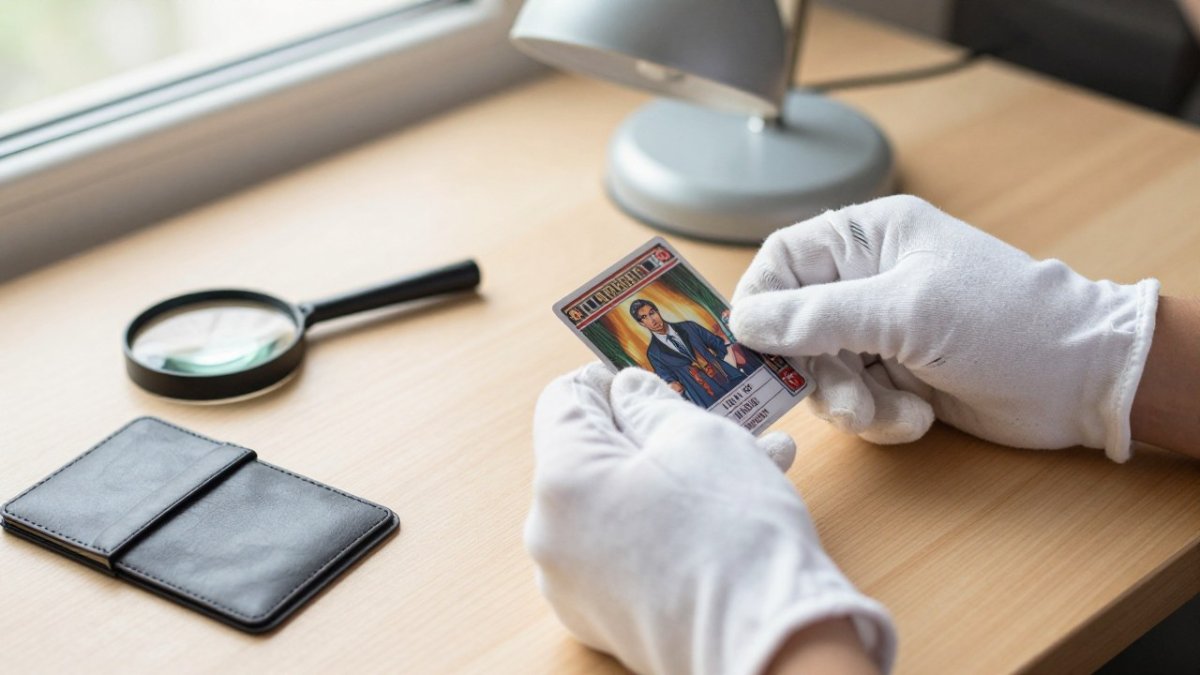
Handle cards only by the edges, use fresh penny sleeves and top loaders, and keep them out of humidity.
A common mistake is submitting a card that is already at the limit of its grade. If a card shows obvious centering drift, it may not justify the fee.
Beckett vs PSA Grading Cost: Fees, Shipping, and Declared Value
Grading fees differ by service company, service level, and card value, and they change over time. Because published pricing shifts, check each company's current fee schedule before you submit.
When comparing costs, look at four line items:
- Per-card service fee: the base grading charge, which varies by service tier.
- Declared value: the value you state for the card, which often sets insurance coverage and sometimes affects fees.
- Shipping and insurance: the cost to send your cards and insure them in transit.
Grading companies such as Beckett and PSA generally offer multiple service levels, with faster turnarounds often costing more. Compare total cost per card, including shipping and insurance, not just the headline fee.
The article lists four line items to compare when weighing grading costs.
| Cost item | What it covers | Note |
|---|---|---|
| Per-card service fee | Base grading charge | Varies by service tier |
| Declared value | Value you state for the card | Often sets insurance coverage |
| Shipping and insurance | Sending and insuring cards in transit | Compare total cost per card |
| Selling fees | Marketplace or auction fees | Apply if you resell the graded card |
Which Card Grading Company Is the Best for Pokémon Cards?
There is no single best company for every Pokémon card. The right choice depends on the card's age, its expected grade, how quickly you need results, and how the graded slab will be sold.
Before deciding, check recent sales of comparable graded cards from each company. Pay attention to whether slabs from one service command a consistent premium for the grade you expect.
Card Grading Turnaround Time and Submission Backlogs
Turnaround depends on the service level you choose and the grading company's current volume. Backlogs can stretch timelines well beyond the advertised standard, especially during busy periods. Check the service's published turnaround information when you submit, and factor in shipping time both ways.
If you plan to sell or trade a card on a deadline, submit well in advance and avoid tying your timing to a specific event or sale date.
Is It Worth Grading Sports Cards? A Decision Framework
Grading makes financial sense when the expected value of the graded card, after all costs, exceeds the value of the raw card. The hard part is estimating that expected value honestly. Most ranking guides stop at "compare the raw price to the graded price." That comparison is incomplete because it ignores grade uncertainty, shipping both ways, insurance, and selling fees.
A Reusable Grading Decision Calculator
Work through these line items for each card. The math is simple; the discipline is in using conservative inputs.
- Raw value. Use recent sales of ungraded copies in similar condition. If the card is raw and ungraded, this is your baseline.
- Expected graded value. Do not use the value at the grade you hope for. Estimate the probability of each likely outcome and weight the values. A simple version: assign rough probabilities to the grades you realistically expect (for example, a 60% chance of a 9 and a 40% chance of an 8), multiply each by recent sales at that grade, and add the results. This is your expected graded value.
- Grading fee. The per-card service fee at the tier you will actually use, not the cheapest advertised tier.
- Shipping and insurance, both ways. Outbound shipping with tracking and insurance, plus the return shipping the service charges. Insurance should reflect declared value.
- Selling fees. Marketplace or auction fees if you plan to resell, plus any shipping you absorb to the buyer.
- Net graded value. Expected graded value minus grading fee, shipping and insurance both ways, and selling fees.
- Decision. Grade only when net graded value exceeds raw value by a margin that compensates you for the time, risk, and uncertainty. A small positive number is not enough; a meaningful margin is.
A common pattern is that collectors overestimate the grade they will receive and underestimate shipping and selling costs. Be conservative on both.
Differences by Card Type and Collecting Goal
The same calculator produces different answers depending on what you collect and why.
- Modern sports cards. High population, tight grading standards, and a steep 9-to-10 value gap. Many modern base and low-end inserts do not clear the fee unless the expected grade is exceptional. Rookies and short prints are the usual candidates.
- Vintage sports cards. Lower population and more tolerance for edge wear and centering drift. Rare vintage cards in good condition can clear the fee easily, and the grade premium is often larger because high-grade examples are scarce.
- Trading card game cards. Foils and holos are sensitive to surface scratches, and market preference for specific labels can vary by set. Check recent graded sales for the exact card and set before submitting.
Submission Risks and Protections
A complete decision includes what happens if something goes wrong. Declared value sets insurance coverage, so under-declaring to save on fees can leave you underinsured. Document every card before shipping, front and back photos, the submission form, and the tracking number, so you have a record if a card is lost or damaged.
Watch out: grading a card you would not be comfortable holding raw if the grade comes back lower than expected is a gamble, not a decision, run the calculator with a pessimistic grade first.
Choosing Your Next Card to Submit or Buy at Dave's House of Cards
If you are deciding whether to submit a card or buy one already in strong condition, start with the grading breakdown above.
At Dave's House of Cards, we carry a curated selection of individual trading cards from popular series, so you can find the specific pieces you need to complete a set or upgrade a collection. Before you buy, read our guide to buying individual trading cards online safely.
Frequently Asked Questions
How does trading card grading work?
A grading company receives your card, encapsulates it in a sealed holder, and assigns a numerical grade based on centering, corners, edges, and surface. Graders inspect each card under magnification and compare it against published standards. The result is a grade, often on a 1-to-10 scale, plus a label that identifies the card and grade. Because the holder is sealed, buyers can verify the grade without handling the card. Results vary by company and by grader, so compare the grading standards each service publishes before submitting.
Which trading card grading company is best in 2026?
No single company is best for every card. PSA is widely recognized in the resale market, while Beckett and other services may offer different fee structures, turnaround options, or grading scales. The right choice depends on the card's value, the game it belongs to, and how quickly you need results. Check each company's current fee schedule and turnaround estimates directly, since these change over time and are not reliably listed in a single place.
Is PSA or Beckett better for grading cards?
The answer depends on your goal. PSA labels are often the most recognized among buyers for many card types, which can support resale. Beckett can be a practical option for cards where its grading or label style is preferred by the market. Compare total cost including grading fee, shipping, and declared value insurance, and look at recent sold listings for graded cards in the same category before deciding.
How much does it cost to get a trading card graded?
Grading costs depend on the service level you choose, the card's declared value, shipping, and insurance. Dave's House of Cards does not provide grading services, and pricing from grading companies changes frequently, so this article does not quote fixed figures. Check each company's published fee schedule for the current cost per card. Remember to add return shipping and insurance to your total before deciding whether grading makes financial sense.
How long does card grading take?
Turnaround time varies with the service level, submission volume, and backlog at the grading company. Lower-cost tiers usually take longer, while faster tiers cost more. Check the company's current turnaround estimates before submitting, and plan for delays during busy periods. Keep your tracking number and submission confirmation in case you need to follow up on a delayed order.
Is it worth grading a trading card before selling it?
Grading often pays off when the expected graded value, minus grading, shipping, and selling fees, exceeds the raw card's sale price by a meaningful margin. Lower-value cards frequently do not justify the cost. Estimate the grade premium by reviewing recent sold listings for graded and raw copies of the same card, then subtract all costs to find your break-even point.
What should I look for before submitting a card for grading?
Inspect centering, corners, edges, and surface under good light and magnification. Look for print defects, scratches, whitening, and warping. Handle cards by their edges, store them in protective sleeves, and avoid submitting cards with obvious damage unless you expect a low grade anyway. Review the submission form carefully, declare value accurately, and keep copies of all paperwork.