 how-to
7 Steps to Buy Individual Trading Cards Online Safely
Quick Summary
To buy individual trading cards online safely, vet the seller before anything else, check the condition grade, and pay through a method with buyer protection. Match your checks to the card's value, and keep screenshots and messages as evidence for every order.
- Check account age, recent reviews, contact details and the written return policy before adding any card to your cart.
- Refuse any seller request to move payment off the marketplace, since that removes buyer protection.
- Cards above $250 warrant verifying the grading company's certification number against its public lookup tool.
- Save the listing text and photos as screenshots, because sellers can edit or remove listings after a sale.
- Pay by credit card or protected marketplace checkout, and avoid wire transfers, gift cards and direct payments to strangers.
Table of Contents
- Why Buying Single Cards Online Carries Real Risk
- Step 1: Vet the Seller Before You Add Anything to Cart
- How to Spot Fake Trading Cards From Listing Photos
- Step 3: Read the Condition Grade Before You Pay
- Choosing Safe Online Card Marketplaces
- Paying Safely and Protecting Your Order
- Trading Card Shipping Protection: What to Check on Delivery
- Planning Your Next Single-Card Order at Dave's House of Cards
- Frequently Asked Questions
Why Buying Single Cards Online Carries Real Risk
Last Updated: November 2, 2026
Buying individual trading cards online is convenient, but it comes with real risks. Counterfeit singles, misgraded cards and sellers who never ship are all common complaints. This guide walks through a practical process for buying single cards safely.
Buy individual trading cards online and you are trusting a photo, a description and a seller you may never meet. Mistakes cost money and time, and they are hard to undo once the money leaves your account.
Step 1: Vet the Seller Before You Add Anything to Cart
Start with the seller, not the card. A listing photo can be copied from anywhere; a seller's track record is much harder to fake. Before you add a single to your cart, run through this checklist.
The seller vetting checklist
- Account age and sales history. Look for a storefront that has been active for at least several months and shows a meaningful number of completed sales. A brand-new account with a large inventory of high-value singles is a red flag, not a bargain.
- Feedback pattern, not just the score. Read the most recent 20-30 reviews. A 99% rating built on hundreds of small orders can still hide a pattern of slow shipping or condition complaints. Search the reviews for the words "shipped," "packaging," "condition," and "refund" to surface problems fast.
- Contact and identity signals. A legitimate store lists a physical address, a customer-service email or phone line, and clear business terms. If the only contact route is a direct message on a social platform, treat that as a caution sign.
- Inventory coherence. Sellers who list cards from one or two series, with consistent photo style and condition language, are usually easier to trust than accounts listing hundreds of unrelated products alongside trading cards.
- Return policy in writing. Find the return window and the conditions for returns before you buy. "All sales final" on a raw single is a meaningful risk signal.
- Off-platform pressure. If a seller asks you to move the deal to a direct message, a peer-to-peer payment app, or an email invoice outside the marketplace, stop. That request removes the marketplace's buyer protection and is one of the most common patterns in card-sale disputes.
Match the depth of your vetting to the value of the card
Not every purchase needs the same scrutiny. A practical tiering:
- Inexpensive raw singles (roughly under $25). A quick feedback scan and a check that the listing shows front and back is usually enough. The downside is small, and marketplace buyer protection covers most of it.
- **** Read recent reviews for condition and shipping complaints, confirm the return window, and ask for extra photos of corners and surface before paying.
- High-value graded cards (above $250). Verify the grading company's certification number against its public lookup tool, confirm the slab serial matches the listing photos, ask the seller for a short video or additional angled photos, and pay only through a protected checkout method. Consider signature confirmation on delivery.
- Unfamiliar sellers at any price point. Add one extra step: message the seller a specific question about the card (centering, surface scratches, whether the photo is of the actual card you will receive). Responsiveness and specificity tell you a lot.
Watch out: A seller with a brand-new account and glowing reviews across many unrelated products deserves extra scrutiny. The same goes for a price that sits far below the going rate for that card in that condition, a deal that looks too good is usually a signal to slow down, not speed up.
Use this quick reference to match your vetting effort to the card's value.
| Card value | Vetting level | Key check |
|---|---|---|
| Under $25 | Quick scan | Feedback scan and front/back photos |
| $25-$250 | Standard | Recent reviews and confirmed return window |
| Above $250 | High | Verify grading certification number |
| Unfamiliar seller | Extra step | Ask a specific question about the card |
How to Spot Fake Trading Cards From Listing Photos
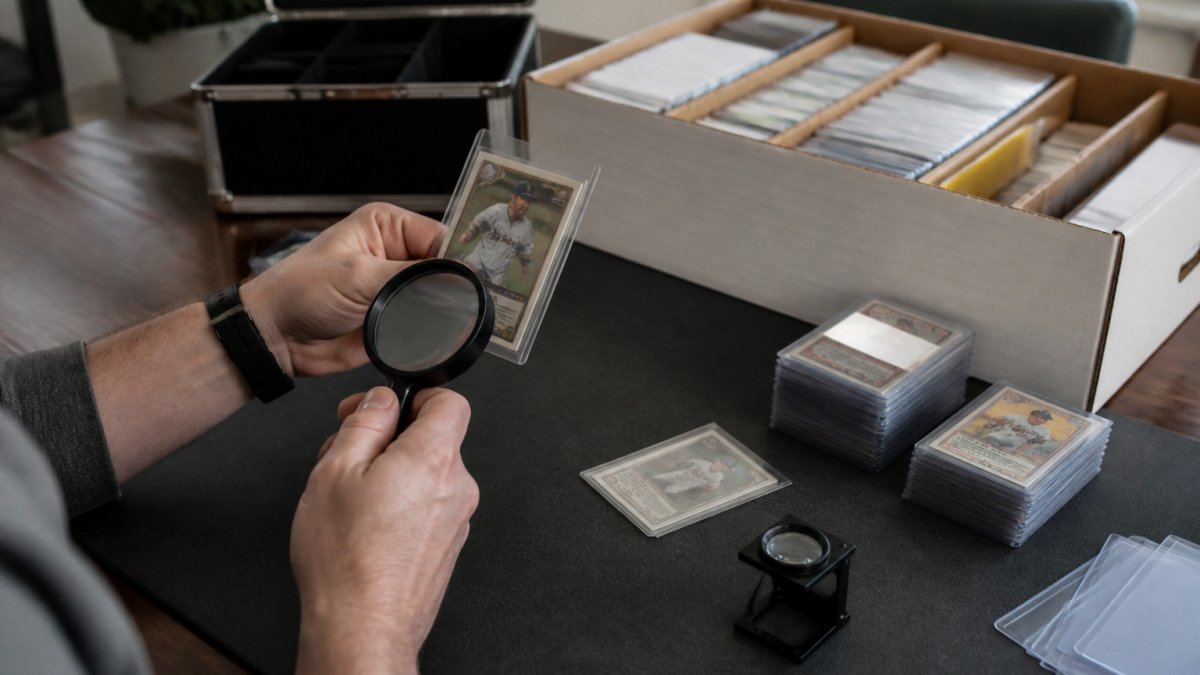
Counterfeit cards are a persistent problem in the singles market. Look for these warning signs in listing photos:
- Colors that look washed out or oversaturated compared with official card art
- Fonts, logos or holo patterns that do not match a known genuine copy
- Blurry or heavily cropped photos that hide the back of the card
- No photo of the back, edges or surface at an angle
Ask the seller for additional photos under good light if the listing does not show them. A legitimate seller will usually provide them.
Step 3: Read the Condition Grade Before You Pay
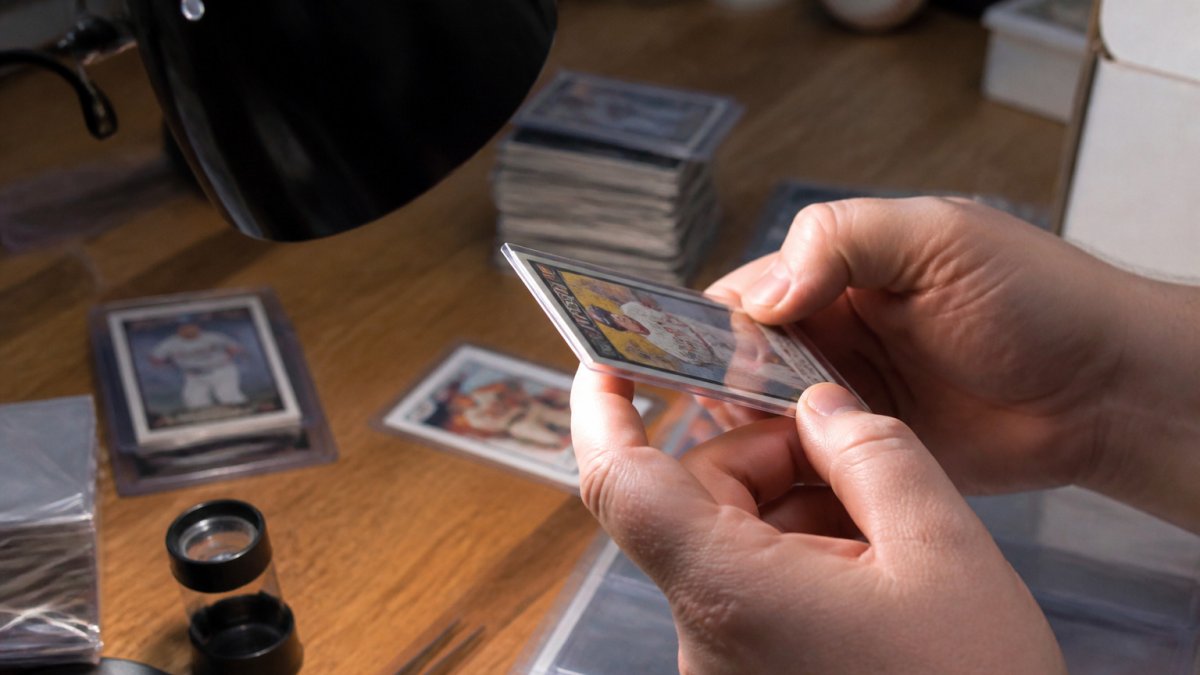
Condition determines value, so read the grade carefully before buying. Ungraded cards are usually described with terms such as near mint, lightly played or moderately played. Graded cards carry a professional grade from a third-party service, which makes the condition easier to verify. You can see a professionally graded card with a top-tier label as a concrete reference point.
Check whether the listing describes corners, edges, surface and centering. Vague phrases like "good condition" tell you little. If the description is unclear, message the seller before purchasing.
Choosing Safe Online Card Marketplaces
Marketplaces differ in how they handle seller verification, buyer protection and disputes. Dave's House of Cards offers a curated selection of individual cards from popular series.
For more on finding specific cards from reliable sources, see our guide to Finding Specific Cards for Tournament Play, or compare options in Where to Buy Tournament Legal Cards.
Paying Safely and Protecting Your Order
Payment is the point where a bad purchase becomes recoverable or not. The method you choose determines whether you have a dispute process, a chargeback right, or nothing at all.
Protected versus risky payment methods
- Credit and debit cards. Credit cards generally carry the strongest dispute rights. Check with your card issuer for the dispute window and procedures that apply to your account.
- Marketplace checkout with buyer protection. Platforms that hold funds until delivery and publish a buyer-protection policy give you an in-platform dispute route. Read the policy before you buy: note the claim window, what counts as "not as described," and whether return shipping is covered.
- Digital wallets and payment services. Many offer purchase protection, but the terms vary widely. Check whether the transaction qualifies and what the claim deadline is.
- Wire transfer, gift cards, and direct peer-to-peer payments to a stranger. These are the methods to avoid. Once the money moves, there is generally no chargeback path, and recovery usually depends on law enforcement.
Evidence to keep for every order
Disputes are won or lost on documentation. Retain:
- Screenshots of the listing, including the title, condition description, photos, and price
- The order confirmation and receipt
- All messages with the seller, especially any promises about condition, shipping time, or returns
- Tracking numbers and delivery scans
- Photos of the package and card as received, taken before you open the holder if the packaging looks damaged
Returns, refunds, and delivery problems
- Card not as described (wrong condition, wrong parallel, counterfeit). Contact the seller first through the marketplace's messaging system so the exchange is on record. If the seller does not resolve it within the platform's stated window, open a formal dispute. Do not ship the card back until you have a return authorization and a tracked label.
- Lost package. Check the tracking scan history and file a missing-mail claim with the carrier if the tracking stalls. Most marketplaces require you to wait a set period before escalating, so note the dates.
- Damaged shipment. Photograph the outer packaging, the inner holder, and the card before moving anything. Report to the seller within the stated window, many stores set a short reporting period, often a few days from delivery, and keep the packaging until the claim is resolved.
- Seller unresponsive. Escalate to the marketplace's dispute team, then to your card issuer if the platform route fails. Include your evidence file in the first message so the reviewer does not have to ask for it.
Trading Card Shipping Protection: What to Check on Delivery
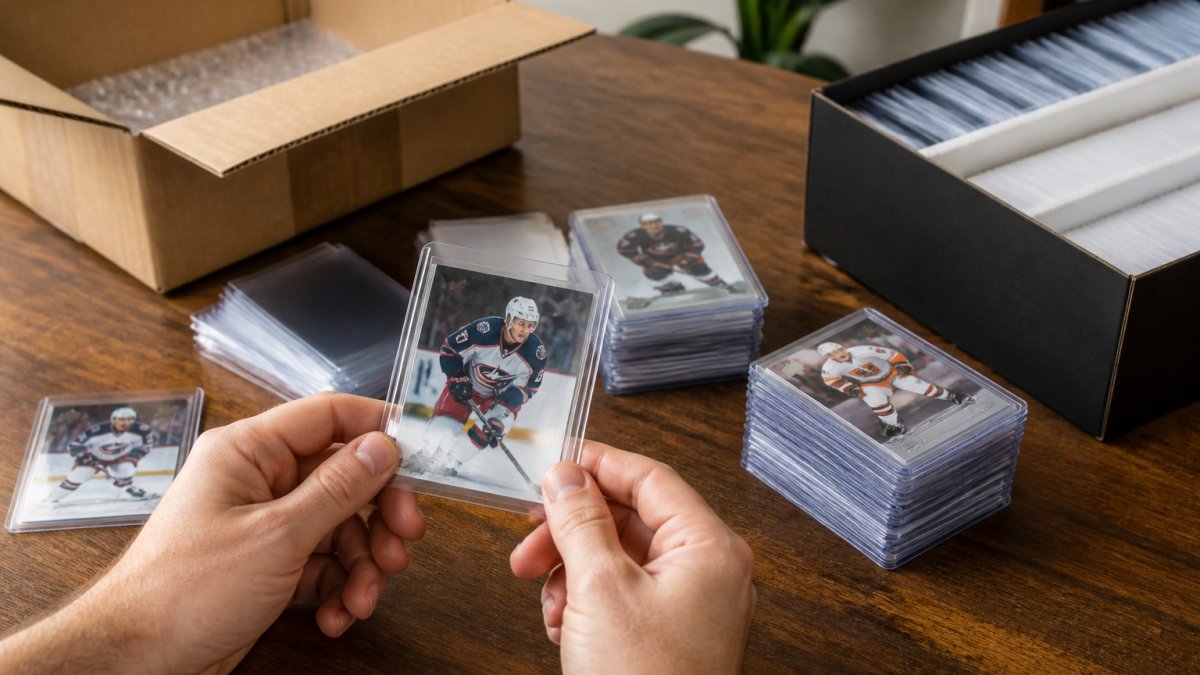
Shipping is where many single-card orders go wrong. Cards should arrive in a rigid holder or sleeve, sealed inside a padded mailer or box. Check the tracking information, and inspect the package for crushing or water damage before you sign.
If a card arrives damaged, photograph the item and packaging right away and contact the seller. Most reputable stores have a defined window for reporting delivery problems, so act quickly.
Planning Your Next Single-Card Order at Dave's House of Cards
When you are ready to build your collection, start with a shortlist of the cards you need, check each condition grade and confirm the shipping terms. Dave's House of Cards offers free standard shipping on orders over $7.50 and free USPS Ground Advantage shipping on orders over $25. Browse our current inventory and shop all to find your next pick.
Frequently Asked Questions
How can I tell if an online trading card seller is trustworthy?
Look for a seller with a long track record of completed orders, a visible return policy, and reviews that mention card condition matching the listing. Check whether the seller shows clear photos of the actual card, not stock images, and whether contact information and business details are easy to find. Be cautious of sellers with new accounts, very low prices on high-value cards, or pressure to pay outside the platform. A seller who answers condition questions directly is usually a safer bet than one who avoids them.
What should I check before buying a single trading card online?
Confirm the exact card name, set, number, and printing variant, since many cards have multiple versions with different values. Review the condition description and photos of the front and back, and check the return policy and shipping method. Compare the listed price against recent sold listings so you know whether the price is reasonable. Make sure the payment method you use offers buyer protection before you check out.
What payment methods offer buyer protection for trading card purchases?
Credit cards and payment services with purchase protection generally give you a clearer path to a chargeback or dispute if a card never arrives or is not as described. Pay through the marketplace's checkout when possible, since outside payments such as direct transfers usually offer little recourse. Save screenshots of the listing and your order confirmation in case you need to file a claim. Check your card issuer's dispute window, which is often limited, so report problems promptly.
What should I do if a trading card arrives damaged or not as described?
Photograph the card and the packaging as soon as you open the box, including any damage to the outer envelope or box. Contact the seller right away with your order number and photos, and state clearly what does not match the listing. Most reputable sellers have a stated return window, so act within it. If the seller does not respond or refuses a fair resolution, file a dispute through the payment provider or marketplace using your saved evidence.