 how-to
Finding Specific Cards for Tournament Play: A Guide
Table of Contents
- Start with a Tournament Deck List Checklist
- How to Find Cards for Tournament Play by Role
- Card Printing and Set Identification
- Verifying Tournament Card Legality and Ban Lists
- Where to Buy Individual Trading Cards for a Deck
- Matching Your Card Choices to the Tournament Metagame
- Conclusion: From Search to Tournament-Ready
- Frequently Asked Questions
Last Updated: October 5, 2026
Start with a Tournament Deck List Checklist
Building a deck for finding specific cards for tournament play starts with a simple truth: you cannot search for what you have not defined.
A deck list is the written record of every card in your deck. In Magic: The Gathering, that means a 60-card main deck and a sideboard of up to 15.
Here is a checklist for new tournament players:
- Pick your archetype or deck theme
- Write the main deck card names and counts
- List your sideboard answers for bad matchups
That last step matters most: it turns a wish list into a shopping list.
The Main Deck vs. The Sideboard
The main deck is your game plan for game one against an unknown opponent. The sideboard is your adjustment kit, cards you swap in after game one once you know what you are facing. Treating it as an afterthought is a common mistake: in best-of-three tournament play it often decides the match, so build it for specific matchups.
How to Find Cards for Tournament Play by Role
The fastest way to find cards is to search by role, not by name. If you need "a two-cost removal spell that hits creatures," you can filter for that; searching by name limits you to cards you already know.
Using Card Databases and Search Syntax
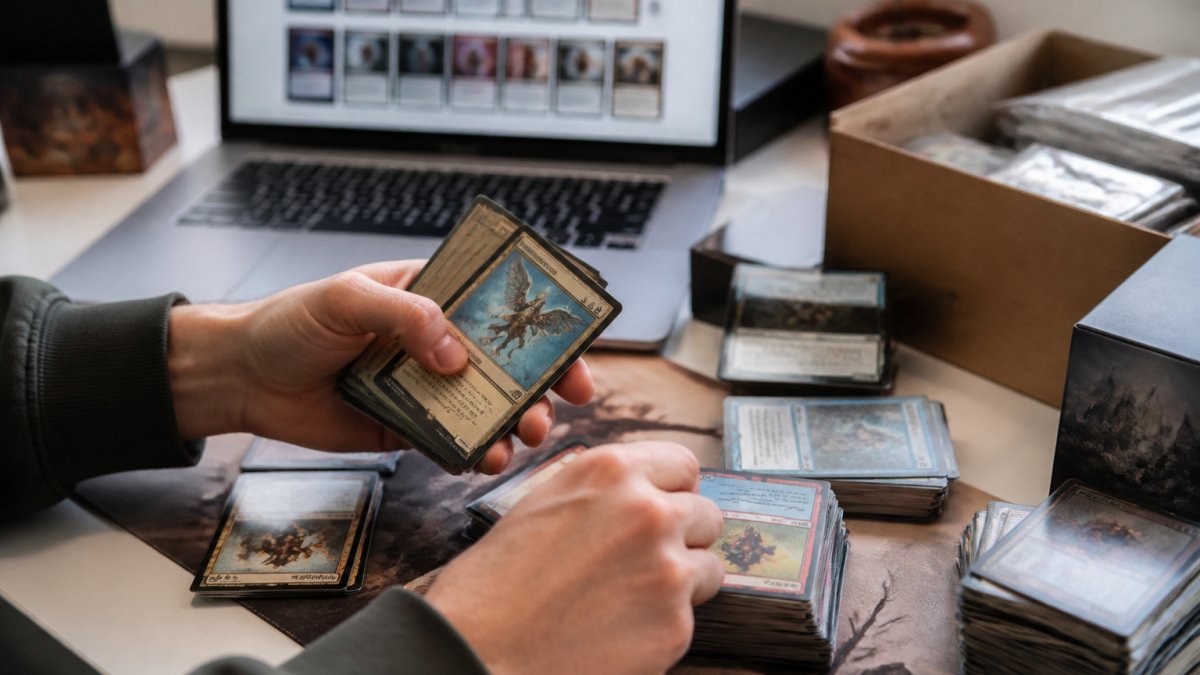
A card database is an online catalog of every card ever printed in a game. The good ones support filters and search syntax to narrow results fast.
To search by role, combine filters like these:
- Card type (creature, instant, land)
- Color or mana cost
- Card text keywords ("draw a card," "destroy target")
Start broad, then tighten. Search for the effect first, then filter by cost and color. You will often find a card you never knew existed that fits your curve perfectly.
Wizards of the Coast official card database and rules resources
Card Printing and Set Identification
Card printing is the specific version of a card from a specific set. The same card can be printed many times, with different art, frames, and collector numbers. Set identification means knowing exactly which printing you are buying.
This matters for three reasons:
- Some printings are worth far more than others
- Older printings may use outdated wording that affects how the card plays
- Tournament-legal reprints can differ from the original printing
When you search, use the set code and collector number, not just the card name. A listing for "Lightning Bolt" could mean a dozen printings; the set code removes the guesswork.
Verifying Tournament Card Legality and Ban Lists
Tournament card legality is the set of rules deciding which cards you may play. Every format has its own legal card pool, and most keep a ban list (or banned-and-restricted list) of cards that are not allowed even though they were printed. Legality is not a property of the card, it is a property of the card in a specific format.
The Formats You Will Actually Encounter
In Magic: The Gathering, paper tournament formats fall into two families:
- Constructed formats, you bring a pre-built deck. Common ones include Standard (a rotating pool of recent sets), Pioneer (a larger non-rotating pool), Modern (an even larger non-rotating pool), Legacy, and Vintage. Limited formats (Draft and Sealed) are different: you build from packs opened at the event, so there is nothing to buy ahead of time.
- Eternal formats, Legacy and Vintage use nearly every card ever printed, but each maintains its own banned list, and Vintage additionally uses a restricted list that limits certain cards to one copy per deck.
Other trading card games use their own format names and banned lists. The workflow below is game-agnostic; only the source you check changes.
A Repeatable Legality Check
Run this before you buy, and again the week of the event:
- Confirm the format. Ask the organizer or read the event listing. "Standard" and "Modern" are not interchangeable; a deck legal in one may be illegal in the other.
- Pull the current banned list from the official source. For Magic, that is the Wizards of the Coast banned-and-restricted announcement page. For other games, use the publisher's official page, not a wiki, forum, or creator's video.
- Check each card individually. A card database with a format-legality filter will flag banned cards, but verify the flagged ones against the official list.
- Check copy limits. Most constructed formats allow up to four copies of a card; restricted lists allow one. Basic lands are exempt.
- Re-check after every set release and scheduled announcement. A card legal when you built the deck can be banned before the event.
Official Magic: The Gathering banned and restricted list
What Legality Does Not Cover
Legality is necessary but not sufficient. Two other rules trip up tournament players:
- Deck-registration rules. You must submit a written deck list at competitive events, and it must match the cards in your deck exactly, including the specific printing if the event requires it. A mismatch can cost you games or the match.
- Card condition and markings. A card that is legal but noticeably warped, marked, or in a different sleeve back can be ruled illegal. Check for bends, water damage, and signature marks before you register.
Save the official ban-list page as a bookmark and check it the morning of the event. Ban-list changes are announced on a schedule, and a card banned the day before your tournament is a card you cannot play.
A Quick Sanity Check
Before finalizing a purchase, run one pass: format confirmed, official list pulled, every card checked, copy limits respected, condition acceptable. A five-minute check costs far less than a deck you cannot register.
Where to Buy Individual Trading Cards for a Deck
You can buy individual trading cards for a deck from several places, each with trade-offs. The right source depends on how specific your needs are, how soon you need the cards, and how much you will pay for speed or condition.
Matching the Source to the Need
| Source | Best For | Watch Out For |
|---|---|---|
| Local game store | Same-day pickup, in-person condition checks, supporting the venue that runs your events | Limited stock; popular singles sell out before events |
| Online singles marketplace | Wide inventory, exact printings, set-code search | Shipping time; condition varies by seller |
| Direct-from-store online shop | Curated inventory, single invoice, combined shipping | Smaller catalog than a marketplace |
| Trading with other players | Free or low-cost cards, community building | Hard to fill exact needs on a deadline |
| Bulk lots | Filling common gaps cheaply | No control over contents; rarely contains the specific rare you need |
For competitive decks, buy singles. Opening sealed product to chase one specific card is a losing bet, a pack's expected value is almost always below the price of the single you want.
Acquisition Planning: When to Buy
Timing matters as much as source. A common pattern among tournament players:
- Four to six weeks out: Lock your list, identify gaps, and place the bulk of your order. This gives you time to test and replace cards that underperform.
- Two weeks out: Fill remaining gaps and order any sideboard cards you are still deciding between. Shipping delays are the main risk.
- Week of the event: Buy only from a local store or a seller who can guarantee delivery before the event. Do not start a new online order this late unless the seller offers expedited shipping.
Budget Tiers and What They Buy You
You do not need the most expensive printing to play a card. For tournament play, any legal printing works, so the question is how much you want to spend on art, foiling, or collector value versus playability.
- Budget tier: Buy the cheapest legal printing in lightly played or near-mint condition. Prioritize function over finish. This is the right call for most players building a first competitive deck.
- Mid tier: Buy near-mint copies of the printing you prefer, and spend the difference on sideboard flexibility rather than foils.
- Premium tier: Foils, alternate arts, and original printings. These are collector choices, not competitive advantages, a foil card does not win more games.
A practical rule: if a card is in your main deck and you will play it every game, buy the best condition you can afford. If it is a narrow sideboard card, buy the cheapest legal copy.
Condition, Grading, and Returns
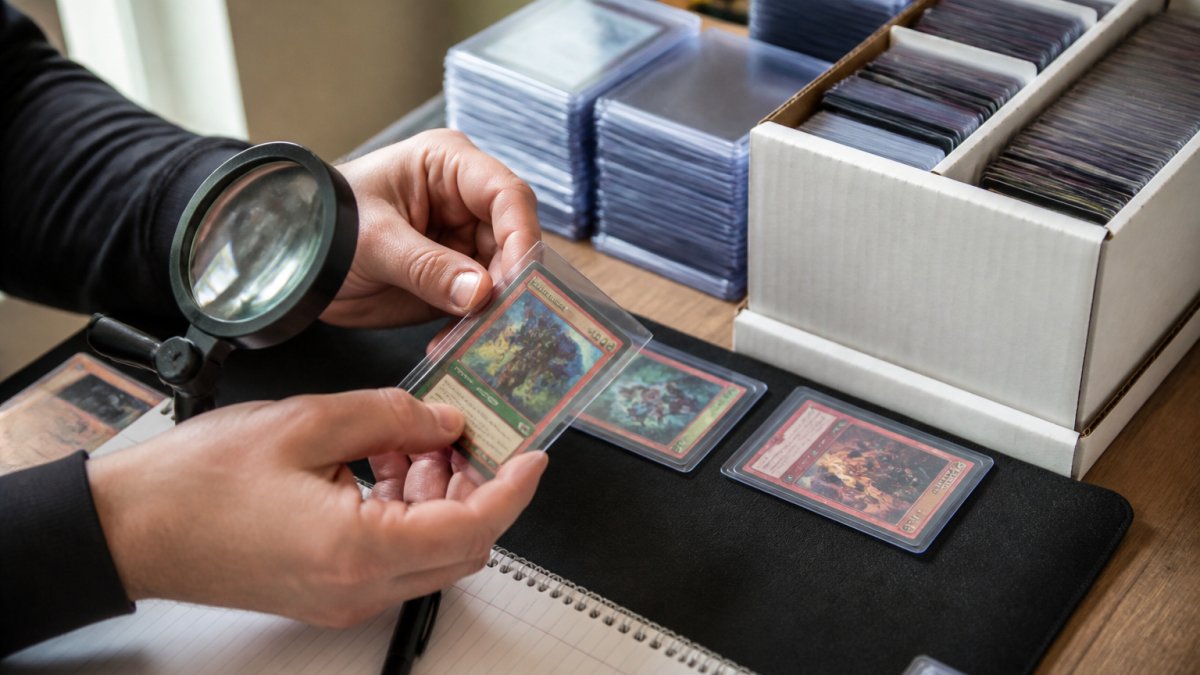
Condition is not cosmetic in tournament play: a noticeably warped, marked, or differently sleeved card can be ruled illegal at deck check. Aim for near-mint or lightly played cards that are flat and free of markings. Before you buy, read the seller's condition guide and return policy; a card that arrives damaged or misdescribed should be returnable. If a seller does not publish a condition guide, look elsewhere.
Proxies and Playtest Cards
A proxy is a stand-in card used in place of the real one. Proxies are useful for testing before you buy, but they are not legal for sanctioned tournament play.
At Dave's House of Cards, we stock individual cards from popular series so you can find the specific pieces you need. Free standard shipping applies over $7.50, and free USPS Ground Advantage shipping kicks in over $25.
USPS shipping services and delivery information
The cheapest legal printing plays exactly the same as the most expensive one. Spend your budget on the cards you will actually draw, not on the finish of the ones you will not.
Matching Your Card Choices to the Tournament Metagame
The metagame is the mix of decks people are actually playing at tournaments right now.
If half the room is playing fast aggressive decks, your removal and early defense matter more.
To read the metagame:
- Check recent tournament results and top eight lists
- Note which archetypes show up most in Swiss rounds
- Track which cards are winning the most games
This is where playtesting pays off: test against the top archetypes before the event. A card that looks great on paper can be dead weight against the wrong matchup.
The best card for your deck is not the strongest card in the format. It is the card that answers what you will actually face across Swiss rounds and the top eight.
Conclusion: From Search to Tournament-Ready
Finding specific cards for tournament play comes down to a repeatable process: define the role, search by that role, verify legality, and buy from a seller you trust. Skip any step and you waste time or money.
If you want a simpler path, Dave's House of Cards makes it easy to find the individual cards you need. Browse a curated selection of singles from popular series, and get free standard shipping on orders over $7.50.
Frequently Asked Questions
How do I find a specific card for a tournament deck?
Start by defining the card's role in your strategy, such as a removal spell or a key creature. Use a card database to search by card text, type, and color rather than just by name. This helps you find all available options. Once you have a list of candidates, check their tournament legality and then look for them on a site that sells individual cards.
How can I check whether a card is legal in a tournament format?
Always check the official ban list and format rules for the specific tournament you plan to enter. Formats like Standard, Modern, and Legacy have different card pools and banned lists. A card's legality can change, so verify it close to the event date. Reputable card databases and the game's official website are the best sources for this information.
How do I find the correct printing or version of a card?
Cards are often reprinted in different sets, which can affect their value and sometimes their legality. Use a card database to identify the specific set code and collector number for the version you need. This is important for older formats or when a specific printing is required. When buying, confirm the set and condition with the seller.
What should I check before buying cards for a tournament?
Before you buy, confirm the card's legality for your format, verify the exact printing and condition, and check the seller's return policy. For competitive play, cards should be in near-mint condition or better. Also, factor in shipping time to ensure your cards arrive before the event. Buying from a trusted source reduces the risk of counterfeits.