 how-to
How to Build Competitive Tournament Decks That Win
Quick Summary
Building competitive tournament decks starts with one clear win condition, then a fixed build order: main attacker, support, search trainers, matched energy count, and a few tech cards. Confirm format legality and rotation first, then test the list with a match log before the event.
- Write your win condition in one sentence and cut any card that does not serve it.
- Check the format, legal sets and rotation before buying any single cards.
- Build in a fixed order: attacker, support, trainers, energy count, then tech cards.
- Test opening-hand consistency across many draws before trusting a list.
- Track matchup win rates in a match log and change only one variable at a time.
Table of Contents
- How to Build Competitive Tournament Decks That Win
- Start With a Deck Concept and a Clear Win Condition
- Check the Format, Legality and Rotation Before You Buy
- How to Build a Competitive Pokémon Deck, Step by Step
- Tournament Deck List Examples and What Makes Them Work
- Trading Card Game Deck Testing: Track Results, Not Feelings
- Building a Budget Competitive Deck Without Losing Consistency
- Your Next Step: Sideboarding and Tournament Prep at Dave's House of Cards
- Frequently Asked Questions
How to Build Competitive Tournament Decks That Win
Last Updated: November 4, 2026
Start With a Deck Concept and a Clear Win Condition
Building competitive tournament decks starts with one question: how does this deck win?
Pick a concept first.
Next, set a unified game plan. Decide what your deck does on turn two, turn four, and turn six.
Common mistake: picking a concept because it looks strong in a video, then never checking whether it fits your local field.
- Write your win condition in one sentence
- List the turns when the deck should act
- Cut any card that does not serve that plan
Watch out: a deck with two unrelated win conditions usually loses to the one it did not prepare for.
Check the Format, Legality and Rotation Before You Buy
Before you spend money, confirm the format you plan to play. Format decides which cards are legal, and rotation decides when older cards leave the pool.
Pokémon Trading Card Game official rules and format information
Rotation can make a deck unplayable overnight. A card that is legal now may be gone from standard play after the next rotation.
Check these three things every time:
- The format you will play at your next event
- Which sets are currently legal
- Whether any key cards are scheduled to rotate out
Buying singles online makes this easier. Browse the Dave's House of Cards catalog by set and card to find the printings your list needs, and avoid paying for cards that will not be legal when you play.
How to Build a Competitive Pokémon Deck, Step by Step
Once the concept and format are set, build the list in a fixed order. A repeatable process beats guessing, and it makes your next deck faster to build.
Work through the steps below in order:
- Choose your main attacker or engine Pokémon
- Add the support Pokémon that help it work
- Add trainer cards for search and draw
- Set your energy count to match the attack costs
- Add one or two tech cards for known matchups
- Count the total and remove anything extra
Balancing Pokémon, Trainers and Energy
Balance matters more than raw card power. Too many Pokémon leave you with dead cards in hand. Too few trainers make the deck slow to find its pieces.
A common starting point is a balanced split of Pokémon, trainers, and energy, then adjust based on testing.
Watch out: adding a tech card for every matchup bloats the deck and hurts consistency.
Building a Consistent Opening Setup
Consistency comes from your opening hand. Count how many starting hands let you set up on turn one. A deck that sets up in most opening hands beats a stronger deck that stalls.
Test your opening with a simple check: shuffle, draw seven, and note whether you can reach your attacker and energy. Repeat this across many draws. Cards that cause a bad opening should be replaced or reduced.
Tournament Deck List Examples and What Makes Them Work
Looking at a strong deck list teaches you how the pieces fit. Study the list for its concept, its search cards, and its energy count, then ask why each slot exists. Strong lists in the Pokémon Trading Card Game share a few traits: a clear main attacker, enough search to find it, and a tight energy count.
To try a build, you can look for the core cards you need in the Dave's House of Cards catalog.
Read the Metagame Before You Copy a List
A deck list is an answer to a specific field. Before you copy one, identify what you expect to face. A simple method:
- List the five to eight archetypes you expect at your next event, based on recent local results and online ladder data.
- Estimate how often you expect to face each one (for example, "three of eight rounds against the most popular attacker").
- For each archetype, note whether your core plan wins, loses, or is even.
- Only then decide which tech cards earn a slot.
A tech card is worth including when it flips a matchup you expect to face more than once. A card that answers a deck you will see once in eight rounds is usually not worth the consistency cost.
Adapt Without Breaking the Core Plan
Metagame adaptation fails when it dilutes the deck's engine. Keep the core intact and adjust the edges:
- Keep your main attacker, your search engine, and your energy count stable.
- Adjust one or two flexible slots, a tech attacker, a stadium, or a recovery card, to answer the top expected deck.
- Re-test after each change using the match log from the testing section.
A common pattern is to add a single copy of an answer card and one more search card to find it, rather than three copies of the answer. That keeps the deck consistent while still giving you outs.
Watch out: building entirely around beating one popular deck often leaves you soft to the second-most-common deck, which you will still face in Swiss rounds.
Prepare a Round-by-Round Plan
Building the deck is half the job; preparing to play it is the other half. Before the event, write a short matchup sheet:
- For each expected archetype: your win condition, the card you must find early, and the card you must deny the opponent.
- Your priority targets: which opposing Pokémon or engine pieces to knock out first.
- Your resource plan: when to use your once-per-game effects and which cards to save for the late game.
If your format uses a sideboard or between-game adjustments, write the exact swaps for each matchup, which cards come out and which go in, so you are not deciding under time pressure.
Finally, confirm your list is legal for the event: check the current banned list, the sets legal in the format, and any event-specific rules before you submit.
A quick comparison of the matchup-prep steps covered in this section, so you can see what each one checks before you play.
| Step | What to check | Key output |
|---|---|---|
| Metagame read | Archetypes you expect to face | Matchup expectations |
| Tech card decision | Matchup you face more than once | Keep or skip a slot |
| Adaptation | Core engine and energy count | One or two flexible slots changed |
| Round-by-round plan | Win condition and key targets per matchup | Matchup sheet |
| Legality check | Banned list and legal sets | Event-ready list |
Trading Card Game Deck Testing: Track Results, Not Feelings
Playing a deck a few times tells you little. Track results so you can see what works, and treat every change as an experiment with a before and after.
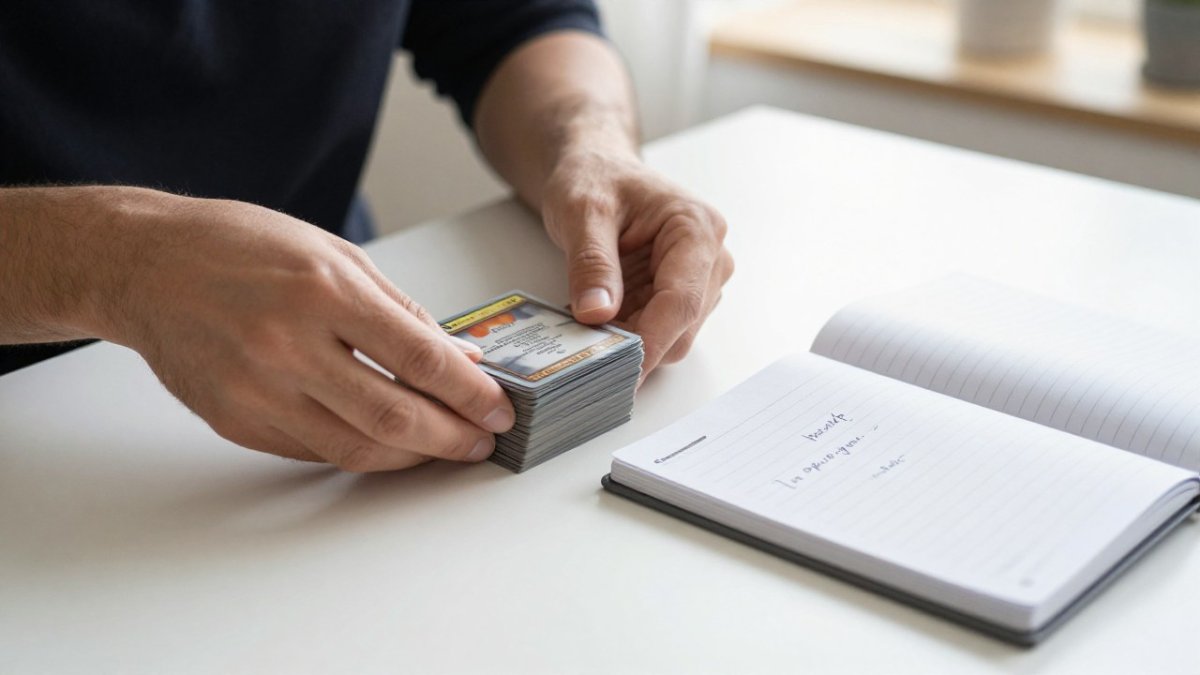
Set Up a Match Log That Answers Questions
A useful log records more than win or loss. Use a spreadsheet or notebook with these columns for every game:
- Date and event (league night, online ladder, testing session)
- Your deck and the opponent's archetype
- Turn order (going first or second)
That last column is where deck changes come from. A card that sits in hand every game is a cut candidate regardless of how strong it looks on paper.
Use Sample Size Before You Trust a Win Rate
A win rate built on a small sample can swing from luck alone. Tournament players often avoid drawing firm conclusions from very small samples, so treat early results as a starting signal rather than proof. If you go 4-1 in five games, you have not proven the deck is good; you have a starting signal.
Track two numbers separately:
- Overall win rate across all opponents, a rough health check on the deck.
- Matchup win rate against each archetype, the number that actually drives card choices.
A deck can post a strong overall record while losing badly to the most common deck in the room. The matchup breakdown exposes that.
Measure Opening-Hand Consistency
Consistency is testable. Shuffle, draw seven, and record whether the hand can reach your main attacker and attach energy by turn two. Repeat this 30 to 50 times and note the percentage of keepable openings. Then do the same after a change.
Watch out: testing only against your friends' decks inflates your win rate and hides the matchups that will knock you out of a tournament.
Change One Variable at a Time
Change one card at a time, or one small package (for example, two copies of a search card for two copies of a draw card). If you swap three unrelated cards at once, you will not know which change helped. Test each change against the same opponents, keep the log, then keep it or revert it.
A practical loop looks like this:
- Play 10 games with the current list and log results.
- Identify the single most common problem in the log (dead cards, missed setup, a losing matchup).
- Make one change that addresses it.
- Play 10 more games against the same opponents.
- Compare matchup win rates and opening-hand consistency, then keep or revert.
This loop is slower than gut-feel swapping, but it produces a list you can defend at a tournament instead of a pile of untested ideas.
Building a Budget Competitive Deck Without Losing Consistency
You do not need expensive cards to compete. Focus your budget on the cards that drive the deck's consistency, and use cheaper copies for basic cards.
Start with the card types that do the most work.
Basic Energy is a good place to save. A card such as Lightning Energy Common Expansion Lp fills the energy slots, and a Super Energy Retrieval Rare Gold Silver To A New World Lp can help recover energy during a game.
Budget decks lose consistency when they use weak substitutes for key cards. Keep the cards that set up your opening, and swap only the optional slots.
Your Next Step: Sideboarding and Tournament Prep at Dave's House of Cards
Frequently Asked Questions
What makes a trading card game deck competitive?
A competitive deck has a clear win condition, a consistent way to reach it on most turns, and answers to the strategies it is likely to face. Consistency matters as much as raw power: a deck that functions in most games beats a stronger one that stalls often. Check the current metagame to see which decks players are bringing, then choose cards that support your plan against those matchups. Test the list enough times to confirm it wins the games it should, not just the ones you remember.
How do I choose a deck for a tournament?
Start with the format you will play and the decks you expect most at the event. Pick an archetype you can pilot confidently, because practice with a deck matters more than small card differences. Look at recent tournament results for the format to see which strategies are performing. Then choose a deck that has favorable or acceptable matchups against the top decks, and avoid a deck that depends on one or two popular opponents to win.
How many cards should a tournament deck have?
Most trading card games set a fixed deck size, so the real question is how to divide those slots. Pokémon, Magic: The Gathering and Yu-Gi-Oh! each have their own rules, so confirm the exact count and copy limits in the official rules for your format before you build. Within those limits, prioritize core cards that drive your strategy, then add search, draw and answer cards that keep the deck consistent. Check the official rules for your game and format before you finalize any list.
How do I test and improve a tournament deck?
Play a set number of practice games against each deck you expect to face and record every result. Track which opening hands lost games and which cards were dead in your hand, since those patterns point to specific changes. Use the win rate across a reasonable sample size rather than judging from one or two games, because variance can mislead you. Make one change at a time, retest, and keep the version that performs better across your matchups.
Before your next event, check your list against the format, count your energy, and test your opening setup. Then review your match log and adjust one card at a time.
Ready to build? Shop all of our individual trading cards at Dave's House of Cards to find the exact pieces your deck needs, with Free Standard Shipping on orders over $7.50.