 ultimate-guide
Where to Buy Tournament Legal Cards: A 2026 Guide
Table of Contents
- Understanding Card Legality for Tournament Play
- How to Check Card Legality for Tournaments
- Identifying Fake Trading Cards Before You Buy
- Where to Buy Singles for Competitive Play
- Card Condition Standards for Tournament Play
- Competitive Deck Building Tips
- Frequently Asked Questions
Last Updated: September 28, 2026
Understanding Card Legality for Tournament Play
Tournament legal cards form the foundation of competitive play. Whether you're building your first tournament deck or refining an established one, knowing what makes a card legal is non-negotiable. The rules governing card legality vary by format, card age, and printing source, and getting this wrong means your entire deck gets rejected at registration.
What Makes a Card Tournament Legal
A card is tournament legal when it meets three core criteria: it's from an official set, it's in acceptable condition, and it hasn't been modified or counterfeited. The Wizards of the Coast official rules (for Magic: The Gathering) and the Pokémon Company International rules (for Pokémon) define legality based on the card's printing, not its rarity or value.
The most common misconception is that older cards are automatically illegal. That's wrong. A card from 1993 is perfectly legal in formats that support it, provided it's an authentic copy from an official printing. What matters is whether the set symbol and collector number match official release records. Cards with gold borders, for instance, indicate promotional or special printings that may have restricted tournament use.
Condition also plays a role. A card with visible creases, water damage, or heavy wear may be deemed unplayable at competitive events. Tournament organizers inspect cards before matches, and visibly damaged cards can be rejected even if they're authentic.
Format-Specific Legality Rules
Different formats have different card pools. Standard format rotates yearly and only includes recently released sets (MTG Standard Format). Modern format includes all cards from a specific cutoff year forward. Commander format allows almost any card ever printed, with a banned list that's updated regularly.
Understanding your format's card pool is essential before you buy. A card legal in Modern might be banned in Standard. A card legal in casual play might be restricted in Commander. Each format maintains an official banned and restricted list that changes throughout the year.
When sourcing cards, verify the format you're playing in first. Then cross-reference the official rules database to confirm legality. This prevents wasting money on cards you can't use.
How to Check Card Legality for Tournaments
Before purchasing tournament legal cards, verify their legal status using official resources. This step saves time and money by preventing purchases of restricted or banned cards.
Using Official Decklist Databases
The official Wizards of the Coast website and Pokémon Company International site maintain comprehensive card databases with legality filters. These databases are updated in real time when the banned list changes. Search by card name, set, or collector number to instantly see which formats allow that card.
Decklist websites like Scryfall (for Magic) and Bulbapedia (for Pokémon) aggregate official data and provide advanced filtering. You can search by format, mana cost, card type, or ability, then instantly see legality status for each result. These tools are free and reliable.
Many competitive players build their decks using these databases before shopping. They create a decklist, verify every card's legality, and only then search for where to buy tournament legal cards. This workflow prevents purchasing errors.
Checking Set Symbols and Collector Numbers
Every legitimate card has a set symbol (a small icon) and collector number printed on it. These two pieces of information uniquely identify which set and printing a card comes from. Counterfeiters often get these details wrong, the symbol might be slightly off-color, the number might be missing, or the placement might be incorrect.
Learn to recognize the official set symbols for the sets you're buying from. Compare the symbol on your card to official reference images. The collector number should match the card's position in the official set list. If a card claims to be from a specific set but the number doesn't align with that set's card count, it's likely counterfeit.
Official Gatherer (Magic's database) and the Pokémon TCG Set List both show accurate set symbols and collector numbers for every legitimate card. Use these as your reference when inspecting cards before purchase.
Identifying Fake Trading Cards Before You Buy
Counterfeit cards are a real problem in the secondary market. Sophisticated fakes can fool casual buyers, but they fail inspection at tournaments. Learning to spot counterfeits protects your investment and prevents wasting money on unusable cards.
Visual Inspection Techniques
Start with the card stock itself. Authentic cards have a specific weight and thickness. Counterfeit cards often feel slightly different, thinner, heavier, or with a different texture. Hold an authentic card and a suspected fake side by side. The difference becomes obvious with practice.
Check the print quality. Official cards have crisp, clean printing with sharp text and borders. Counterfeit cards often show blurry text, misaligned colors, or rough edges (Buyer Beware). The holofoil pattern (on holographic cards) should be consistent and uniform. Fakes often have uneven or distorted holofoil.
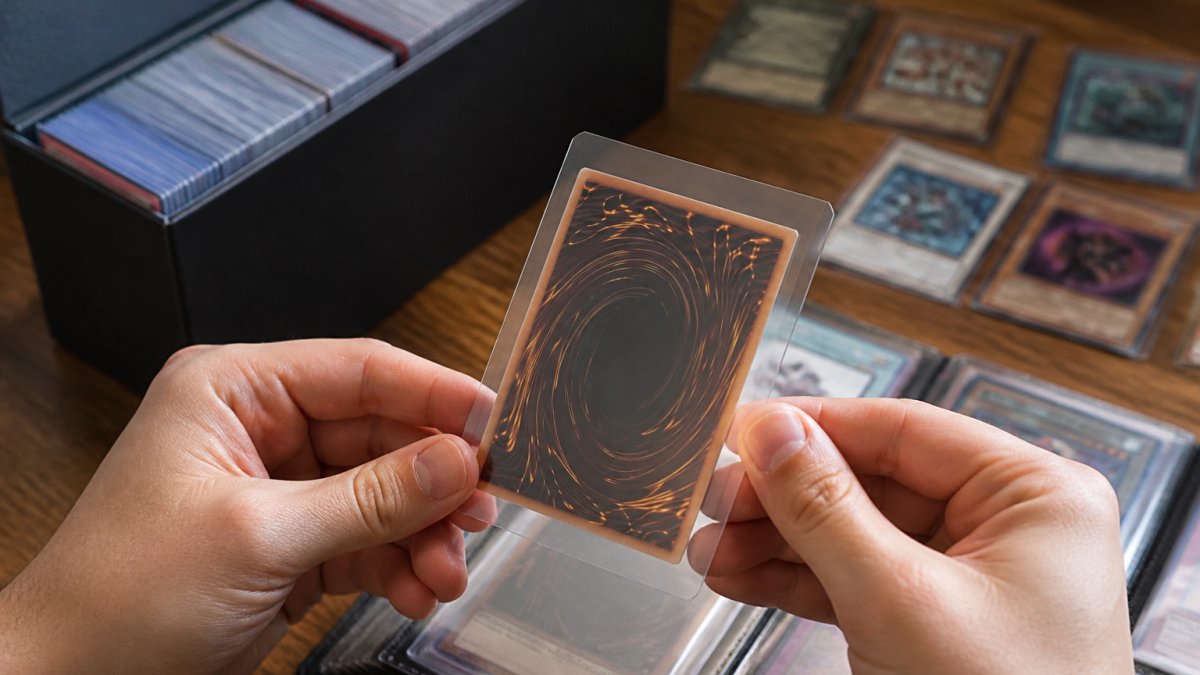
Examine the back of the card. The back should have consistent color, clear text, and proper alignment. Counterfeit backs sometimes show color bleeding, faded text, or misaligned elements. The card back's texture should match the front.
Look at the edges. Authentic cards have clean, straight edges with consistent coloring. Counterfeit cards sometimes show rough edges, color bleeding at the edges, or uneven trimming.

Red Flags in Online Listings
Prices that seem too good to be true usually are. If a rare card is listed for half its market value, question why. Legitimate sellers price competitively but not drastically below market rate, there's no profit in that.
Vague product photos are a warning sign. Reputable sellers show clear, close-up images of both sides of the card, the edges, and the holofoil (if applicable). If a listing shows only a small thumbnail or a stock photo, avoid it.
Seller history matters. New sellers with no feedback are riskier than established sellers with hundreds of positive reviews. Check how long the seller has been active and what percentage of their reviews are positive. A seller with 99% positive feedback over five years is more trustworthy than one with 95% feedback over three months.
Watch for sellers who won't accept returns or offer no condition guarantee. Reputable sellers stand behind their products. If a seller refuses returns or claims all sales are final, that's a major red flag.
Where to Buy Singles for Competitive Play
Finding reliable sources for tournament legal cards requires knowing where to look and what to evaluate in a seller.
Local Game Stores vs. Online Retailers
Local game stores offer hands-on inspection before purchase. You can see the card's condition, verify authenticity, and walk out with it immediately. Many local stores have knowledgeable staff who can answer format-specific questions. The downside is limited inventory, smaller stores might not stock every card you need.
Online retailers offer vast inventory and often competitive pricing. You can browse thousands of cards from home and compare prices across multiple sellers. The downside is you can't inspect the card before purchase, and shipping adds time and cost. Returns can be complicated if a card arrives damaged or in worse condition than described.
Dave's House of Cards combines the benefits of both approaches. We maintain a curated selection of individual cards from popular series, making it easy to find specific pieces for your tournament deck. Our online shopping experience is straightforward, and we offer convenient shipping options including Free Standard Shipping over $7.50 and Free USPS Ground Advantage Shipping over $25. This means you get the inventory breadth of an online retailer with reasonable shipping costs.
What to Look for in a Reliable Seller
Established sellers have track records. Check their reviews on multiple platforms, not just their own website. Consistent positive feedback across different review sites indicates reliability.
Transparent grading matters. Reliable sellers clearly describe card condition using standard grading terms: Near Mint, Lightly Played, Moderately Played, Heavily Played, and Poor. They explain what each grade means and show photos that match the stated condition.
Clear return policies protect you.
Card Condition Standards for Tournament Play
Tournament organizers enforce condition standards to ensure fair play. A card's condition affects whether it's playable in your deck.
Competitive Deck Building Tips
Building a tournament-legal deck requires strategy beyond just finding the cards. Smart sourcing saves money and time.
Sourcing Cards Within Your Budget
Prioritize staple cards first. These are the most-played cards in your format, they're essential to any competitive deck. Buy staples in Near Mint condition because you'll play them frequently. Prioritize quantity over rarity when building the core of your deck.
Avoiding Common Purchasing Mistakes
Don't buy cards without verifying format legality first. A card might be legal in one format but banned in another. Always cross-reference the official rules database before purchasing.
Frequently Asked Questions
What makes a card tournament legal?
A card is tournament legal if it comes from an official expansion set approved for the specific format you're playing. The card must have the correct set symbol, collector number, and printing. Gold-bordered cards, proxies, and promotional versions of cards not printed in standard sets are typically banned. Check the official rules document for your game's format to confirm legality before purchasing.
How can I verify if a trading card is tournament legal?
Use the official decklist database or format rules for your trading card game. Search for the card by name and set symbol to confirm it's approved for your format. Check the collector number and set symbol on the card itself against the official listing. Many retailers now display format legality information on product pages. When buying singles, ask the seller to confirm the card's format eligibility if you're unsure.
How do I identify counterfeit cards when shopping online?
Look for unusually low prices compared to market rates, which signal counterfeits. Request high-resolution photos showing the card's texture, printing quality, and set symbol. Authentic cards have sharp, consistent printing and proper weight.
Do tournament legality rules change based on the format?
Yes. Standard format only allows cards from recent expansion sets, while Modern format permits cards from 2003 onwards. Commander format has a banned list that changes quarterly. Vintage and Legacy formats have their own restrictions. Always check the current official rules for your specific format before buying cards, as legality can shift with new set releases and quarterly updates. Different games also have different rules, Pokémon, Magic, and Yu-Gi-Oh each maintain separate legality standards.