 ultimate-guide
Near Mint Trading Card Condition Guide
Table of Contents
- What Is Near Mint Card Condition
- Trading Card Condition Grades Explained
- Near Mint vs Lightly Played: Key Differences
- How to Grade Trading Cards: A Step-by-Step Inspection Workflow
- PSA Grading Scale for Trading Cards
- Near Mint Card Examples and Visual Reference
- Documenting and Disclosing Condition When Selling
- Frequently Asked Questions
Last Updated: October 11, 2026
What Is Near Mint Card Condition
Near Mint card condition represents one of the highest grades a trading card can achieve while still showing minimal signs of handling. A near mint trading card condition card displays virtually no visible wear to the naked eye, though minor imperfections may exist under close inspection or magnification. The card retains its original finish, sharp corners, and clean surface, making it highly desirable for collectors and competitive players alike.
Understanding near mint condition matters because it directly affects a card's value, playability in tournaments, and appeal to buyers. Cards in this grade command premium prices compared to lower conditions, yet they're more accessible than true mint or pack-fresh examples.
At Dave's House of Cards, we recognize that condition grading can feel subjective without clear standards. This guide breaks down exactly what near mint means, how to inspect cards properly, and how to communicate condition accurately when buying or selling.
Trading Card Condition Grades Explained
The Full Grading Scale
Trading cards are typically graded on a scale that ranges from Damaged to Mint, with Near Mint positioned near the top. Most grading systems use numerical scales (1-10) or descriptive categories that help buyers and sellers communicate condition clearly.
The standard grading hierarchy includes:
| Condition Grade | Abbreviation | Characteristics |
|---|---|---|
| Mint | M | Pack fresh, no visible wear, pristine |
| Near Mint | NM | Minimal visible wear, sharp corners, clean surface |
| Lightly Played | LP | Light wear visible, minor corner rounding, slight surface marks |
| Moderately Played | MP | Obvious wear, rounded corners, visible scratches, edge whitening |
| Heavily Played | HP | Heavy wear throughout, significant corner/edge damage, stains possible |
| Damaged | D | Major defects, creases, tears, heavy stains, unplayable condition |
Near Mint sits at the sweet spot where cards show virtually no play history while remaining realistic for collectors to obtain. Cards graded as Mint are exceptionally rare and command significantly higher prices due to their pack-fresh status. Understanding where your card falls on this scale is essential for accurate pricing and setting buyer expectations.
Near Mint vs Lightly Played: Key Differences
The distinction between near mint and lightly played cards often determines whether a card qualifies for competitive tournament play or commands a premium collector price. While both grades represent well-preserved cards, the differences are meaningful.
A near mint trading card condition card shows virtually no signs of handling under normal viewing. The surface remains unmarked, corners stay crisp and sharp, and edges display no whitening or wear. When you hold a near mint card at arm's length, it appears flawless.
Lightly played cards, by contrast, show obvious but light wear from handling and play. You'll notice soft corners where the edges have begun to round slightly, minor surface scratches or scuffs that catch light, and possible faint edge whitening.
The practical difference matters most when you're deciding whether to purchase a card for investment, tournament use, or display. Near mint cards hold value better over time and appeal to stricter collectors.
How to Grade Trading Cards: A Step-by-Step Inspection Workflow
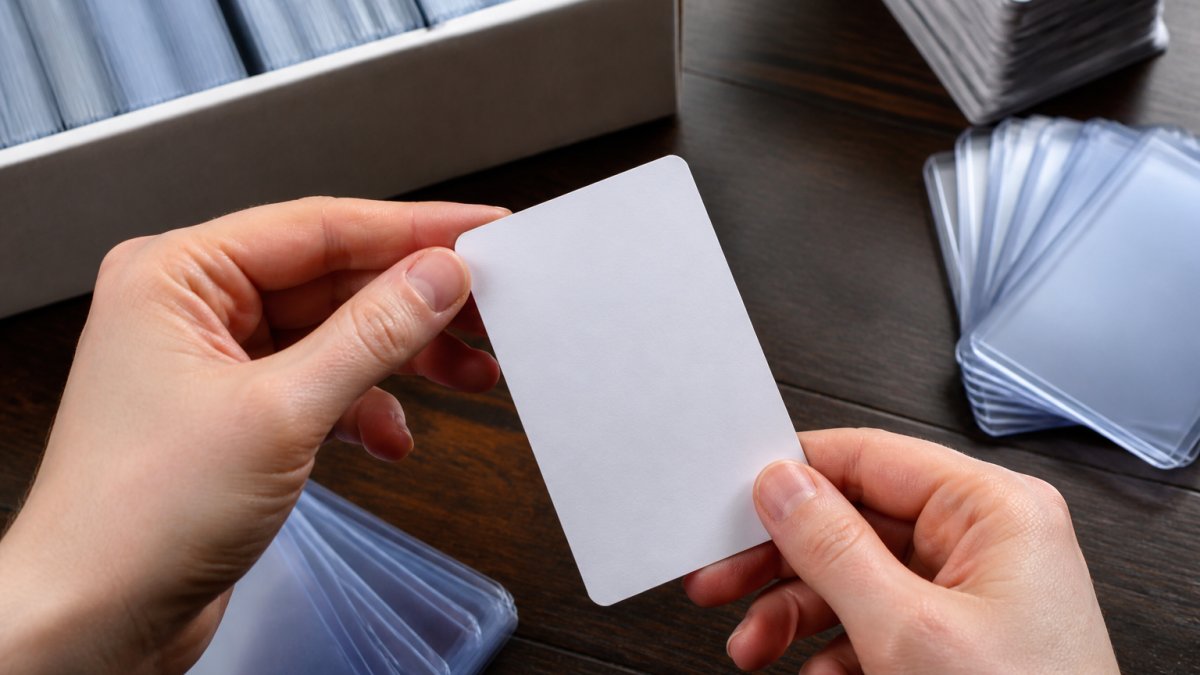
Grading your own cards requires a systematic approach and proper lighting. Rather than making a quick judgment, take time to examine each area methodically.
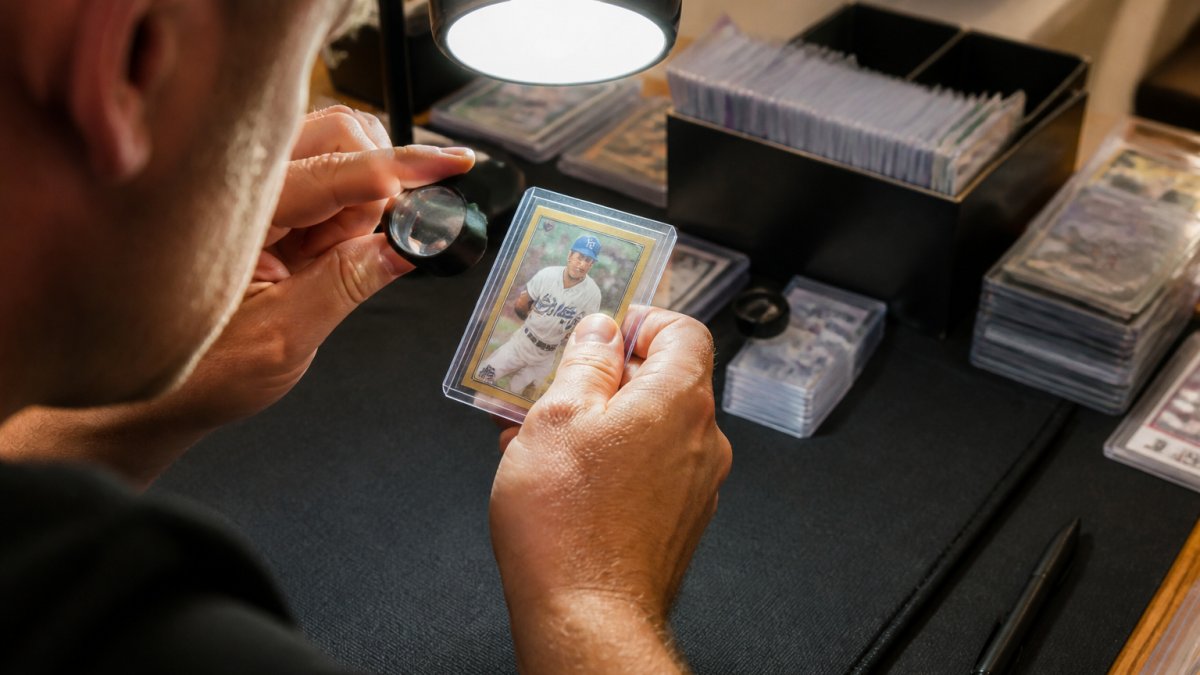
Step 1: Set up proper lighting. Use bright, natural or LED lighting that reveals surface imperfections without creating glare.
Step 2: Examine the surface for wear and scratches. Hold the card at a 45-degree angle under bright light and look for any marks, scratches, or scuffs across the entire printed area. Even minor surface imperfections lower the grade. Near mint cards should show no visible surface wear to the naked eye.
Step 3: Inspect all four corners. Corners are the first place cards show wear from handling and shuffling. Look for any softening, rounding, or whitening.
Step 4: Check the edges for whitening and wear. Run your eye along all four edges. Edge whitening occurs when the card's layers separate or wear, exposing the lighter core.
Step 5: Look for bends, creases, or folds. Flex the card gently to feel for any structural damage.
Step 6: Inspect for stains, marks, or discoloration. Check both the front and back for any spots, stains, or discoloration. Near mint cards should be clean and unmarked.
Surface Wear, Scratches, and Scuffs
Surface imperfections are the most common defects that separate near mint from lower grades. Trading cards accumulate scratches from shuffling, storage, and handling. A single visible scratch can drop a card from near mint to lightly played.
Look for scratches by tilting the card under bright light at various angles. Scratches catch light and become visible as thin lines across the printed surface. Near mint cards display no scratches visible to the naked eye. Scuffs, which are broader areas of light wear rather than distinct lines, should also be absent or invisible without magnification.
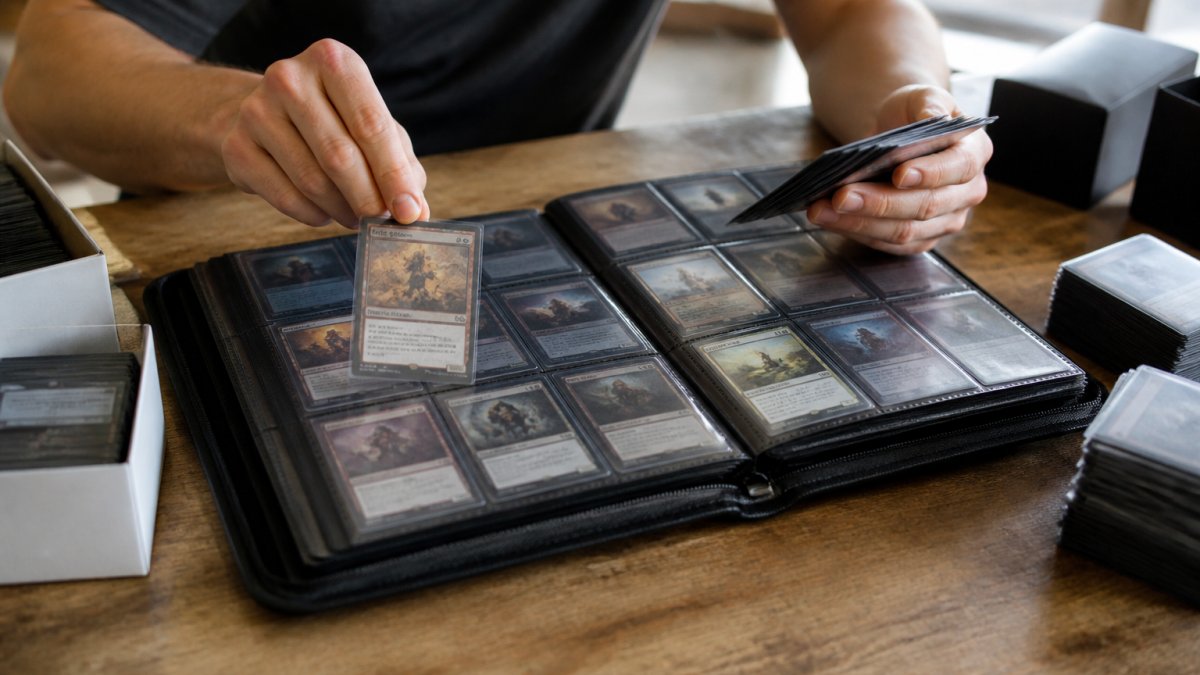
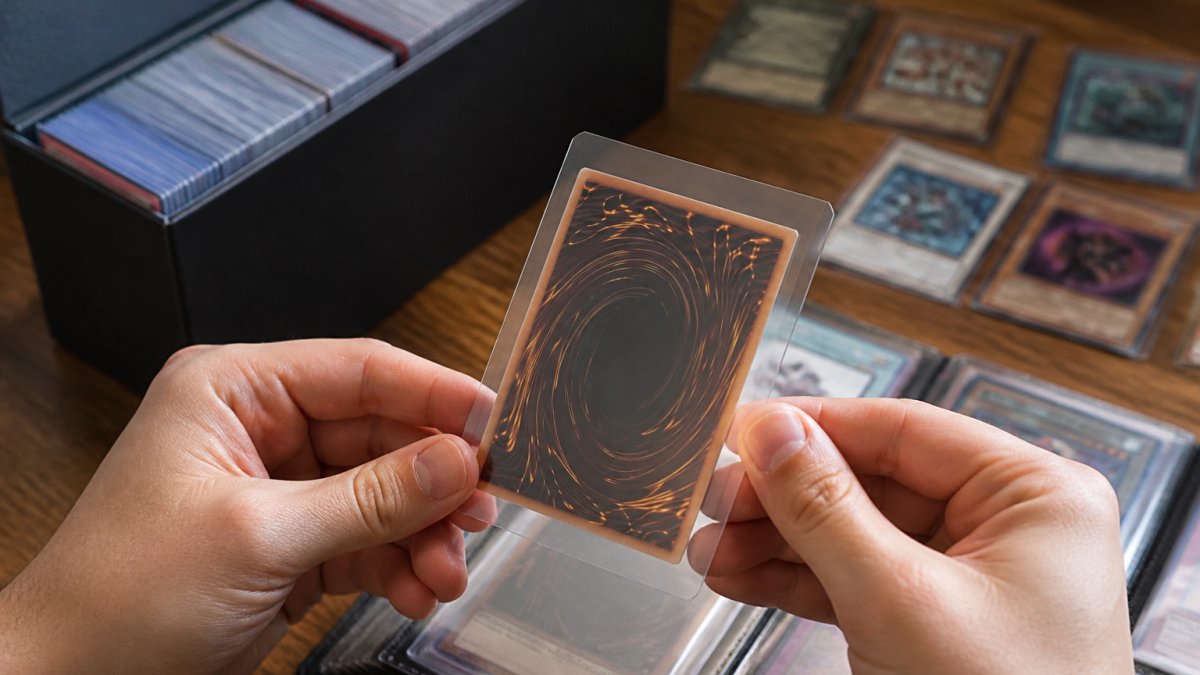
Storage method affects surface condition significantly. Cards stored in soft sleeves without protective cases accumulate more surface wear than those in rigid holders. Handling with bare hands transfers oils that can cause faint marks over time. When assessing surface condition, consider whether marks are from manufacturing (which is acceptable) or from play and handling (which indicates wear).
Corners, Edges, and Whitening
Corners and edges reveal a card's handling history more clearly than any other feature. These areas experience the most stress during shuffling, storage, and transport. Even subtle corner wear indicates the card has been played or handled.
Inspect corners by looking at them head-on and from the side. Crisp corners have sharp, defined edges with no visible rounding or softening. Soft corners show slight rounding where the edge has worn smooth. This rounding is often the first sign of play and immediately disqualifies a card from near mint status.
Edge whitening occurs when the card's cardstock layers separate or wear, exposing the white or gray core material. This is irreversible and permanent. Even minimal whitening visible only under magnification indicates the card has experienced significant wear. Near mint cards should show no whitening on any edge.
Bends, Creases, and Stains
Structural damage like bends and creases permanently affects card condition and value. A bent card may regain some flatness if pressed, but the damage remains visible. Creases are permanent deformations in the cardstock and immediately drop a card well below near mint status.
Stains from spills, food, or environmental exposure are also permanent. Even faint stains visible only under certain lighting indicate play history and lower the grade. Near mint cards should be completely clean with no stains, marks, or discoloration on either surface.
PSA Grading Scale for Trading Cards
The Professional Sports Authenticator (PSA) grading scale is one of the most widely recognized standards in the trading card industry. PSA uses a 1-10 numerical scale where 8 represents near mint condition. Understanding this scale helps you align your own assessments with professional grading standards.
According to PSA's official grading standards, a PSA 8 (Near Mint-Mint) card shows only the slightest wear, with sharp corners and a clean surface. A PSA 9 (Mint) represents an even higher standard with virtually no visible wear.
Other grading companies like Beckett Grading Services (BGS) and Sportscard Guaranty Company (SGC) use similar scales with slightly different terminology. BGS uses a 1-10 scale as well, while SGC historically used a 1-10 scale with different descriptors.
When buying graded cards, the numerical grade provides objective verification of condition. When selling ungraded cards, referencing these professional standards helps buyers understand what they're purchasing.
Near Mint Card Examples and Visual Reference
Identifying near mint cards becomes easier with visual examples of borderline cases. The difference between a solid near mint card and one that just barely misses the grade often comes down to subtle details.
A true near mint card displays a completely clean, unmarked surface under normal viewing. The corners are sharp and defined with no visible rounding. All four edges remain uniform in color with no whitening.
Borderline near mint cards show one or two minor characteristics that threaten the grade. Perhaps there's a single soft corner with just barely noticeable rounding, or a faint surface mark visible only at certain angles.
The practical distinction matters most for expensive cards. A $500 card graded near mint versus lightly played might have a $200+ price difference. For lower-value cards, the condition difference may be less significant financially, but it still affects collectibility and tournament eligibility.
Documenting and Disclosing Condition When Selling
Accurate condition disclosure protects both you and your buyers. When you misrepresent a card's condition, you invite returns, disputes, and damage to your reputation.
Start by taking detailed photos under bright, consistent lighting. Photograph the front, back, and close-ups of corners and edges. Include shots at different angles to show surface condition clearly.
Write a detailed condition description that references specific observations. Rather than simply stating "near mint," explain what you observed: "Sharp corners with no visible rounding.
Disclose any defects, no matter how minor. If you spot a faint mark, soft corner, or any other imperfection, mention it.
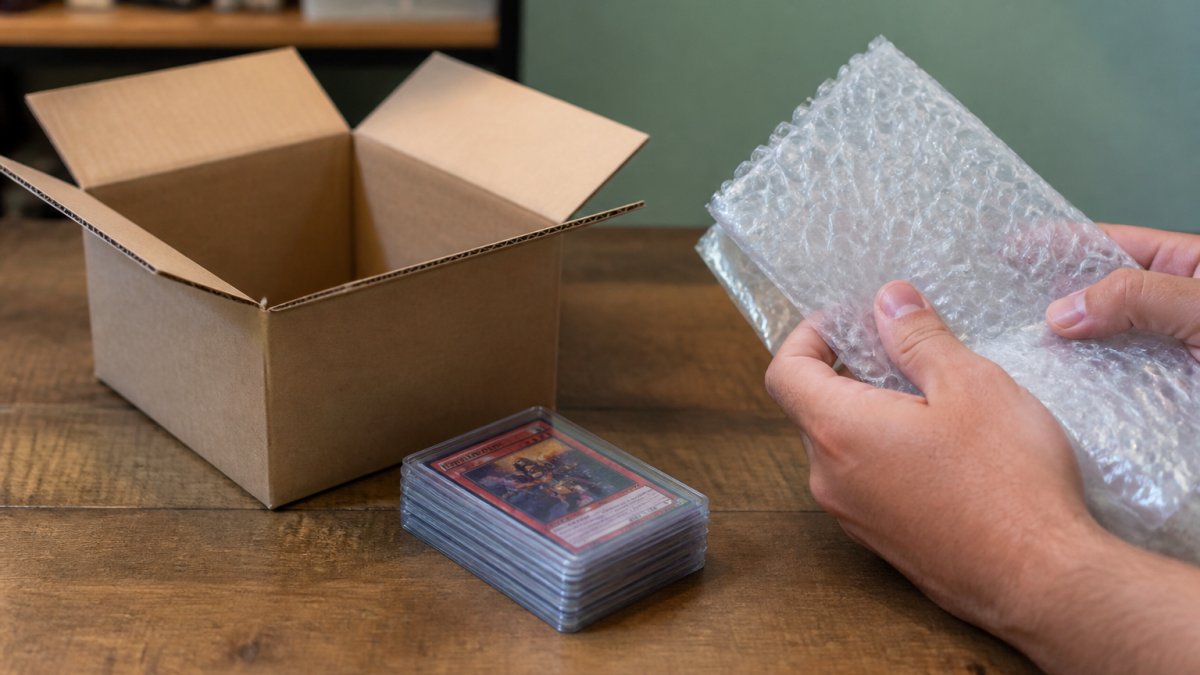
When shipping, use proper protection. Cards should be in sleeves, placed in top loaders or rigid card holders, and padded within the package.
Accurate condition assessment builds trust in the marketplace. When you accurately represent condition, buyers return for future purchases and recommend you to other collectors.
Accurate condition grading separates confident buyers from hesitant ones.
Frequently Asked Questions
What qualifies as near mint condition for a trading card?
Near mint (NM) cards show minimal wear from handling and play. They have crisp corners with only slight rounding, unmarked surfaces with no visible scratches or scuffs, clean edges with minimal whitening, and no stains, bends, or creases. A near mint card may have been in a sleeve immediately after opening and saw little to no actual play. The card retains its original gloss and sharp focus throughout.
What is the difference between near mint and lightly played?
Near mint cards display almost no signs of play, while lightly played cards show obvious but moderate wear. Lightly played cards have noticeably rounded corners, light scratches or scuffs visible on the surface, visible edge whitening, and possible minor creases. Lightly played cards typically spent time in a deck or were shuffled regularly. Near mint cards are significantly more valuable and command premium prices from collectors and competitive players.
How do you check a trading card for whitening and edge wear?
Examine the card's edges under bright light by tilting it side-to-side. Whitening appears as light-colored exposure where the cardstock layers separate, most visible on the left and right edges. Near mint cards have no whitening or only microscopic traces. Look at the corners as well, they often whiten first from shuffling and handling. Use a loupe or magnifying glass for accurate assessment. Compare your card against known examples to calibrate your eye.
Can a near mint card receive a PSA 10 grade?
No. PSA 10 is reserved for gem mint condition, which is technically superior to near mint. A near mint card typically receives a PSA 8 or PSA 9 grade. PSA 9 (mint condition) is very close to near mint but shows virtually no imperfections. PSA 8 (near mint-mint) allows for minor wear. The distinction matters significantly for value, a PSA 9 or PSA 10 commands substantially higher prices than a PSA 8, even within the near mint range.
How should you describe a near mint card when selling it?
Be specific about condition rather than using vague terms. Describe the card's surface as 'unmarked' or note any visible scratches or scuffs. Specify corner condition, 'crisp corners with minimal rounding' or 'soft corners.' Detail edge wear and whitening if present. Mention any stains, creases, or bends explicitly. Disclose the card's pack history if known (pack fresh, light play, etc.). Provide clear photos under good lighting. Accurate disclosure prevents returns and builds trust with buyers.
What are the acceptable conditions for trading cards in competitive play?
Most organized play formats require cards in near mint condition or better to avoid marked-card violations. Tournament organizers inspect cards for consistent wear patterns, and heavily worn cards can be flagged as marked. Near mint cards (PSA 8-9) are the standard for competitive deck construction. Some tournaments accept lightly played cards if they're not obviously marked, but near mint is the safer choice. Check your specific league's rules, as standards vary by organization.
Does near mint mean a card is perfect?
No. Near mint cards are not perfect, they show minimal but visible signs of wear. Perfect cards are graded PSA 10 (gem mint) or PSA 9.5. Near mint cards may have slight corner rounding, minimal surface imperfections, or very light edge wear that's only visible under close inspection. The term 'near mint' acknowledges that the card has been handled and possibly played, just not heavily. This distinction is important for pricing and buyer expectations.