 listicle
9 Best Ways to Store Collectible Cards Safely
Last Updated: November 5, 2026
Quick Summary
The best way to store collectible cards is in layers: sleeve each card first, place valuable ones in top loaders or semi-rigid holders, and keep them in a sealed, acid-free box in a stable room. Store cards away from direct sunlight, extreme temperatures, humidity and water to prevent fading, warping and edge wear.
- Sleeve every card before placing it in any other holder to stop scratches and fingerprints.
- Use top loaders or semi-rigid holders to keep valuable cards flat and stop them bending.
- Choose acid-free boxes, since acid in ordinary cardboard can slowly discolor card edges.
- Keep cards out of direct sunlight, because light fades printing and the damage is irreversible.
- Store boxes off the floor and away from pipes and windows to reduce water damage risk.
Table of Contents
- Why Storage Method Matters for Your Collectible Cards
- 1. Penny Sleeves: The First Layer of Protection
- 2. Top Loaders and Semi-Rigid Holders for Valuable Cards
- 3. Trading Card Binders: Organizing Complete Sets
- 4. Storage Boxes for Bulk and Long-Term Collections
- 5. Display Cases and Magnetic Holders
- How to Protect Cards from Light, Heat, Humidity and Water
- Your Next Step: Matching a Storage Setup to Your Collection
- Frequently Asked Questions
Collectible cards lose value fast when they are stored badly. A single crease, a faded corner or a film of dust can cut what a card is worth, and most of that damage happens in a drawer or a shoebox, not during play. This guide covers the best ways to store collectible cards, from the cheapest first layer to the setups that suit a serious collection.
Why Storage Method Matters for Your Collectible Cards
Collectible cards are paper-based, so they react to their surroundings. Light fades ink, humidity invites warping, and rubbing against other cards causes edge wear. A card that looks fine today can show damage after a year in a loose stack.
The storage method you choose should match the value of the cards and the size of your collection. A bulk box of commons does not need the same protection as a graded rare. Keep that in mind as you read the options below, because the best setup is usually a combination rather than a single product.
1. Penny Sleeves: The First Layer of Protection
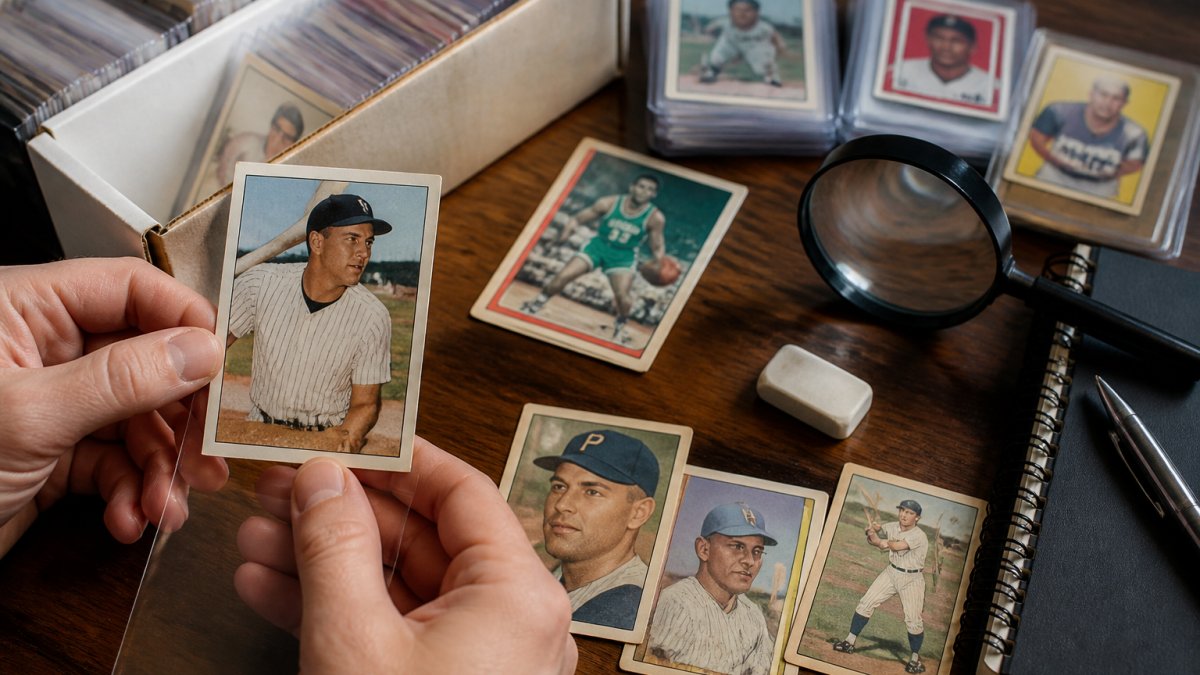
Penny sleeves are thin, clear plastic sleeves that slide over a card. They are the cheapest way to stop surface scratches and fingerprints, and most experienced collectors start here.
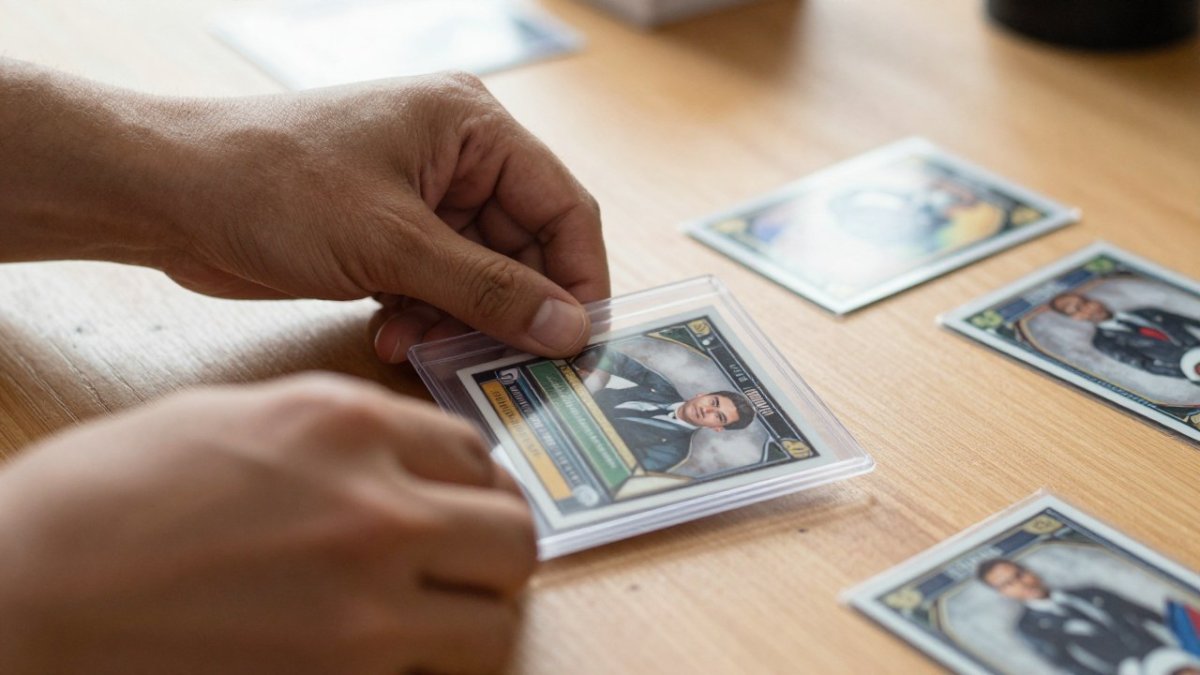
Sleeve every card before it goes into any other holder. The sleeve takes the abrasion so the card does not have to. Slide the card in gently, keep the sleeve flat, and avoid forcing a card that does not fit.
Watch out: a sleeve alone is not enough for valuable cards. Dust and bending still reach the card, so add a rigid holder or a sealed box on top of the sleeve.
2. Top Loaders and Semi-Rigid Holders for Valuable Cards
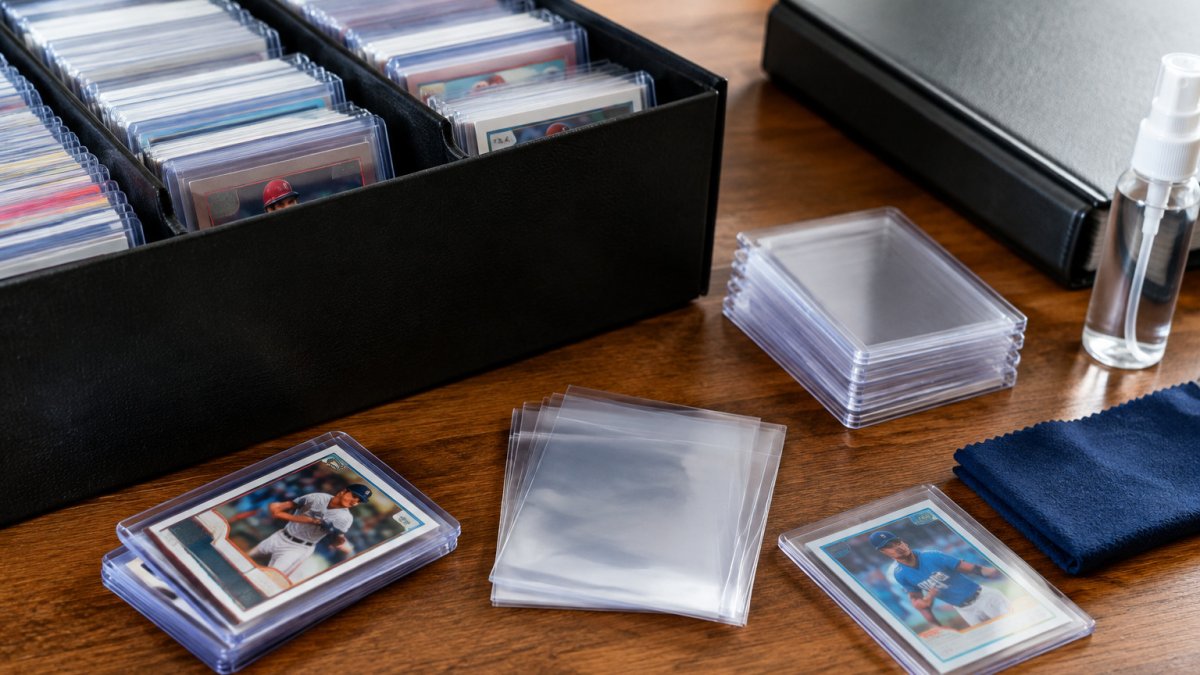
Top loaders are rigid plastic holders with an opening at the top. Once a sleeved card is slid inside, the holder keeps it flat and stops it from bending when the stack shifts. Semi-rigid holders work on the same principle with a flexible edge, and they are often used for cards that need extra support without the weight of a full top loader.
For higher-value cards, sleeve the card first, then place it in the holder.
3. Trading Card Binders: Organizing Complete Sets
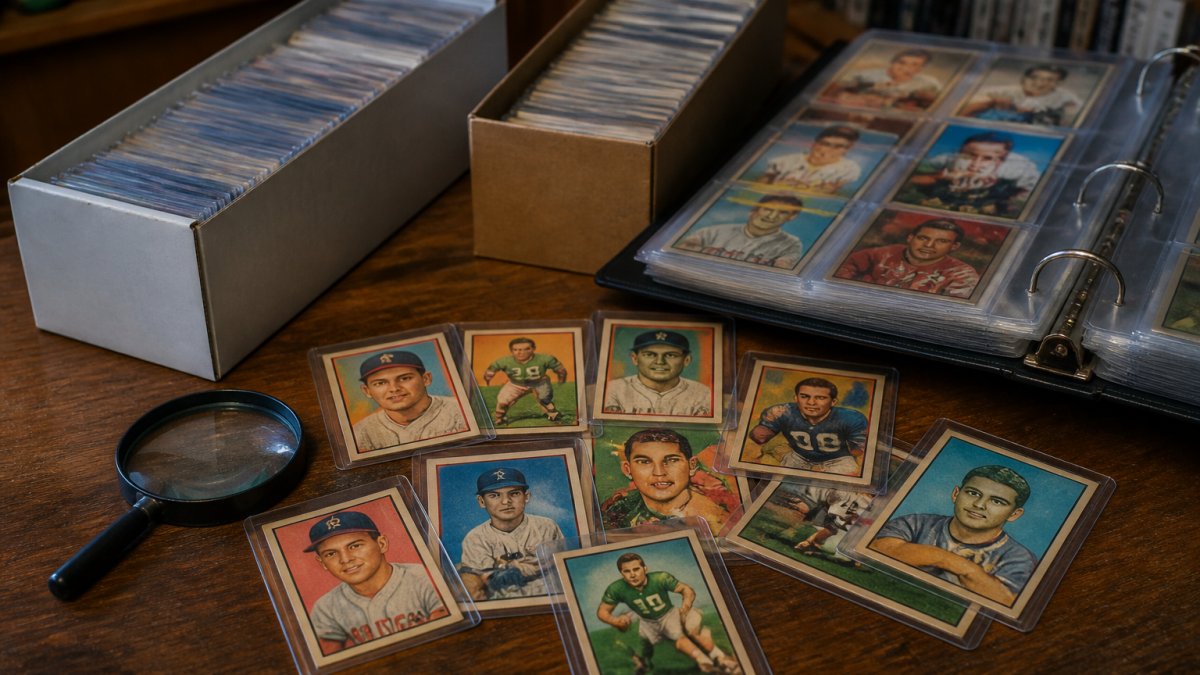
Binders suit collectors who want to see a full set at a glance. Side-loading binder pages let you slide cards into pockets from the edge, which reduces the chance of catching and scratching a card as you insert it, and makes them a practical way to store collectible cards you display often.
Binders are best for commons, duplicates and sets you are building. Keep your most valuable cards out of a binder unless each one is sleeved and the pages are archival quality.
4. Storage Boxes for Bulk and Long-Term Collections
Storage boxes are the practical choice for large collections, but "a box" covers a wide range, and the right one depends on what you are storing and how often you need to reach it.
Match the box to the card value and collection size. A simple framework works better than buying one product for everything:
- Bulk commons and duplicates. Use a basic acid-free cardboard box, cards sleeved or not, packed upright and not overfilled.
- Mid-value singles and playable cards. Use a rigid box with dividers so cards stand upright and do not lean, and keep them sleeved. This is where a little extra structure prevents the edge wear that shows up first.
- High-value and graded cards. Move up to a sealed, archival-safe container, keep graded cards in their original slabs and store them upright so the slab does not rest on a corner, and consider a lockable case if the collection is large enough to insure.
- Long-term storage. Choose acid-free material, a tight lid and a stable location, and label the box with contents and date so you are not opening everything to find one card.
Choose acid-free material. Acid in ordinary cardboard and some plastics can slowly discolor card edges. Look for boxes described as acid-free or archival, and avoid recycled corrugated boxes for anything you plan to keep for years.
Leave room to stand upright. A tightly packed box can bend cards that lean against each other, and an overfilled box puts pressure on the top row. Leave a little headroom, use dividers to keep rows vertical, and never lay a heavy box on its side for long-term storage.
Seal and elevate. A sealed container limits dust and moisture, and storing boxes off the floor protects them from leaks and spills. Keep the box in a stable room, away from the places discussed in the protection section above.
Weigh access against protection. A sealed archival box protects best but is slow to open, while an open sorting box is convenient but exposes cards to dust and light. Most collections end up with both: a working box for active cards and a sealed box for the ones you rarely touch.
5. Display Cases and Magnetic Holders
Display cases and magnetic holders let you show off a card without handling it. A magnetic holder closes around the card with a firm seal, which keeps out dust and fingerprints. Display cases work well for a single high-value card you want to feature on a shelf.
These options protect the card from handling, but they still need the right environment. Keep them out of direct sunlight, because a case that sits in a bright window will fade the card over time, even though the card looks safe behind glass.
How to Protect Cards from Light, Heat, Humidity and Water
Storage method is only part of the job. Where you keep the box matters as much as what is inside it, and the difference between a card that holds its grade and one that warps usually comes down to four controllable factors: light, temperature, humidity and water.
Light and UV. Keep cards out of direct sunlight and away from strong UV exposure. Light fades printing faster than most collectors expect, and the damage is cumulative and irreversible (Limiting Light Damage). Store cards in a closed box or cabinet rather than an open shelf by a window, and if a display piece must sit out, rotate it and keep it on a wall that never receives direct sun.
Temperature. Paper and the inks on it expand and contract as temperature moves, and repeated cycling is what warps cards and stresses sleeves. Aim for a stable room that stays in the range most people keep their living space, roughly 65 to 72 degrees Fahrenheit, and avoid rooms that swing through hot and cold cycles. Attics, garages and basements are the usual offenders because they can climb well above 80 degrees in summer and drop sharply at night. A room where you are comfortable year-round is usually a safe choice for cards.
Humidity. This is the factor most collectors under-manage. Damp air causes warping and can encourage mold, while very dry air makes paper brittle and can curl foils.
Material safety. The sleeve or page touching the card matters as much as the room.
Water and disaster planning. Store boxes off the floor on a shelf or pallet, away from pipes, water heaters and windows, and never directly under a bathroom or laundry room. Use sealed containers where practical, and check them after heavy rain or any flooding. A card that gets wet should be separated from the rest immediately and dried slowly and flat between absorbent paper, never with heat or a hair dryer, which can warp and cockle the stock beyond recovery. A short written plan, such as which boxes to grab first and where they go, is worth more than it sounds when water is already moving.
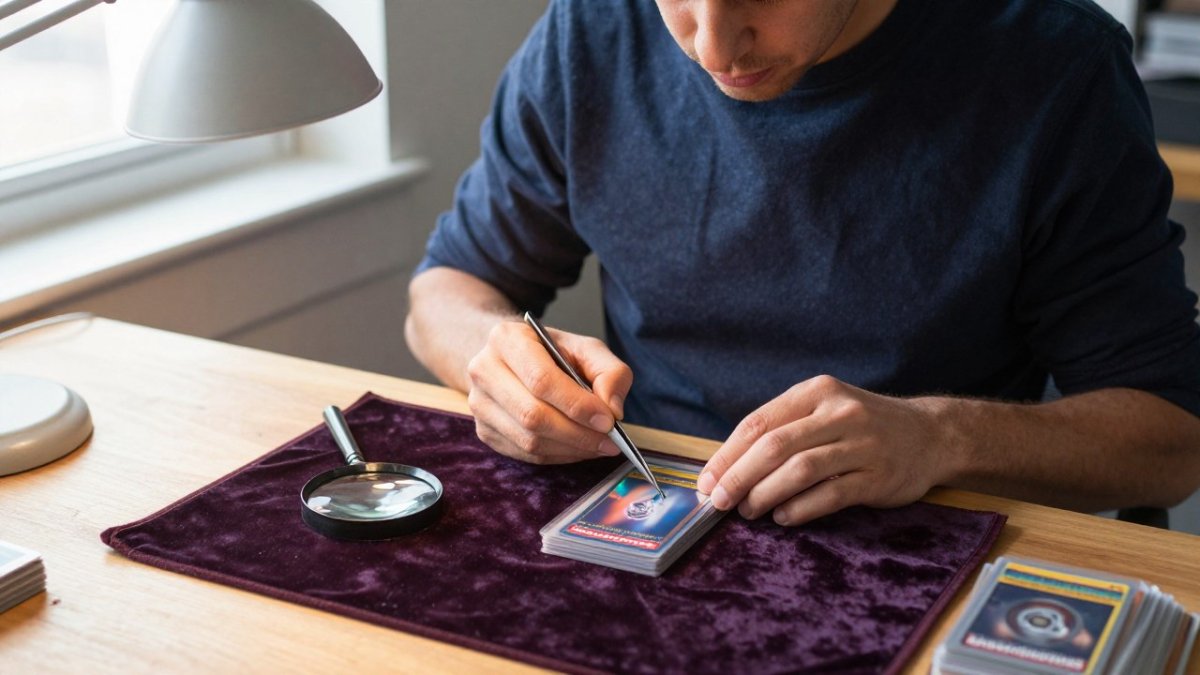
Monitoring and documenting condition. A simple habit, such as checking your boxes every few months and noting any changes, catches problems while they are still easy to fix.
Safe transport and transitions. When cards move between home, events and storage, keep them flat and supported, avoid leaving them in a hot or cold car, and let a box come back to room temperature before you open it after a move. Abrupt temperature changes are a common cause of condensation and warping that collectors blame on the cards themselves.
The article points to four controllable factors that decide whether cards hold their condition.
| Factor | Target or risk | Key action |
|---|---|---|
| Light and UV | Fades printing, cumulative and irreversible | Store in a closed box or cabinet, not by a window |
| Temperature | Roughly 65 to 72 degrees Fahrenheit | Avoid attics, garages and basements |
| Humidity | Damp air warps and invites mold | Keep the room stable and dry |
| Water | Warping and cockling after wetting | Store boxes off the floor, dry flat between absorbent paper |
Your Next Step: Matching a Storage Setup to Your Collection
Start with your most valuable cards. Sleeve them, place them in top loaders or semi-rigid holders, and store them in a sealed box in a stable room. Move your commons and duplicates into binders or bulk boxes next.
If you are still building a collection, you can find individual cards and accessories at Dave's House of Cards, with free standard shipping on orders over $7.50 and free USPS Ground Advantage shipping on orders over $25. Shop all to see what is available, then choose the storage method that fits what you own.
Frequently Asked Questions
How do you properly store collectible cards?
Start by sleeving each card in a penny sleeve to keep dust and fingerprints off the surface. Then place sleeved cards upright in a rigid box or binder, leaving enough room that the cards are not pressed together or bent. Keep the box in a cool, dry, dark room away from direct sunlight, and avoid attics, basements and garages where temperature and humidity swing widely. Handle cards by their edges and check the collection periodically for moisture or warping.
Is it better to store cards in a binder or a box?
A binder works best for complete sets and cards you want to view or flip through, since side-loading pages hold cards securely and keep them organized. A box is better for bulk storage, larger collections and high-value cards that should stay in individual holders. Many collectors use both: binders for display and sets, boxes for the rest. Whichever you choose, keep cards upright and avoid overfilling either one.
Are penny sleeves enough to protect collectible cards?
Penny sleeves protect against dust, scratches and handling wear, but they do not guard against bending, pressure or crushing. For common cards, a penny sleeve inside a storage box is usually sufficient. For valuable or potentially valuable cards, add a top loader or semi-rigid holder after sleeving. Penny sleeves should be archival-quality and free of PVC to avoid long-term residue or damage to the card surface.
How should you store expensive trading cards?
Store high-value cards in a layered setup: a penny sleeve, then a top loader or semi-rigid holder, then a rigid storage box kept upright in a stable environment. Keep them away from sunlight, heat, moisture and areas with temperature swings. Consider a fireproof or waterproof container if you live in a flood-prone area, and keep a written or photographed record of each card's condition and purchase details for insurance purposes.