 listicle
7 Proven Tips for Finding Vintage Trading Cards
Last Updated: October 25, 2026
Quick Summary
Finding vintage trading cards starts with local estate sales and garage sales, where collections are often priced by sellers unfamiliar with card values. Online marketplaces like eBay offer broader selection, while card shows and specialty retailers provide expert guidance and quality assurance for serious collectors.
- Arrive early to estate and garage sales, as serious collectors find the best cards within the first hour
- Check eBay sold listings to compare actual prices paid rather than asking prices when valuing cards
- Inspect card stock, print quality, and holograms under magnification to spot counterfeits before buying
- Graded cards from PSA or SGC cost more upfront but sell faster and command higher prices than raw cards
- Assess condition by checking centering, corners, surface wear, and creases using a magnifying glass
Table of Contents
- 1. Search Estate Sales and Garage Sales for Hidden Gems
- 3. How to Tell If Vintage Cards Are Authentic
- 4. How to Check Vintage Trading Card Condition Before Buying
- 5. How to Value Old Trading Cards Using Sold Listings
- 6. Raw vs. Graded Cards: What Beginners Need to Know
- 7. Start Your Vintage Trading Card Hunt Today
- Frequently Asked Questions
1. Search Estate Sales and Garage Sales for Hidden Gems
Finding vintage trading cards starts where most collectors overlook: local estate sales and garage sales. These venues hold cards that never reach online marketplaces, often priced by sellers who don't know what they have.
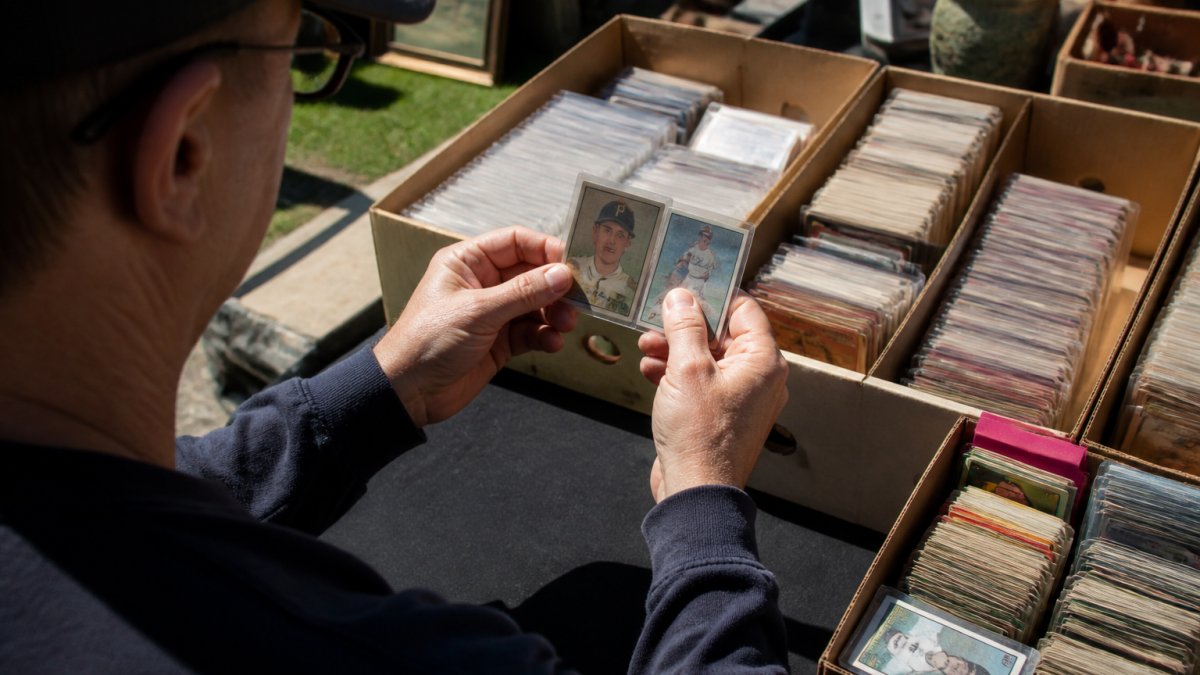
Estate sales are your best bet. When someone passes away or downsizes, their entire collection can hit the market in a single weekend.
Here's how to hunt systematically. Check local estate sale company websites for upcoming events. Many post inventory online, and you can preview what's being sold. If cards are mentioned, that's your signal to attend.
When you arrive, head straight to the box lots. Sellers bundle unsorted cards together at low prices because they can't grade individual cards. This is where you find value.
(https://blog.daveshouseofcards.com/best-sites-vintage-card-singles) offers a curated selection of individual cards from popular series.Card shows and conventions bring together dozens of dealers in one location. You can compare prices, see cards in person, and negotiate directly with sellers. Shows happen year-round in major cities. Check The Spike or local hobby shops for schedules.
Online specialty retailers focus on specific card types. Some handle only baseball cards, others specialize in Pokémon or Magic: The Gathering. Their narrower focus means deeper expertise and often better condition standards than general marketplaces.
When buying online, check seller ratings carefully. Look for reviews mentioning card condition accuracy and shipping care. A seller with 98% positive feedback and thousands of sales is typically reliable. Avoid sellers with recent negative feedback about authenticity or condition misrepresentation.
3. How to Tell If Vintage Cards Are Authentic
Counterfeit cards exist, especially for high-value vintage pieces. Learning to spot fakes protects your investment.
Start with the card stock. Authentic vintage cards have a specific weight and thickness. Counterfeits often feel slightly different, too thin, too thick, or flimsy. Hold a suspect card next to a known authentic card and compare.
Print quality reveals counterfeits quickly. Vintage cards have crisp, clean printing with sharp text edges. Fakes often show fuzzy lettering, blurry images, or color bleeding where inks overlap.
Check the card back. Legitimate vintage cards have consistent spacing, alignment, and typography across the back. Counterfeits frequently misalign text or use slightly wrong fonts. Compare the back of a suspect card with known examples online.
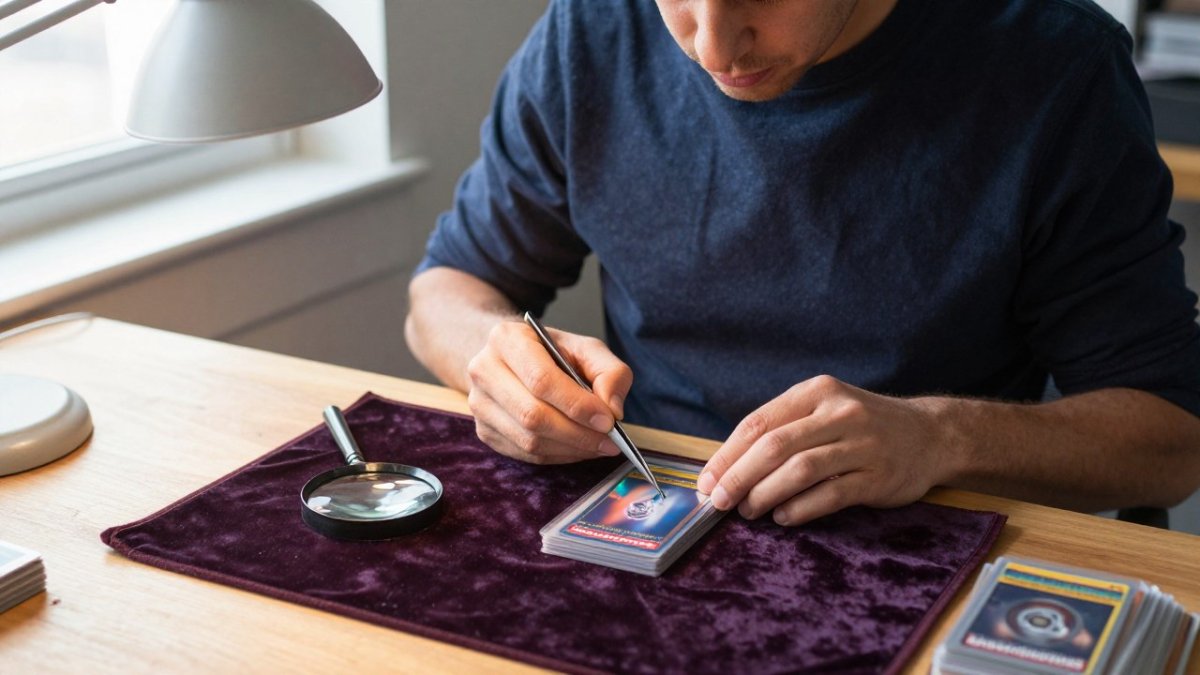
Holograms and special features are common counterfeiting targets. If your card has a hologram, tilt it under light. Real holograms show smooth color shifts and defined patterns. Fake holograms flicker, show poor color transitions, or display distorted images.
Authentication services like PSA and SGC offer grading that includes authenticity verification. If you're considering a high-value card, professional grading removes doubt. These companies examine cards under magnification and compare them against known examples.
For non-sports cards, Pokémon, Magic: The Gathering, Yu-Gi-Oh!, each franchise has specific security features. Research what legitimate cards from your target series should include.
4. How to Check Vintage Trading Card Condition Before Buying
Card condition drives value more than rarity. Understand near mint condition grading standards to properly assess cards you're considering. A rare card in poor condition sells for a fraction of the same card in excellent shape.
Condition grading uses a standard scale.
Start with centering. Look at the card's borders, top, bottom, left, right. On a well-centered card, borders are even on all sides. Off-center cards have uneven borders. Severe centering issues lower value significantly.
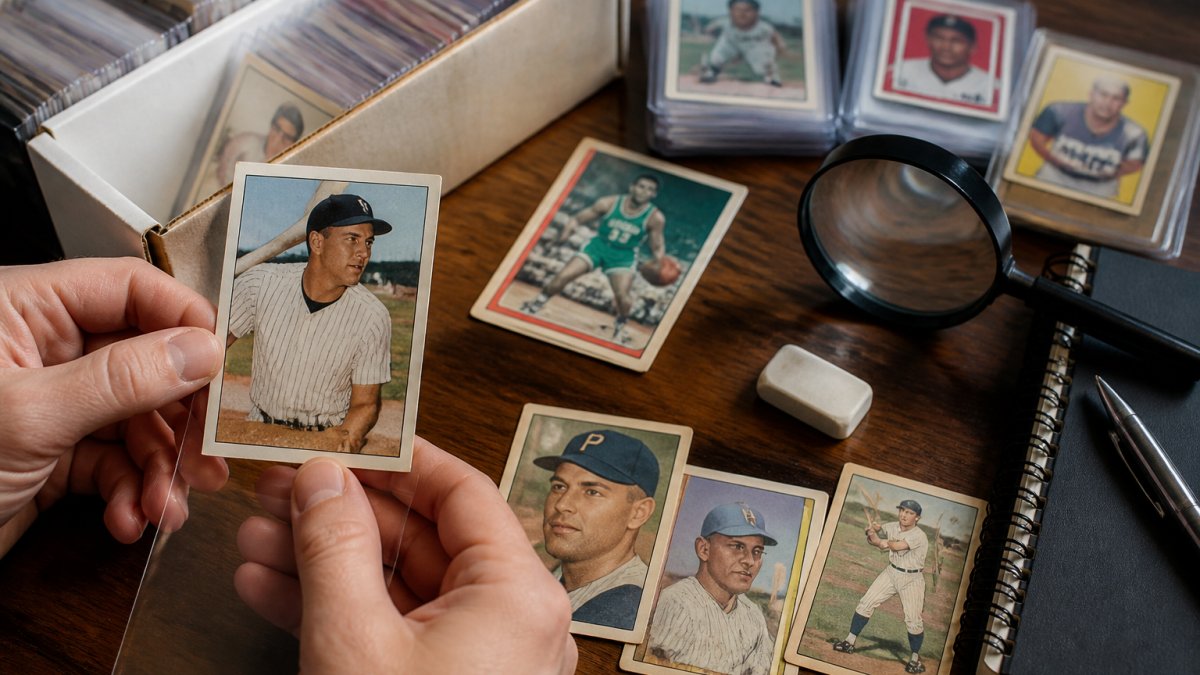
Examine corners closely. Vintage cards often show corner wear. Look for rounding, creasing, or soft corners where edges have worn smooth. Sharp corners indicate better condition. Use a magnifying glass to inspect corner detail. Even slight wear is visible under magnification.
Check the card surface. Run your fingernail gently across the surface, never hard enough to damage it. Feel for texture changes, scratches, or print spots. Look at the card under light from different angles.
Look for creases. These are permanent damage that severely reduces value. A crease runs across the card surface, creating a visible line. Even light creases are significant. Tilt the card under light to see creases clearly.
Stains and discoloration matter. Water damage creates brown spots or staining. Foxing, brown spots from age, is common on old cards but reduces value. Gum stains from card packs are normal but visible.
5. How to Value Old Trading Cards Using Sold Listings
Comparable sales determine market value. Learn how to grade trading cards yourself with a step-by-step process to determine accurate valuations. Recent sold prices tell you what collectors actually paid, not asking prices.
eBay's sold listings filter shows completed auctions and sales. Search for your card, then filter by "sold listings." You see the final price, sale date, and condition. Compare multiple sales to find the average price range.
PSA Card Value combines grading standards with price data. You can compare a raw card's condition against PSA's grade scale and see what similar graded cards sold for recently.
Just Collect publishes a vintage baseball card price guide focused on older cards and sets. Their data comes from actual sales, not asking prices.
Look at multiple sales across several months. A single sale might be an outlier, either a great deal or an overpriced listing. Five or ten sales give you a reliable range.
Factor in condition carefully. The same card in near-mint condition might sell for double what it brings in good condition. Always compare cards in similar condition grades.
Rarity affects pricing dramatically. Rookie cards, low-population sets, and cards with printing errors command premiums. A common card from a popular set might sell for a few dollars. The same card with a printing variation could be worth hundreds.
6. Raw vs. Graded Cards: What Beginners Need to Know
Raw cards are ungraded, you buy them as-is without professional certification. Graded cards have been examined and assigned a grade by a professional grading company like PSA or SGC. The choice affects price, authenticity assurance, and resale value.
Raw cards cost less. You buy them directly from collectors or dealers at lower prices than graded equivalents. The tradeoff: you assume all risk for authenticity and condition assessment. If you misjudge a card's condition, you've overpaid.
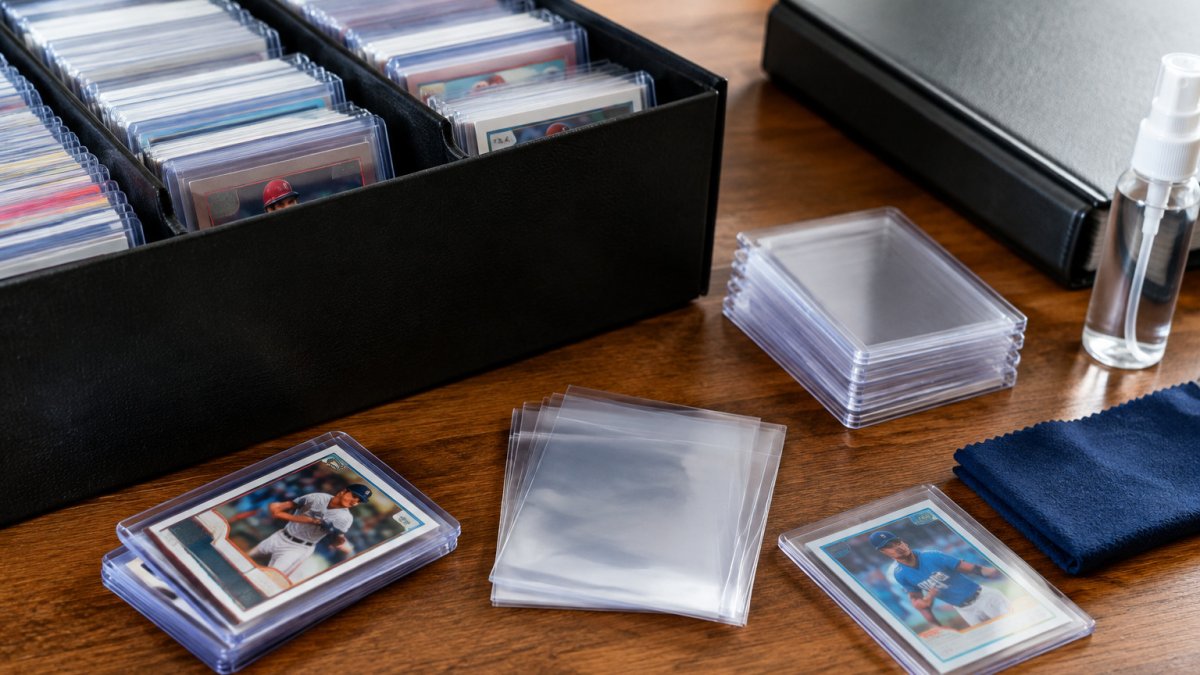
Graded cards come in protective slabs with a grade printed on the label. PSA uses a 1-10 scale. A PSA 9 is near-mint. A PSA 8 is very good-mint. The grade is objective, multiple graders examined the card and agreed on its condition.
Graded cards cost more upfront. You pay for the grading service, the slab, and the authentication. But you recoup this investment when reselling.
For valuable vintage cards, anything over a few hundred dollars, grading makes sense. The authentication alone protects your investment. For bulk cards or commons, raw cards are fine. You don't need PSA certification on a $5 card.
Consider your goals. If you're building a personal collection to keep long-term, raw cards work fine. If you're buying cards as investments to resell, grading adds credibility and value. Competitive players need cards in excellent condition, often graded, for tournament play.
7. Start Your Vintage Trading Card Hunt Today
Finding vintage trading cards requires patience and strategy. Start locally with estate sales and garage sales. These venues offer the best prices and the thrill of discovery. Move to online marketplaces once you understand what you're looking for and how to spot quality.
Learn to authenticate cards and assess condition. These skills separate informed collectors from impulse buyers. Use sold listings and price guides to research value before committing money. Understand the difference between raw and graded cards so you make choices aligned with your budget and goals.
The vintage card market rewards collectors who do their homework. Spend time learning, inspect cards carefully before buying, and build relationships with reliable sellers. Whether you're completing a childhood set or investing in rare pieces, these fundamentals apply.
Ready to start building your collection? Dave's House of Cards makes it easy with a curated selection of individual cards from popular series, free shipping over $7.50, and convenient online shopping. Shop all vintage trading cards and find the specific pieces you need to complete your collection.
| Sourcing Method | Best For | Typical Price Range | Condition Variability |
|---|---|---|---|
| Estate sales & garage sales | Budget hunters, bulk lots | Lowest | High, inspect carefully |
| Local card shops | Quality assurance, expert help | Mid-range | Lower, dealer vetted |
| Online marketplaces | Selection, price comparison | Variable | Depends on seller |
| Card shows | Direct negotiation, variety | Mid-range | Moderate, dealers present |
| Specialty retailers | Specific series focus | Higher | Consistent, curated stock |
Frequently Asked Questions
Where can I find vintage trading cards in my area?
Vintage trading cards are available at estate sales, garage sales, antique malls, and local card shops. Online marketplaces like eBay and specialized card retailers offer broader selection. Card shows and conventions also attract dealers selling vintage inventory. Start by checking your local area first, estate sales often have collections at reasonable prices, and you can inspect cards in person before buying.
How can I tell if a vintage trading card is authentic?
Check the card's printing quality, color saturation, and font consistency against known authentic examples. Look for signs of reprinting or alteration like uneven ink, blurry text, or misaligned borders. Examine the card stock weight and texture, reproductions often feel thinner or have a different finish. Compare the card's back with authentic reference images online. When in doubt, consult grading company resources like PSA Card Value, which provides grade descriptions and authentication guidance.
What condition should I look for when buying vintage cards?
Condition depends on your goal. Competitive players need near-mint or mint cards for tournament play. Casual collectors often accept light play or moderate wear. Check corners for softness, edges for wear, the surface for creases or stains, and centering for print alignment. Cards graded 8 or higher by professional services (PSA, SGC) are considered excellent condition. For raw cards, compare them directly to grading-scale descriptions before purchasing to ensure they meet your standards.
How do I know what price to pay for a vintage card?
Research recent sold listings on eBay to see what collectors actually paid for comparable cards in similar condition. Check price guides like Just Collect's vintage baseball card prices and PSA Card Value for reference ranges. Compare multiple sold listings over the past 30 days, not asking prices, since actual sales reflect true market value. Factor in the card's condition, rarity, and demand. Prices vary significantly by grading status, graded cards typically command premiums over raw cards.
Should I buy raw or graded vintage cards?
Raw cards cost less and let you inspect condition directly before buying. Graded cards offer authentication certainty and professional condition assessment, which matters for high-value purchases or competitive play. Beginners often start with raw cards to learn condition evaluation. As you build expertise and pursue higher-value cards, graded options from PSA or SGC provide confidence in authenticity and grade consistency. Your choice depends on budget, experience level, and intended use.